By Business Insider Reporter
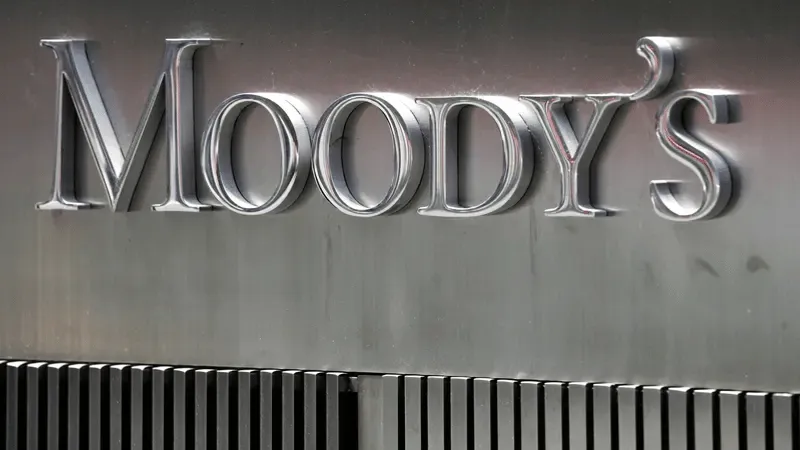
Moody’s Ratings has reaffirmed Tanzania’s long-term local and foreign currency issuer ratings at B1, maintaining a stable outlook, underscoring confidence in the country’s growth momentum while warning that political and social pressures remain key constraints on the credit profile.
In its assessment dated February 20, 2026, Moody’s said the affirmation reflects Tanzania’s strong and increasingly broad-based economic growth, improving policy effectiveness and resilience to shocks, balanced against weak institutional capacity, low household incomes and heightened political risks following unrest around the 2025 general election. Although stability has since been restored, the agency cautioned that underlying social pressures – linked to rapid population growth and persistent income constraints – could weigh on investment, exports and fiscal outcomes if tensions re-emerge.
Growth momentum supports credit strengths
Moody’s expects real GDP growth of at least 6 percent over the medium term, driven by rising investment in manufacturing, mining and mineral processing, alongside continued expansion in tourism and transport-related services.
Major public infrastructure projects and improvements in energy reliability have supported activity, while reforms aimed at easing the regulatory burden are gradually shifting the growth model toward greater private-sector-led investment.
Macroeconomic management has strengthened in recent years.
Increased exchange-rate flexibility has helped eliminate parallel foreign-exchange markets and improved the economy’s ability to absorb external shocks. Inflation has remained below 5 percent since 2018, supported by a functioning interest-rate-targeting framework, even as monetary transmission remains relatively weak.
Debt remains moderate, revenues improving
Government debt has risen to just under 50 percent of GDP, reflecting borrowings to finance infrastructure, social spending and the clearance of arrears. While interest costs have increased – now absorbing about 16 percent of government revenue – Moody’s considers the debt burden moderate relative to peers and expects it to stabilise, supported by strong nominal growth and improving revenue mobilisation.

Non-grant revenue has increased steadily, rising from 13.7 percent of GDP in 2020/21 to 15.9 percent in 2025/26, and is projected to exceed 17 percent in the current fiscal year. Gains have been underpinned by tax administration reforms, digitisation, improved compliance and higher non-tax revenues, including dividends from state-owned enterprises following governance reforms.
However, access to concessional financing has deteriorated, partly due to post-election unrest, while pressure to expand social spending to address political and social risks is likely to persist—factors that could strain fiscal outcomes over time,
Political and ESG risks remain key constraints
Moody’s highlighted elevated political risk following the 2025 election, noting that renewed instability would undermine investor confidence, disrupt tourism and exports, and weaken fiscal performance.
The agency also assigned Tanzania an ESG Credit Impact Score of CIS-4, indicating that environmental, social and governance factors pose material – but not dominant – constraints on creditworthiness.
Environmental risks are elevated due to climate-related shocks such as droughts and floods, while social risks remain pronounced given limited access to basic services and education. Governance risks are assessed as moderate, with ongoing challenges in regulatory quality and policy execution, despite gradual improvements.
What could change the rating
An upgrade could follow stronger-than-expected revenue mobilisation that reduces debt and interest burdens, higher household incomes driven by faster growth and export diversification, or a durable easing of political risks through reconciliation and improved civic space.
Conversely, renewed social or political instability, rising spending pressures without commensurate revenue gains, or setbacks to the reform agenda could trigger downward pressure on the rating.

For investors and businesses, the Moody’s assessment paints a picture of an economy with solid growth fundamentals and improving policy credibility, but where political stability and social inclusion will be decisive in determining whether Tanzania can translate momentum into a stronger sovereign credit profile.
Comenting on than rating, Stanbic Bank Tanzania CEO, Mr Manzi Rwegasira (pictured above) noted that it means that the ratying augur well for Tanzania.
“In simple terms: international creditors have assessed that Tanzania’s fiscal credibility and situation remains stable and broadly positive. This speaks to the country’s finances and economic outlook. The cost of borrowing from abroad (internationally) should remain constant (it is not rising),” he said. He noted that this is particularly positive given public concerns about investor sentiment on Tanzania following domestic challenges we faced last year.