By Business Insider Reporter, Dodoma
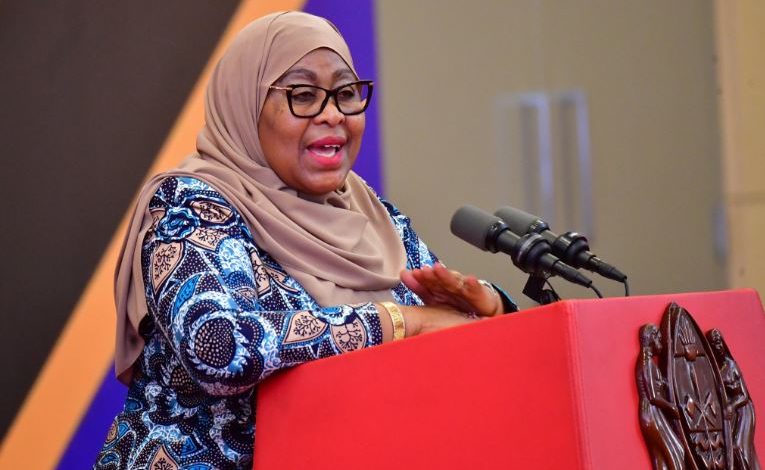
President Samia Suluhu Hassan has emphasised that the success of Vision 2050 will depend entirely on its effective implementation, urging all stakeholders to shift from rhetoric to action.
Speaking in Dodoma during the official launch of the long-term development blueprint, President Samia noted that while the Vision lays out ambitious goals, it is the translation of these plans into concrete actions that will determine Tanzania’s future.
“This blueprint cannot be achieved if we continue with business as usual,” she warned. “It is unfortunate that many Tanzanians are more inclined to talk than to act.”
The President directed responsible authorities to urgently develop robust mechanisms for monitoring and evaluation, stressing the importance of tracking progress and ensuring accountability at every stage of implementation.
“I hereby instruct all concerned institutions to move swiftly and prepare comprehensive monitoring and evaluation frameworks, so we can measure the progress of this Vision accurately and consistently,” she added.
She, however, expressed firm confidence in Tanzania’s ability to meet the ambitious goals outlined in the newly launched National Development Vision 2050 (Dira 2050), describing the blueprint as “crafted by Tanzanians for Tanzanians”.
Speaking during the official launch in Dodoma, President Samia said the government was fully committed to delivering on the long-term plan, which aims to transform Tanzania into an upper-middle-income and inclusive economy by 2050.
“We cannot afford to fail on a plan that is the collective vision of our people,” she declared. “This is our commitment, our responsibility, and our future.”
Peace, unity, climate awareness key to success
President Samia emphasised that sustained peace, national unity, and social cohesion would be critical enablers in achieving the plan’s goals.
She also warned that climate change, if not addressed with urgency, could pose a serious obstacle to long-term development.
“We must remain alert and proactive in addressing the impact of climate change, as it could derail our collective efforts,” she noted.
On Tanzania’s demographic outlook, the President welcomed data showing that a significant portion of the population is under the age of 36, describing this as an advantage for future economic growth.
“This is the age group that forms the backbone of any thriving economy – energetic, innovative, and productive. Our challenge now is to harness this human capital effectively,” she added.
A home-grown vision
Speaking earlier, the Executive Secretary of the National Planning Commission, Dr. Fred Msemwa, outlined the rigorous and inclusive process that led to the formulation of Dira 2050.
He described the plan as having three unique characteristics including:
Inclusive participation – over 1.17 million Tanzanians from all walks of life were engaged through household surveys, SMS platforms, phone interviews, town halls, and digital forums.
Local expertise – the entire vision was developed by Tanzanian professionals from initial drafting to validation.
Fully funded by the government, without foreign donor dependence, marking a significant milestone in national self-determination.
“The Vision is not only a roadmap – it is a reflection of the people’s will and an investment in our sovereign future,” Dr. Msemwa said.
A strategic partner in execution
The launch of Dira 2050 was attended by a cross-section of national stakeholders, including investors, business leaders, civil society, and political figures.
Among them was Freeman Mbowe, former leader of the opposition CHADEMA, whose presence underscored a growing consensus around the country’s development aspirations.
Throughout the event, the private sector was repeatedly referenced as a critical engine for achieving Dira 2050. President Samia and other speakers stressed that unlocking the full potential of Tanzania’s economy would depend on strong public-private collaboration, access to affordable capital, and policies that support local enterprise.
Already, the government has begun engaging the private sector to design implementation mechanisms, especially in areas like infrastructure, agriculture, digital innovation, green energy, and youth employment.
From strategy to delivery
The Vision outlines a series of economic and social targets to be achieved by 2050, including:
- Raising GDP to over USD 1 trillion
- Achieving high-value industrialization
- Strengthening human capital development
- Expanding access to quality health, education, and infrastructure
- Enhancing sustainability and climate resilience
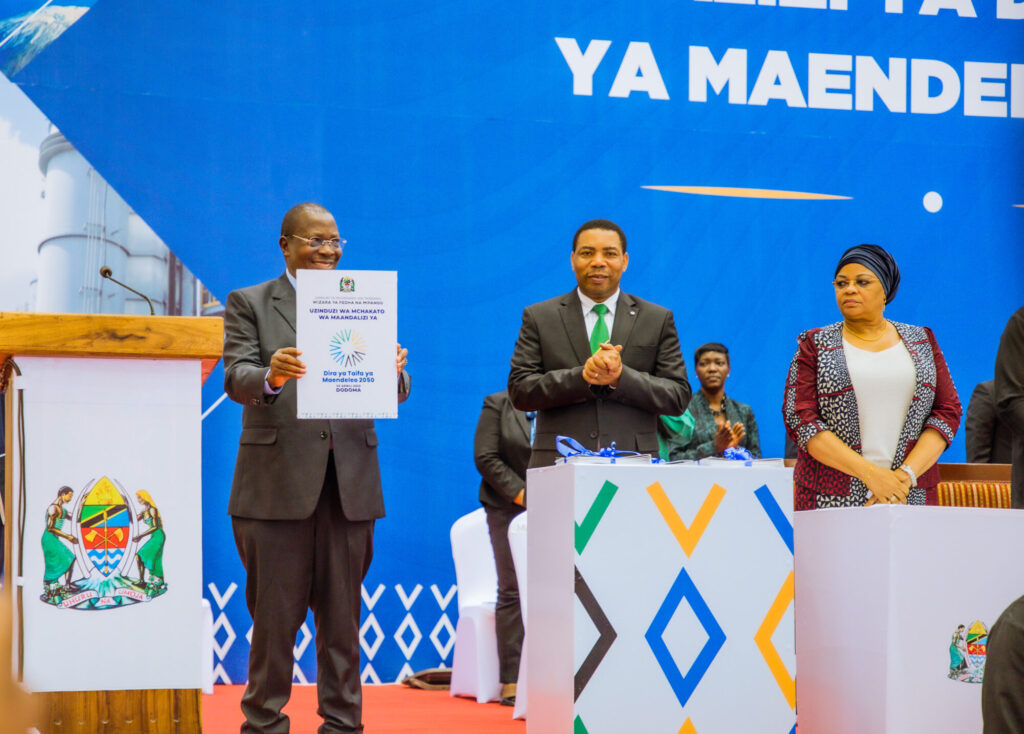
Dira 2050 was officially endorsed by the Cabinet on 22 June and ratified by Parliament on 26 June 2025, making it a legally protected framework for all future development policies.
Dira 2050 offers a bold, unified direction for Tanzania’s future.
With strong political backing, nationwide participation, and increasing private sector alignment, the foundation has been laid. The challenge now lies in execution – converting a visionary document into measurable progress for all Tanzanians.