

By Business Insider Reporter
The government has rolled out a sweeping National Supply Chain Management Policy of 2025, targeting long-standing inefficiencies and leakages in public spending by tightening oversight across procurement and logistics systems.
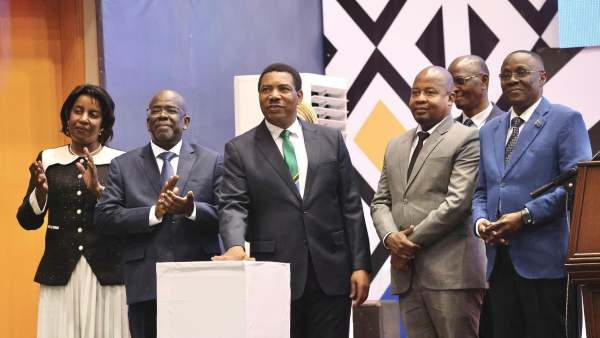
Launched on April 8, 2026, at the Jakaya Kikwete Convention Centre in Dodoma, the new policy introduces a unified framework covering the entire supply chain – from needs assessment and procurement to storage, distribution and disposal of public assets.
Prime Minister Mwigulu Nchemba, who officiated the launch on behalf of President Samia Suluhu Hassan, described the policy as a milestone in strengthening accountability and safeguarding national resources.
“For this policy to deliver results, there must be accountability, professionalism and adherence to the rule of law,” he said, stressing that implementation – not legislation – has historically been the weakest link in public procurement.
Audit reports from the National Audit Office of Tanzania (NAOT) and the Public Procurement Regulatory Authority (PPRA) have repeatedly flagged procurement irregularities, including inflated prices and the emergence of “ghost suppliers,” which have drained public funds.
At the heart of the new framework is a push to seal these gaps. The policy prioritises digital systems to reduce human discretion, improve traceability and enhance efficiency in procurement processes. By automating key stages, the government aims to curb waste, limit manipulation and ensure value for money in public spending.
Finance Minister Khamis Mussa Omar noted that, until now, Tanzania has relied on fragmented laws and regulations without a single, integrated policy to guide supply chain operations. This, he said, created coordination challenges, cost inefficiencies and implementation gaps.
“Supply chain management is the heart of public financial accountability,” he said, adding that more than 50 percent of the government’s expenditure is channelled through procurement – making it a critical front in the fight against corruption.
The new policy seeks to overhaul that landscape through a comprehensive approach that integrates procurement, clearance, storage, distribution and disposal under one coordinated system. Experts say such end-to-end visibility is essential to closing loopholes that have historically enabled duplication, waste and abuse.
Beyond cost control, the policy also positions procurement as a driver of economic transformation. By strengthening local content requirements and encouraging private sector participation, it aims to stimulate industrial growth, expand employment and boost incomes.
Dr. Nchemba called on businesses to align their strategies with the new framework, noting that stronger collaboration between public institutions and the private sector would unlock opportunities across supply chains.
“This is not just about cutting costs,” he said. “It is about building an inclusive and competitive economy driven by Tanzanians.”
The policy also underscores the importance of good governance, urging public officials to uphold integrity in managing resources. According to the Prime Minister, procurement challenges in Tanzania have often stemmed less from policy gaps and more from the conduct and practices of those entrusted with implementation.
Analysts say the reform reflects a broader shift in fiscal policy – recognising that how the government spends is as critical as how much it spends.
With procurement accounting for a substantial share of public expenditure, tightening controls in this area could significantly improve service delivery in key sectors such as health, education and infrastructure.
However, they caution that the success of the initiative will depend on enforcement, institutional discipline and continuous monitoring.
If implemented effectively, the National Supply Chain Management Policy could mark a turning point in restoring efficiency, strengthening public trust and ensuring that taxpayer funds translate into tangible development outcomes. For Tanzania, plugging the leaks in public spending is no longer just a fiscal necessity – it is central to building a resilient and accountable economy.