
By Mwanamkasi Jumbe
The government is set to disburse more than TSh 1 billion in royalties to artists across Tanzania by January 23, 2026, in what officials describe as a landmark step towards strengthening the country’s creative economy and resolving long-standing grievances over artists’ earnings.
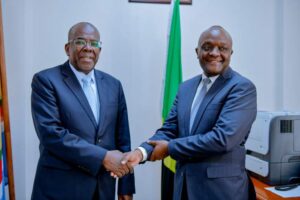
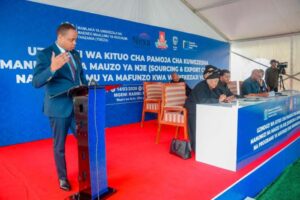
The payments will be made through the Copyright Society of Tanzania (COSOTA) under the Ministry of Information, Culture, Arts and Sports, following high-level consultations between Deputy Minister Hamis Mwinjuma (pictured bwlow) and COSOTA’s leadership. The talks focused on accelerating royalty collection and distribution mechanisms that artists have for years criticised as slow, opaque or ineffective.
Deputy Minister Mwinjuma said the forthcoming payout would be one of the largest single royalty distributions ever made in Tanzania, signalling a new chapter for musicians, filmmakers, authors and other creative professionals.

“As an artist and as Deputy Minister, I have been receiving many questions from fellow artists about the fate of their royalties,” Mwinjuma said. “After constructive discussions with COSOTA, we have agreed that on January 23 next year, we will distribute more than TSh 1 billion. This is a significant amount and a historic moment for our creative sector.”
The breakthrough follows recent legal and institutional reforms passed by Parliament, which amended copyright laws to allow the establishment and licensing of Collective Management Organisations (CMOs). These bodies are mandated to collect, manage and distribute royalties on behalf of rights holders – an approach widely used in mature creative markets.
According to the Deputy Minister, two CMOs have already been licensed and are working in partnership with international copyright management institutions, including South Africa’s CAPASSO. The partnerships are expected to improve technical capacity, compliance and transparency in royalty collection, particularly in the digital and broadcast space.
The bulk of the funds earmarked for distribution have been generated through levies on devices capable of carrying artistic works – such as recording and playback equipment – as well as fees from blanket licences paid by radio and television stations that broadcast music and other creative content.
“We have collected more than TSh 1 billion through the blanket licensing system alone,” Mwinjuma said. “These funds will directly benefit artists, while a portion will support the Culture and Arts Fund, COSOTA’s operations and the government’s regulatory role.”
Crucially, the scope of beneficiaries has been broadened beyond musicians, reflecting the diversity of Tanzania’s creative economy. Artists eligible for the upcoming payout include those in music, film, performing arts, crafts and literary works, including book authors. This marks a shift from earlier practices that were often perceived as favouring only a narrow segment of the industry.
The development comes as Tanzania’s creative sector gains increasing economic and cultural prominence. Music, film and cultural content have become major drivers of youth employment, regional influence and digital exports, particularly across East and Southern Africa. However, weak copyright enforcement and unreliable royalty systems have long undermined artists’ incomes and discouraged investment in the sector.
Mwinjuma cautioned, however, that only artists who have formally registered their works with COSOTA will qualify for royalty payments. Registration, he said, remains the only reliable way to track usage and ensure artists are paid when their works are broadcast, performed or otherwise exploited commercially.
“I urge all artists to register their works with COSOTA,” he said. “Without registration, it is impossible to guarantee royalty payments when your work is used.” With the January 2026 payout approaching, stakeholders see the move as a test of whether Tanzania’s copyright reforms can deliver tangible benefits to creators. If successfully implemented, the distribution could help restore trust in royalty systems, improve livelihoods for artists and position the creative industry as a more robust contributor to the national economy.