By Business Insider Reporter
Tanzania’s leather industry has long been described as a sleeping giant – rich in raw materials but weak in value addition. Now, a homegrown scientific breakthrough backed by African Development Bank (AfDB) funding may offer a pathway to unlocking that potential.
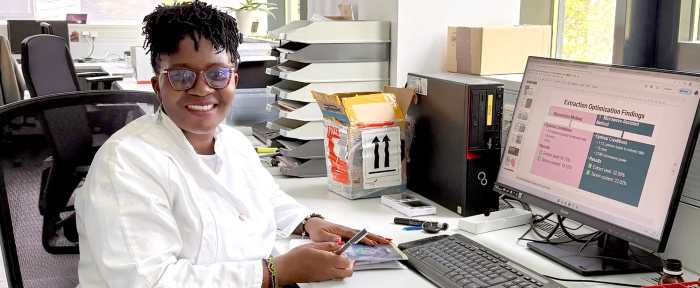
Dr. Cecilia China, a materials scientist trained at the Nelson Mandela African Institution of Science and Technology (NM-AIST) in Arusha, has developed eco-friendly tannins derived from cashew nut husks – an agricultural waste product – as a safer alternative to chromium-based chemicals traditionally used in leather processing.
Her innovation is more than a laboratory success. It represents a possible structural shift in how Tanzania captures value from its vast livestock and agricultural resources.
The value addition gap
Tanzania is home to more than 50 million cattle, sheep and goats, positioning it among Africa’s largest livestock holders. Yet the country exports a significant share of its hides and skins in raw or semi-processed form, forfeiting higher-margin opportunities in finished leather goods such as footwear, handbags and upholstery.
The challenge is compounded by limited domestic processing capacity and continued dependence on hazardous chemical tanning processes.
Chromium-based tanning, while widely used, carries environmental and health risks. Improper waste disposal contaminates water systems, and tannery workers face prolonged exposure to potentially carcinogenic compounds. For export-oriented producers, tightening global environmental compliance standards are adding further pressure.
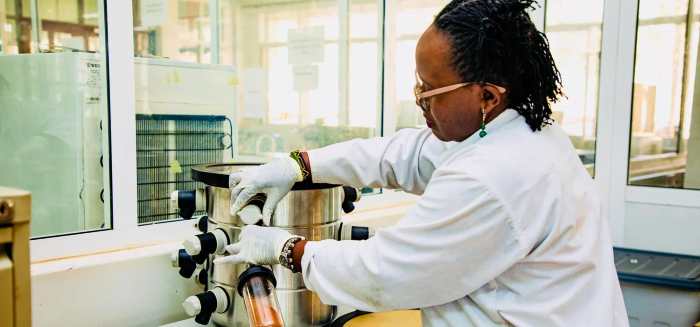
China’s plant-based tannin innovation directly addresses both concerns by offering a locally sourced, non-toxic alternative that can reduce environmental damage while strengthening domestic production capacity.
Turning cashew waste into industrial input
Tanzania is one of Africa’s major cashew producers, yet the reddish-brown husk covering the cashew kernel is typically discarded as waste.
China’s research demonstrates that this by-product can be processed into natural tannins capable of preserving and softening hides without the toxic side effects associated with conventional chemicals.
The implications extend beyond environmental sustainability. By reducing reliance on imported chemicals, lowering effluent treatment costs and creating a new industrial use for agricultural waste, the innovation introduces an additional revenue stream into rural economies.
About 96 percent of workers in cashew processing are women, meaning that demand for cashew husks could directly support women’s incomes and link rural agricultural communities to higher-value manufacturing supply chains.

This integration aligns closely with Tanzania’s industrialisation strategy, which seeks to connect agriculture to manufacturing through value chain development.
AfDB’s STEM investment as industrial policy
China’s breakthrough was made possible through an AfDB-financed postgraduate scholarship programme supporting STEM education at NM-AIST. More than half of the 141 beneficiaries were women – a notable milestone in a region where female representation in advanced science remains limited.
The Bank’s support highlights a broader economic lesson: strategic investment in science and technology education can generate commercially viable industrial solutions.
Rather than importing green technologies, Tanzania is demonstrating that domestic research ecosystems can produce context-specific innovations tailored to local raw materials and the realities of small and medium-sized enterprises.
Commercialisation and SME upskilling
Through her venture, AfriTech Organic Leather Company, Dr China is moving beyond research into commercial application.
The company works with small and medium-sized enterprises to process hides into finished consumer products, retaining more value within Tanzania.
If scaled effectively, the model could reduce the country’s reliance on exporting semi-processed hides while increasing employment across agriculture, manufacturing and retail. SMEs gain access to safer tanning inputs, producers can target environmentally conscious export markets, and domestic brands can differentiate themselves through sustainable production practices.
ESG and export competitiveness
Global buyers, particularly in Europe, are increasingly enforcing strict environmental compliance standards. Sustainable leather sourcing is becoming a prerequisite for market access.
An eco-friendly tanning process provides Tanzanian producers with a potential competitive advantage under frameworks such as the African Continental Free Trade Area (AfCFTA) and other preferential trade agreements. By reducing toxic waste and improving environmental performance, the innovation strengthens the sector’s Environmental, Social and Governance (ESG) profile – a growing determinant of investor and buyer confidence.
A gender and skills multiplier
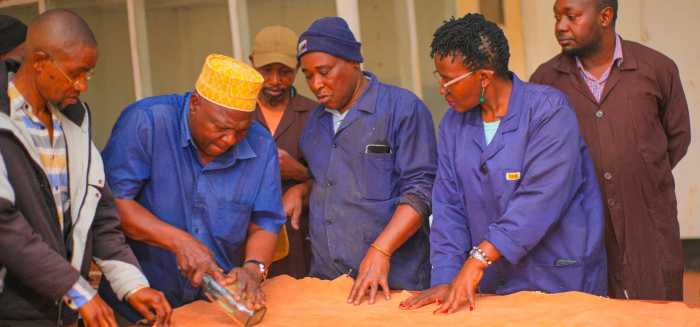
China’s journey also exposes structural gaps in Tanzania’s scientific talent pipeline. In one of her recent nanomaterials classes, all 60 students were male, underscoring persistent gender disparities in advanced science education.
In response, she founded a non-governmental organisation aimed at encouraging girls to pursue science from primary school through university. Sustainable industrialisation depends not only on innovation but also on inclusive access to education and technical training.
A blueprint for industrial upgrading
Tanzania’s leather sector has historically struggled with low productivity, environmental compliance challenges and fragmented value chains. China’s cashew-based tannin innovation offers a practical blueprint for industrial upgrading rooted in local resources.
By transforming agricultural waste into industrial input, strengthening rural–industrial linkages and embedding sustainability into manufacturing, the model supports SME-led value addition.
The broader economic message is clear. Tanzania’s industrial transformation may not rely solely on large-scale foreign investment or mega-projects, but also on strategically funded local research capable of converting everyday waste into high-value opportunity. From a village childhood inspired by a visiting doctor to a laboratory breakthrough with national economic implications, Dr Cecilia China’s story reflects a deeper truth about Tanzania’s development path: innovation grounded in local realities can become the foundation of globally competitive industries.