

By Business Insider Reporter
In 2024, Tanzania’s banking sector continued to grow not just in numbers, but in its national impact – extending more credit, deepening access, and bolstering its own resilience to support households, businesses, and the economy at large.
According to the Bank of Tanzania’s (BoT) 2024 Financial Sector Supervision Annual Report, loans, advances and overdrafts surged by 14.3 percent, reaching TSh 36.59 trillion, up from TSh 32.01 trillion in 2023.
These funds did not sit idle – they were actively deployed across sectors, powering enterprises, enabling families to invest in homes and education, and pushing development across the country.
Credit expansion: Building the economic backbone
The rise in credit extended by banks represents more than financial growth – it is a tangible enabler of nation-building. For households, access to credit means the ability to acquire homes, invest in education, or launch small businesses.
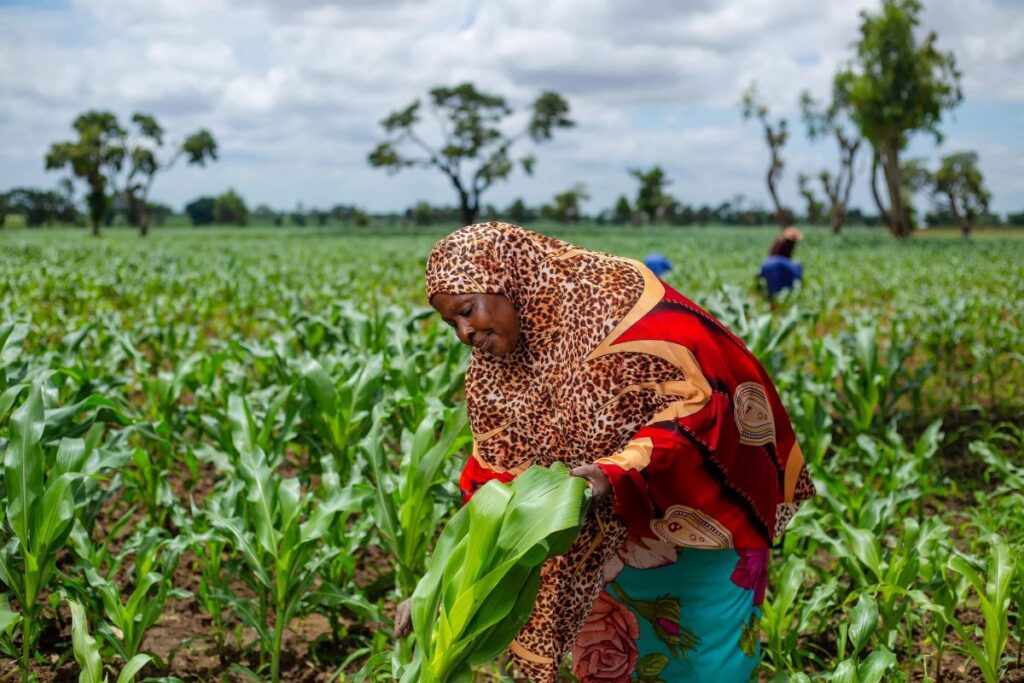
For businesses, particularly MSMEs that form the majority of Tanzania’s private sector, loans offer the fuel to expand operations, purchase equipment, and create jobs.
This robust credit growth was largely supported by favourable macroeconomic conditions, an accommodative monetary policy, and proactive regulatory support by BoT aimed at spurring private sector activity.
Crucially, this expansion in lending did not come at the cost of prudence. Non-performing loans (NPLs) dropped significantly to 3.4 percent from 4.4 percent in 2023 – a sign of improved asset quality driven by better credit risk management and a healthy economic environment.
A stable and profitable sector
Behind this momentum lies a strong and stable banking sector, as highlighted by multiple performance indicators. Profitability rose sharply, with Return on Assets (ROA) increasing to 5.2 percent from 4.4 percent, and Return on Equity (ROE) climbing to 23.7 percent from 20.5 percent the previous year.
This was attributed to both higher interest income – linked to loan growth – and non-interest income, as well as enhanced operational efficiency.
The sector also saw a rise in capital adequacy, with core capital ratios improving to 19.4 percent and total capital ratios reaching 20.0 percent, well above the minimum regulatory requirements of 10 percent and 12 percent respectively.
Meanwhile, liquidity remained strong, with the ratio of liquid assets to demand liabilities standing at 28.6 percent, comfortably above the regulatory 20 percent minimum. This strong performance reflects growing public confidence in the banking system, increased deposit mobilization, and sound regulatory oversight by BoT.
Financial deepening: Banking gets closer to the people
While the numbers show macro-level strength, the story of 2024 is also about how financial services are reaching Tanzanians on the ground.
The total number of bank branches rose slightly from 1,011 to 1,028, but the real expansion came through agent banking and digital channels. The number of banking agents surged by 37 percent, hitting 145,430 agents nationwide.
These agents processed over 105 million cash deposit transactions and 60 million withdrawals, with deposit volumes growing by 20.3 percent and withdrawals by 18.6 percent.
This expansion means Tanzanians in remote and previously underserved areas now have greater access to formal financial services – reducing reliance on informal networks, improving savings habits, and boosting economic activity.
Meanwhile, mobile and digital banking continue to play a transformational role. With digital financial services now accounting for over 82 percent of access points across the country, Tanzania is moving rapidly toward a more inclusive, tech-driven financial ecosystem.
“Today, over 96 percent of all customer transactions at NMB Bank take place outside its branches – a powerful reflection of the bank’s successful digital transformation journey,” the lender highlighted this milestone on Thursday, October 23, while announcing its inclusion among Africa’s Top 40 banks in the 2025 African Business Magazine rankings.
The sector’s expansion is also being reinforced by consolidation and innovation. Mergers and acquisitions – such as the formation of Co-operative Bank Tanzania Limited from the merger of Kilimanjaro and Tandahimba Co-operative Banks – reflect efforts to build stronger institutions. Similarly, acquisitions involving Access Bank Tanzania, Selcom Microfinance Bank, and Exim Bank Tanzania point to a maturing and competitive financial market.
National impact: Financing the future
The implications of this financial sector growth go far beyond bank ledgers. It provides the capital that will build roads, modernize agriculture, fuel entrepreneurship, and empower millions of Tanzanians to participate more meaningfully in the economy.
The sector’s rising profitability also means more tax contributions, stronger institutions, and the capacity to support government development initiatives.
With total banking assets increasing by 14.4 percent to TSh. 62.2 trillion and deposits growing by 12.3 percent to TSh. 42.77 trillion, the sector is not just growing – it is anchoring Tanzania’s economic aspirations.

Looking ahead: Safeguarding growth and inclusion
Even with this progress, BoT remains focused on ensuring continued financial stability, regulatory compliance, and risk management. In 2024, it enhanced its supervision of foreign exchange services, issued over 765 new licenses to microfinance providers, and laid the groundwork for a regulatory framework to support Islamic banking and climate-related financial risks.
Furthermore, strengthening Anti-Money Laundering and Countering Financing of Terrorism frameworks remains a top priority to preserve the integrity and resilience of the financial system.
The Bank of Tanzania’s 2024 Annual Report paints a picture of a dynamic financial sector that is not only growing and profitable, but also inclusive, resilient, and aligned with national development goals. As credit reaches more Tanzanians – backed by strong banks, digital tools, and agent networks – the foundation is being laid for sustainable, people-centred growth. It’s not just about more loans. It’s about what those loans make possible: homes, businesses, livelihoods, and a stronger, more inclusive economy for all.