By Business Insider Reporter
A groundbreaking fossil discovery in Ethiopia could reshape how scientists interpret decades of hominin research at Tanzania’s Olduvai Gorge – long considered the “Cradle of Mankind.”
Researchers working in Ethiopia’s Afar Region have unearthed fossilised teeth belonging to a previously unknown species of Australopithecus, dating back 2.65 million years. Remarkably, the site also yielded the oldest known Homo species teeth, dated to 2.59 million years ago. The findings, published in Nature, suggest that at least four distinct hominin species coexisted in East Africa at the time.
Why it matters for Olduvai Gorge
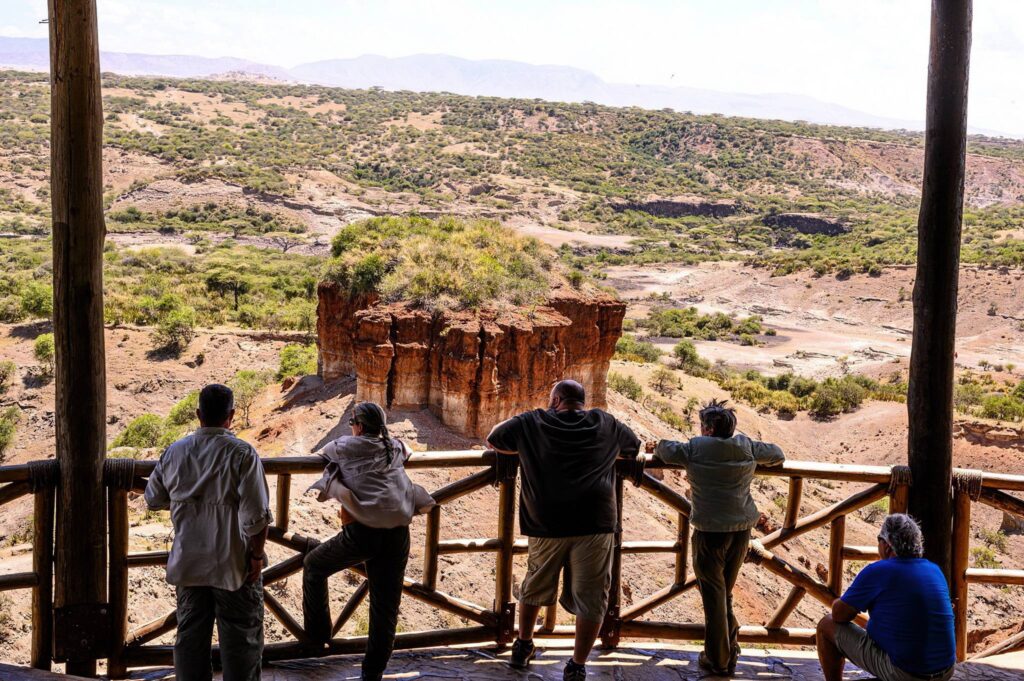
Olduvai Gorge’s rich fossil record, spanning nearly two million years, has provided some of the most important insights into human evolution.
Until now, researchers believed that by the time the earliest Homo species emerged, Australopithecus diversity was already in decline.
This new Ethiopian discovery challenges that timeline.
“The overlap of early Homo with multiple Australopithecus species means the evolutionary story may be far more complex than previously thought,” said University of Nevada paleoanthropologist Brian Villmoare, lead author of the study. “It wasn’t a straight line of progress – it was a branching bush.”
If similar patterns are confirmed in Olduvai Gorge strata, it could force a reinterpretation of fossil layers previously attributed to a single evolutionary sequence.
Sites where tools and bones have been linked to early Homo might, in fact, have been shared landscapes between multiple human species.
Competition and coexistence
The study’s co-director, Arizona State University paleoecologist Kaye Reed, noted that dietary overlap could have influenced species survival.
“We are currently analysing teeth to see if they ate the same thing,” she said. Such ecological rivalry could help explain why some lineages, like Paranthropus, vanished while Homo thrived.
For Olduvai Gorge, where evidence of tool-making and butchery has been found alongside diverse faunal remains, these findings could spark fresh questions: Were stone tools used exclusively by Homo? Or did other species experiment with early technology?
New lens for East Africa’s prehistory
The Ethiopian fossils – found in what was once a lush ecosystem teeming with rivers, lakes, and megafauna – reinforce the idea that East Africa was a mosaic of habitats and species. If Olduvai Gorge shared similar environmental complexity during the same era, archaeologists may need to revisit assumptions about hominin behaviour, migration, and adaptation.
“This is a reminder that discoveries in one part of East Africa can completely transform interpretations in another,” said a Tanzanian paleoanthropologist not involved in the study. “Olduvai may still hold surprises that could rival Ethiopia’s latest find.” With Ethiopia now adding a seventh recognised Australopithecus species to the human family tree, the race is on to see whether Olduvai Gorge will yield matching evidence – and perhaps rewrite a chapter in the story of human origins.