By Business Insider Reporter
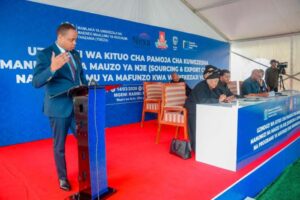
East African policymakers, economists and civil society leaders are set to gather in Entebbe later this month for a high-level Regional Dialogue on Domestic Resource Mobilisation, a meeting that could shape the region’s financial stability for years to come.
The two-day forum, taking place from November 25 and 26 2025, comes at a time when East African economies are grappling with rising debt burdens, declining tax compliance and volatile global financial conditions. Organised by SEATINI with support from Diakonia, the meeting will run under the theme “Enhancing Domestic Resource Mobilisation through Reformed Global Financial Architecture and Prudent Fiscal and Debt Policy Management.”
A crucial conversation for a region under pressure
Across the East African Community (EAC), the conversation on fiscal sustainability is becoming increasingly urgent. Despite consistent GDP growth, the region’s tax-to-GDP ratio averages between 12 percent and 14.5 percent, well below the EAC Monetary Union target of 25 percent. This gap has forced governments to rely heavily on borrowing to fund infrastructure, social services and public investment.
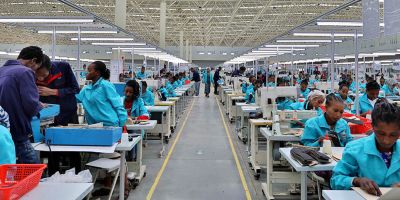
The debt data is sobering: since 2018, Kenya’s public debt has risen by more than 50 percent, Tanzania’s by 82 percent, and Uganda’s by over 100 percent. While much of this debt has gone into capital projects, rising debt servicing costs are crowding out essential spending on health, education and job creation.
If the Entebbe dialogue is to be more than a talking shop, experts say participants must confront some uncomfortable truths about fiscal management, accountability, and the political economy of taxation.
what the dialogue must address
Boosting tax efficiency and fairness
The region’s low revenue performance is not just about weak tax bases – it is also about inefficiencies in collection, loopholes, and limited enforcement. Participants are expected to call for a more efficient and equitable system that targets the informal sector without overburdening compliant taxpayers.
Curbing unsustainable borrowing
Governments must move beyond short-term borrowing to finance recurrent expenditures. Delegates will likely push for a regional debt sustainability framework under the EAC, coupled with stricter oversight on how debt-funded projects are prioritised and managed.
Tackling global financial biases
A major theme will be the reform of international credit rating systems. Many African economies face disproportionately high interest rates due to risk assessments by agencies such as Moody’s, Fitch, and S&P. The dialogue offers an opportunity for East Africa to build a common position on how to address this imbalance and push for fairer treatment in global capital markets.
Harnessing public investment management systems (PIMS)
Improving returns on debt-funded projects will be a priority. Stronger PIMS can help ensure that public investments deliver value for money and contribute meaningfully to economic growth rather than adding to the debt burden.
Aligning with global tax reform efforts
Delegates are also expected to examine the UN Framework Convention on International Tax Cooperation, which aims to create a fairer global tax regime. A coordinated EAC stance could strengthen Africa’s collective bargaining power in shaping future global tax rules.
Towards a common East African fiscal vision
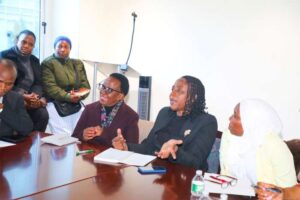
The meeting will bring together senior officials from EAC finance ministries, national revenue authorities, parliamentary committees, and regional think tanks such as AFRODAD, Tax Justice Network Africa (TJNA), and FEMNET.
At stake is not only how East Africa raises and spends its money, but also how it positions itself in the global conversation on financial justice and debt reform. Building a unified East African voice will be essential for influencing international negotiations on taxation and debt restructuring.
A turning point for fiscal self-reliance
As the EAC advances toward its Vision 2050 agenda – which prioritises industrialisation, integration and sustainable growth – domestic resource mobilisation remains central to reducing dependence on external financing.
For the Entebbe meeting to be truly profitable, delegates must emerge with concrete, time-bound recommendations that move beyond diagnostics to implementation – from improving tax systems and transparency to reforming debt governance and strengthening fiscal discipline. If successful, the Entebbe dialogue could mark the beginning of a more fiscally sovereign and economically resilient East Africa – one capable of financing its own development on fairer and more sustainable terms.