By Business Insider Correspondent, Kampala
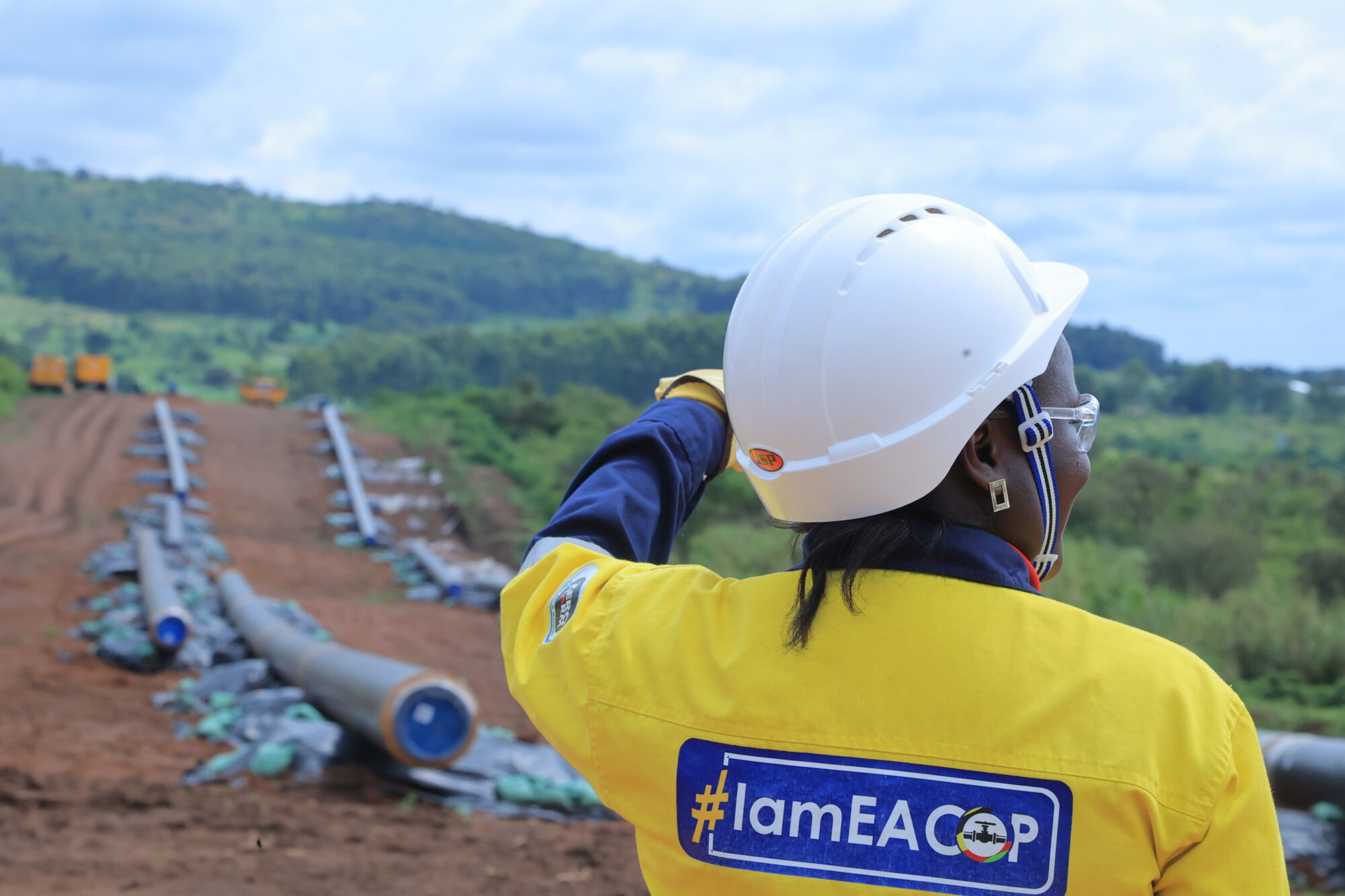
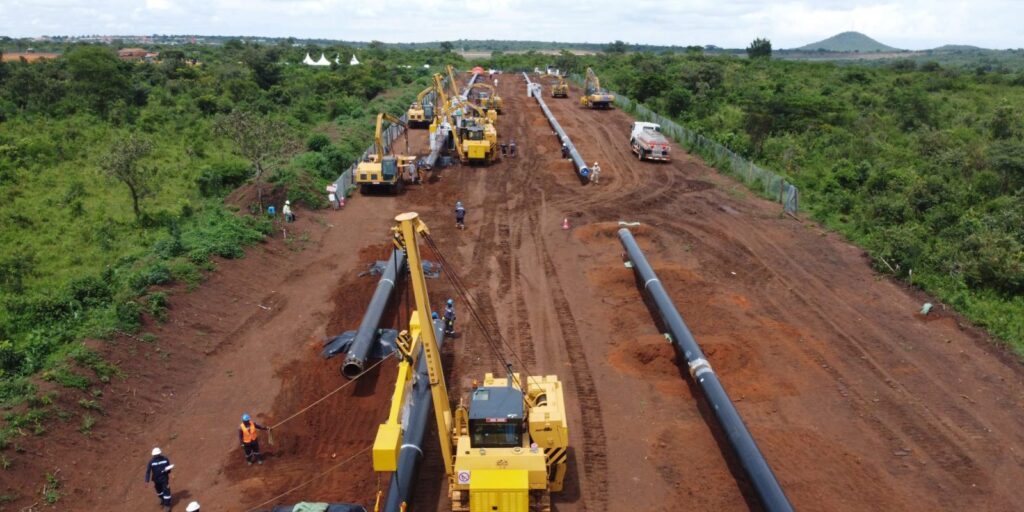
Uganda’s ambition to become a regional oil exporter has moved a major step forward, with authorities announcing that three-quarters of the US$5 billion East African Crude Oil Pipeline (EACOP) has now been constructed.
The update marks the most significant progress yet on a project that has faced nearly two decades of delays, legal challenges, financing hurdles and sustained criticism from environmental groups.
The 1,443-kilometre heated pipeline, stretching from oilfields in Uganda’s Albertine Graben to the Tanzanian port of Tanga on the Indian Ocean, is a critical component of the $15 billion Lake Albert oil development led by TotalEnergies and China’s CNOOC.
Production target set for late 2026
Uganda’s state-run Petroleum Authority of Uganda (PAU) said on Wednesday that the country is now targeting the second half of 2026 to begin crude production from the Tilenga and Kingfisher fields. The long-awaited start date hinges on the timely completion of EACOP, which must be operational before commercial exports can flow.
Ernest Rubondo, the PAU’s chief executive, said in a statement that all pipeline segments have been delivered to storage and construction yards along the route in both Uganda and Tanzania. So far, US$3.3 billion has been invested in the pipeline alone, with TotalEnergies holding a 62 percent stake, and the remaining shares split among the national oil companies of Tanzania and Uganda as well as CNOOC.
Development activity accelerates in Uganda
Uganda is simultaneously pushing ahead with upstream development. Rubondo noted that more than US$4 billion is currently being invested in the country’s petroleum sector between 2025 and 2027 to prepare for production, including drilling, infrastructure and processing facilities.
Progress at the major fields is gathering pace with Tilenga project construction reaching 60 percent of drilling and associated development works completed and Kingfisher project being 74 percent complete, putting it ahead of schedule.
These two fields, located in the ecologically sensitive Albertine rift basin, are projected to produce a combined 230,000 barrels per day at peak output.
Regional Economic Stakes High
Once operational, EACOP will be the world’s longest electrically heated crude pipeline, designed to transport waxy Ugandan crude at consistent temperature across vast terrain. For Uganda, the project underpins plans to diversify its economy and generate billions in annual export revenues.
Neighbouring Tanzania stands to benefit as well, earning transit fees, creating jobs, and expanding infrastructure around the Tanga port. The pipeline also positions Tanzania as a strategic regional energy corridor.
Environmental Scrutiny Remains
Despite the milestone, EACOP continues to face resistance from climate activists and financial institutions concerned about environmental risks, displacement, and its footprint within protected ecosystems, including wildlife corridors. Several Western banks have publicly declined to finance the project.
However, both governments maintain that EACOP meets international environmental and social standards and argue that oil revenues are essential for long-term economic transformation.
A new phase for east African energy If the current momentum holds, East Africa could export its first crude oil within 18 months – a landmark moment for a region long seen as an emerging hydrocarbons frontier. For Uganda, which discovered its first commercial reserves in 2006, the announcement signals that the finish line, after years of uncertainty, may finally be in sight.