By Elizabeth Hombo
Tanzania’s ambitious public procurement reforms – designed to ring-fence 30 percent of government tenders for youth, women, older persons and people with disabilities – are facing serious implementation challenges, raising questions about inclusivity, digital readiness and transparency in the country’s Sh30 trillion procurement market.
Despite a clear legal framework and the introduction of a national electronic procurement platform, participation by special groups remains strikingly low, particularly in urban councils such as Ubungo in Dar es Salaam.
The 30% rule: A bold policy with limited delivery
The Public Procurement Act of 2023 and its 2024 Regulations require all public institutions to allocate 30 percent of their procurement budgets to designated special groups. Under the allocation framework: women – 10 percent, people with disabilities – 10 per cent, youth – 5 per cent and older persons – 5 percent.
The policy was introduced after it became evident that these groups were largely excluded from public procurement opportunities.
To support implementation, the Public Procurement Regulatory Authority (PPRA) developed guidelines aimed at helping procuring entities and beneficiary groups understand the legal requirements.
However, performance data suggests that the gap between policy intent and actual delivery remains wide.
Paltry 2% compliance recorded
An analysis of various audit and procurement system reports shows that only two percent of the intended 30 percent allocation has effectively reached special groups.
The 2025 Methodology for Assessing Procurement Systems (MAPS) review found that only two percent of audited procuring entities complied fully with the legal requirement to reserve 30 percent of their procurement budgets.

Similarly, the 2020/21 report by the Controller and Auditor General (CAG) revealed that out of 86 audited institutions only two fully complied with the 30 per cent requirement with three allocating below the required threshold.
Some 81 institutions (94 per cent) allocated nothing at all.
These findings point to systemic weaknesses in enforcement and oversight.
The role of NeST: Reform meets digital reality
To improve transparency, efficiency and accountability, the government introduced the National e-Procurement System of Tanzania (NeST) in July 2023. Under Section 73 of the Public Procurement Act 2023, all procurement, supply and disposal processes must be conducted electronically through NeST.
The platform enables digital tender publication, bidder registration, evaluation, contract awards, payments and e-auctions. It also records an audit trail and complies with international Open Contracting Data Standards (OCDS).
As of April 2024, 77,595 tenders had been published on NeST, with a total projected value of TSh30.12 trillion. By June 2024, 1,147 procuring entities were registered on the system.
If the 30 percent rule were fully implemented, more than TSh9 trillion would be channelled to special groups.
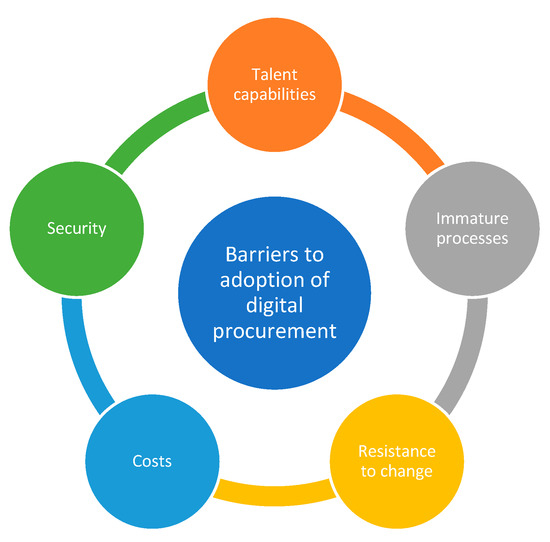
Yet digital transformation has introduced new barriers.
Procurement system assessments indicate that many potential beneficiaries lack the technical capacity, capital and digital literacy to navigate the platform.
In Ubungo Municipality, several small traders and contractors interviewed reported little or no awareness of NeST or the 30 per cent allocation policy.
Structural barriers beyond technology
Reports highlight several key constraints:
- Limited legal awareness among procurement officers
- Absence of a comprehensive national procurement strategy
- Complex and opaque tender procedures
- Limited access to capital and bid securities
- Low technical capacity in bid preparation and contract management
A 2022 study by the Economic and Social Research Foundation (ESRF), which surveyed 3,832 women-owned businesses, found that only 242 had applied for public tenders.
Of those, 95.9 per cent reported being asked for financial bribes, while 8.1 per cent reported being solicited for sexual favours.
Such findings raise deeper governance concerns within the procurement ecosystem.
PPRA defends reform progress
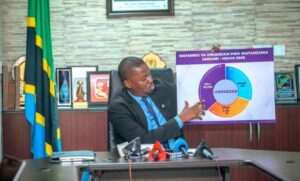
The PPRA Director General, Dennis Simba, insists that the authority was established to ensure that public procurement benefits citizens. He acknowledges that implementation remains challenging but points to increasing outreach efforts.
According to Simba, the authority has conducted nationwide awareness campaigns and targeted training programmes, including initiatives for visually impaired groups where Braille materials and audio learning tools were provided.
Speaking to Business Insider in his Dodoma Office, he also cited a recent case involving a rural electrification project funded by the World Bank, where negotiations led to a greater share of contracts being awarded to local firms. As a result, more than TSh766 billion reportedly remained within the domestic economy.
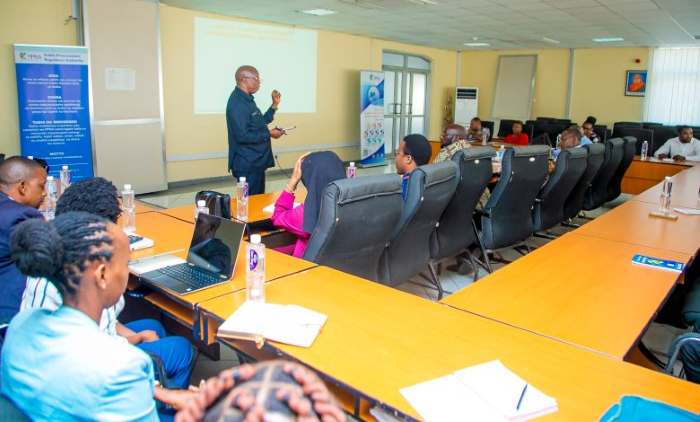
Simba argues that the reform trajectory is positive compared to two decades ago, when public tenders were widely perceived as accessible only to a small circle of established contractors.
Business implications: Inclusion as economic policy
Public procurement in Tanzania represents one of the largest economic channels for state-driven growth. Failure to implement the 30 per cent allocation undermines efforts to:
- Expand SME participation
- Reduce poverty
- Deepen domestic value chains
- Improve income distribution
- Strengthen public trust in state institutions
At the same time, weak statistical reporting within NeST – including the absence of easily downloadable contract data by entity – raises transparency concerns flagged in the 2025 MAPS review. For Tanzania’s broader economic reform agenda, procurement inclusion is not merely a social objective; it is a macroeconomic lever. Redirecting even a fraction of the projected TSh30.12 trillion procurement value to youth- and women-led enterprises could stimulate enterprise growth, job creation and domestic capital formation.