By Business Insider Reporter and Agencies
While US uses tariff as a whip to many countries it does trade withm China has decided to take a different route.
The far East country has declared its readiness to eliminate all tariffs on imports from the 53 African countries with which it maintains diplomatic ties – a move that could significantly alter the trade dynamics for East Africa, which in recent years has been looking more to the east for bilateral ties.
Announced at a recent China-Africa cooperation forum, the decision positions China as a more accessible and reliable trade partner at a time when African exports, particularly from East Africa, face growing uncertainty in the US market.
East African economies – including Kenya, Tanzania, Uganda, Rwanda and Ethiopia – stand to benefit significantly from expanded market access to China, particularly for their agricultural products, textiles, minerals, tea and coffee.
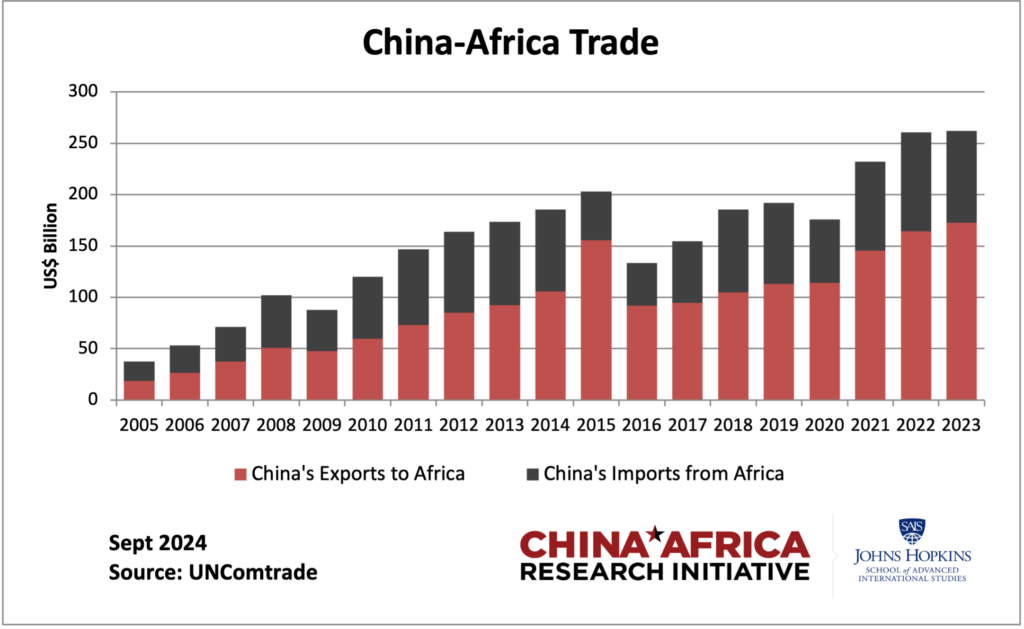
With China already the continent’s largest trading partner for 15 consecutive years, the removal of tariffs could enhance competitiveness, diversify export markets, and reduce over-reliance on Western trade frameworks such as the Africa Growth and Opportunity Act (AGOA), which is currently under threat from renewed US protectionism.
In 2023, Africa exported goods worth approximately $170 billion to China.
Under the current trade structure, many East African nations have struggled to scale up exports due to tariff barriers and limited product competitiveness.
The zero-tariff initiative builds upon a prior agreement that applied only to the 33 least-developed African countries, now expanding to include larger economies such as South Africa and Nigeria.
China has not specified when the new policy will come into force.
Strategic win amid US trade tensions
The announcement comes as the United States, under President Donald Trump’s revived influence, considers imposing steep new tariffs on African imports.
The US had planned to increase tariffs up to 50% for Lesotho, 30% for South Africa and 14% for Nigeria, triggering concern across the continent.
East Africa is also vulnerable, particularly if AGOA is rolled back or replaced with more restrictive frameworks.
In 2024, the US imported goods worth $39.5 billion from Africa, with a large share entering duty-free under AGOA. But that preferential treatment is increasingly at risk, making China’s zero-tariff offer both timely and geopolitically strategic.
For East African Community (EAC) member states, this shift could accelerate efforts to align export standards with Chinese demand, expand infrastructure linked to trade, and position Special Economic Zones (SEZs) to target Asian markets.
Countries like Tanzania and Ethiopia, with strong mining and agricultural output, could gain new leverage in negotiating better terms of trade.
One exception: Eswatini
Eswatini is the only Africa country excluded from this tariff-free scheme due to its diplomatic recognition of Taiwan – a move that clashes with Beijing’s “One China” policy.
All EAC countries maintain diplomatic relations with China and thus qualify for the benefits.
Looking ahead
While the full implementation timeline remains unclear, China’s zero-tariff initiative signals a major shift in global trade alignments.
For East Africa, it presents both a challenge to reorient trade strategies and a golden opportunity to increase exports, attract investment, and forge deeper economic ties with Asia’s largest economy. As the geopolitical competition between China and the US intensifies, East African nations will have to carefully balance their partnerships – but with tariffs falling in Beijing and potentially rising in Washington, the economic calculus may be tilting eastward.