By Business Insider Reporter
Over the past four years under President Samia Suluhu Hassan’s administration, the Government Chemist Laboratory Authority (GCLA) has undergone a major transformation, reinforcing its role as a key national institution in safeguarding public health, enhancing justice, and regulating industrial chemicals.
Over the past four years GCLA has seen rapid growth in laboratory infrastructure, forensic capacity, chemical regulation and digital service delivery – aligning with the government’s broader push for science-based public services.
Forensic science at the forefront
Between July 2021 and May 2025, GCLA conducted forensic investigations on 175,561 samples, marking a 21% increase from the 155,817 samples examined in 2021/2022.
These tests spanned criminal forensics (such as poisoning, assault, and child trafficking), environmental monitoring, industrial product quality, medical diagnostics, and public safety.
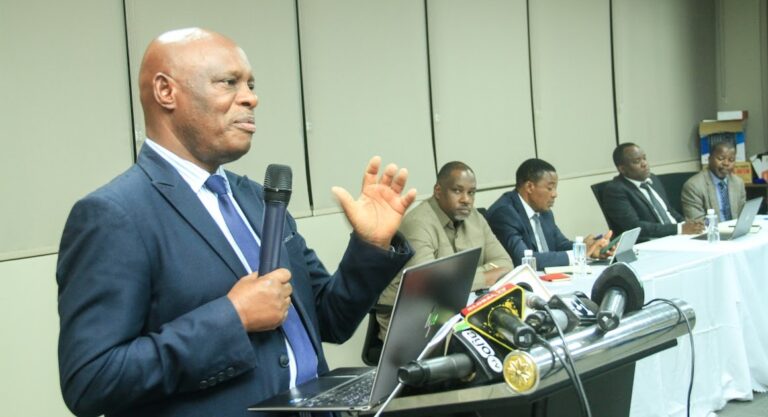
“This expansion reflects growing trust among stakeholders such as the police, TRA, health institutions, and environmental regulators. It’s about justice, safety, and transparency,” said GCLA director general, Dr. Fidelice Mafumiko when talking to journalists in Dar es Salaam.
GCLA’s findings have significantly contributed to Tanzania’s criminal justice system, supporting over 1,200 stakeholders including prosecutors, police and medical personnel with evidence management training.
According to Dr. Mafumiko, the laboratory has also played a crucial role in confirming parentage, processing organ transplants, and analysing toxic substances both before and after death.
Investments in equipment and accreditation
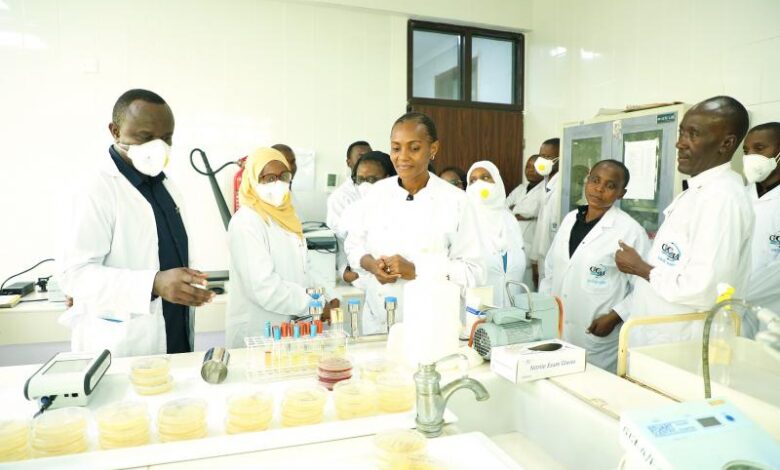
Under President Samia’s sixth-phase government, Dr. Mafumiko noted, the agency invested TSh17.8 billion to procure 16 major and 274 minor modern lab instruments – up from TSh13.6 billion in previous years.
The new equipment has improved the speed and reliability of forensic investigations and helped the agency attain ISO 17025:2027 accreditation for six laboratories including human genetics, microbiology, toxicology, environmental analysis, and regional labs.
“These certifications elevate Tanzania’s position in international forensic science and ensure our results meet global standards,” said the agency CEO.
Expanding chemical regulation
Through the Industrial and Consumer Chemicals (Management and Control) Act, GCLA intensified the regulation of hazardous chemicals.
He noted for instance that from 2021 to 2025, the number of registered chemical businesses rose from 2,125 to 3,835 – an 81% increase.
The agency also inspected over 8,500 chemical warehouses and issued more than 67,000 chemical import/export permits, a 40% rise over four years.
Key chemical imports – such as ammonium nitrate, sulfur, and sodium cyanide – used in mining and exported to Zambia and the DRC via Dar es Salaam and Tanga ports also rose dramatically, he noted.
For example, sulfur imports surged by 370% to 1.8 million tonnes in 2025, highlighting Tanzania’s growing role in the regional mining value chain.
“The growth is a direct outcome of improved port infrastructure and strategic diplomacy with neighbouring countries,” said GCLA.
Infrastructure and digital innovation
Dr. Mafumiko said the agency completed the construction of its new TSh8.1 billion headquarters in Dodoma and is building regional labs in Mtwara and Dar es Salaam to serve coastal and southern zones.
New staff housing units were also completed at key border posts such as Namanga and Rusumo to support 24-hour operations.
In tech innovation, he said, GCLA developed several internal digital systems including an electronic permit and registration portal (CCMP), a virtual court testimony system, expert witness management systems and integration with government platforms like TANCIS, GePG, and GovESB.
As a result, permit processing times dropped from seven days to under one hour, saving time and costs across the justice and trade ecosystems.
Looking ahead
The agency contributed nearly TSh4 billion to the government’s general fund during the four-year period and secured unqualified audit opinions from the Controller and Auditor General (CAG) for all four years.
Despite challenges posed by rapid scientific advances and limited public awareness, GCLA aims to further modernise its services.
Plans include expanded lab facilities, enhanced data security, and broader stakeholder education to improve compliance and public health outcomes.
“As science evolves, we are committed to evolving with it—through technology, training, and partnership,” the agency said in a statement. GCLA’s four-year performance reflects a broader shift in Tanzania’s institutional landscape under President Samia: one where science, law, and innovation converge to deliver better governance and service to the people.