By Business Insider Reporter
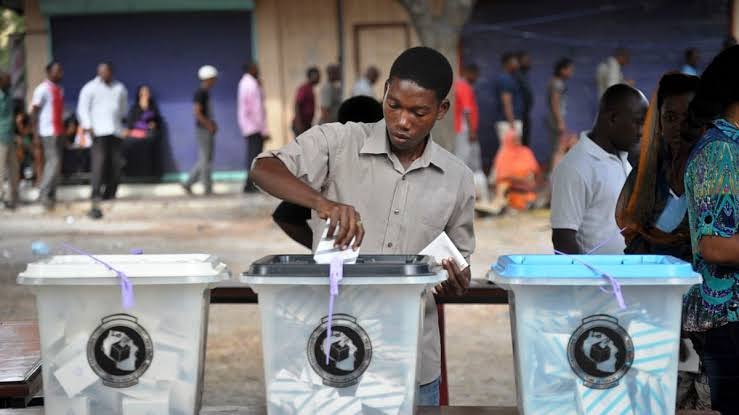
The ongoing political altercations hava raises na lot of concerns as Tanzania heads into the October 2025 general elections.
Tanzania’s status as an emerging market is caught in a delicate balance – between democratic promise and political uncertainty, economic potential and investor caution.
The broader East African context, as outlined in The Paradox of Potential, offers valuable insights for understanding the underlying investment risks Tanzania now faces.
Political stability
Tanzania is regarded, currently, to be politically stable, lingering undercurrents notwithstanding.
Compared to Sudan, Ethiopia, and the DRC, Tanzania appears more politically stable on the surface.
The ruling party, Chama Cha Mapinduzi (CCM), has maintained uninterrupted power since independence, offering predictability.
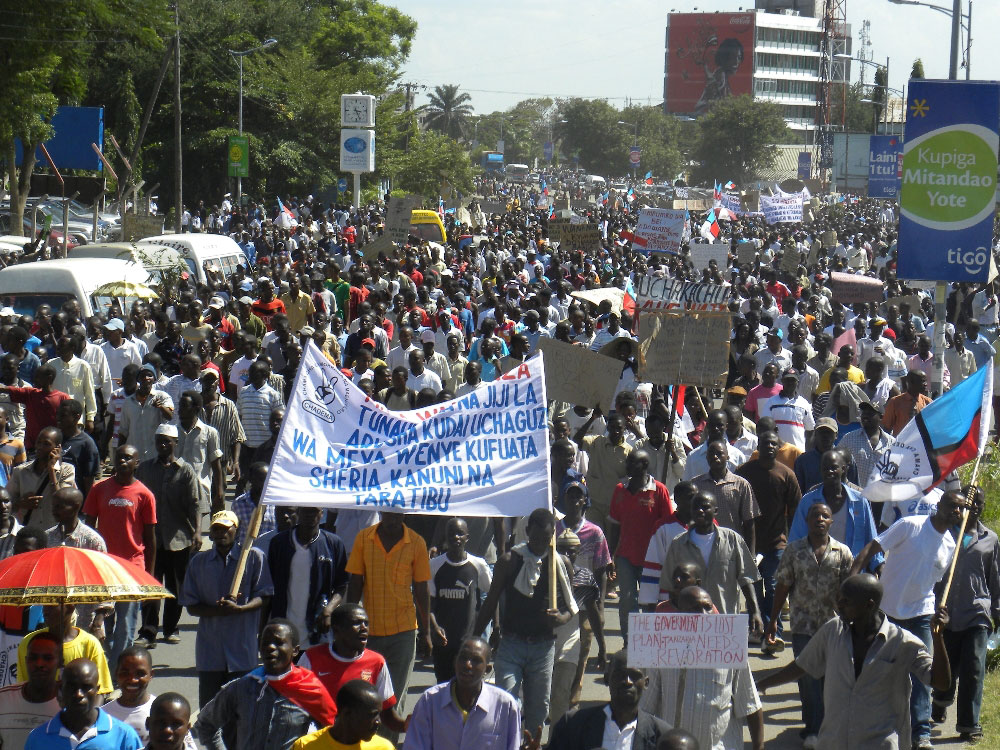
But if you look deep, then situation is not calm as it seems. Disputes between then ruling party and government on one hand and the opposition, mainly the main opposition party, Chadema, suggests that things are not normal.
Altercations between the state and several groups, basically church leaders and activists also suggests that things are far from calm.
Worse still, on recent days we have witnessed serious misunderstandings within the ruling CCM, with some of its prominent members coming out to criticize the party and the government openly.
CCM nomination (of members iof parliament and councilors candidates) process has been riddled with reports of massive corruption, intimidation and abuse of prevailing rules, raising concerns that the outcome of the process will be flawed if something is not done to correct the situation.
All this put the pre-election environment tense and stakeholders have been watching it closely.

Lingering factors
Though the government ahs assured the public that preparations for the general elections are going on smoothly, butbvthere are a number of sticky issues.
Shrinking democratic space is one of them. Though President Samia Suluhu Hassan ushered in a more conciliatory political tone after taking office in 2021, opposition groups, including political parties such as Chadema and ACT Wazalendo; activists and media have continued to express concern over delayed electoral reforms, unequal access to public platforms and suppression of freedom of expression.
There is also issue of delayed constitutional review. The much-anticipated constitutional reforms remain shelved despite President Samia promise that gave a three years deadline to ensure that the country has a new constitution.
Critics argue that due to flawed laws, electoral institutions lack the independence to ensure free and fair polls.
There is also security concerned fuelled by a spat of disappearance and abduction of people, something which has been going on for years now.
While not marked by widespread violence, Tanzania’s political environment remains tightly controlled and this perceived repression contributes to rising political risk premiums.
Economy fundamentals uncertainty
These underlying political dynamics create an atmosphere of institutional uncertainty for investors, particularly in sectors tied to long-term regulatory frameworks such as mining, telecoms and agriculture.
Tanzania’s economic fundamentals remain relatively sound, with projected GDP growth of around 5.4% in 2025, driven by agriculture, mining and construction.
However, currency depreciation and inflationary pressure present risks that could be amplified by political uncertainty:
The Tanzanian shilling has lost value sharply since late 2024, affecting import costs and fuelling inflation, which hit 3.3% in March 2025, the highest since 2016.
Dollar scarcity and increased demand for foreign exchange to fund capital goods have worsened the situation, affecting profit margins for multinationals and SMEs alike.
The cost of sovereign debt servicing is rising due to reliance on foreign-denominated loans, increasing fiscal pressure just months before the election.
Without clear post-election fiscal direction or a credible medium-term strategy to stabilise the currency, investor confidence may weaken further.
Risks and opportunities
Despite these macroeconomic and political headwinds, certain sectors continue to show resilience and attract capital:
Renewable energy and power
Tanzania’s inclusion in AfDB’s Mission 300 (e.g. the recent $282m investment to power Zanzibar and Mafia islands) underlines the country’s renewable energy potential.
Clean cooking energy also aligns with international climate finance goals.
Agriculture and agro-processing
The government has prioritised irrigation, storage and market linkage initiatives. However, political interference in crop pricing and marketing boards (e.g., cashew and coffee) remains a concern.
Mining
Tanzania is rich in critical minerals including graphite, lithium, and gold. But past disputes with investors (e.g., the Barrick-Acacia saga) continue to cast a long shadow. Investors seek legal predictability – particularly with the pending review of the 2017 Mining Laws under the new investment climate.
Tourism
Zanzibar and Northern Circuit destinations are rebounding post-pandemic. Still, tourism remains vulnerable to currency shifts and regional instability (e.g., if the DRC conflict disrupts East African cooperation).

Market risks
The situations in Ethiopia, Kenya and the DRC provide critical lessons for Tanzania.
Ethiopia’s FDI boom shows how sectoral liberalisation (coffee and banking) can attract capital despite conflict. Tanzania could follow suit in sectors like fintech or energy if regulatory clarity is offered post-election.
Kenya’s fiscal struggles reveal the danger of over-reliance on foreign debt. Tanzania must ensure a balanced debt portfolio and prioritise domestic revenue mobilisation.
The DRC conflict’s disruption of mining underscores the fragility of resource-based economies without robust security guarantees.
While Tanzania remains relatively peaceful, ensuring the protection of mining corridors is vital, especially with growing global demand for transition minerals.
Strategic advice for investors
Diversify exposure
Balance Tanzanian portfolios with investments in relatively stable EAC partners such as Rwanda or Uganda to cushion political or currency shocks.
Focus on resilient sectors
Target sectors aligned with long-term policy priorities (Mission 300, agro-processing, tourism diversification) that are less prone to post-election disruptions.
Monitor post-election policy signals
Track commitments from the next administration on reforms, especially regarding the judiciary, land rights, and private sector taxation.
There is a need for investors to engage with local stakeholders. They should forge partnerships with local firms, civil society actors and regional institutions like the East African Business Council (EABC) for insight and influence.
Opportunity in volatility
But all is not lost. There is hope as there is time to ensure that the worst does not happen.
But the truth is that Tanzania stands at a crossroads. The October 2025 general election will serve as a litmus test for its democratic maturity and economic credibility.
While East Africa faces mounting political and economic turbulence, Tanzania’s relative calm and abundant potential could position it as a beacon of stability – if transparency, reforms, and investor protection are prioritised.
For investors, Tanzania might be a paradox: a market ripe with opportunities, yet shadowed by uncertainty. Government and other players should take note of this and apply decisive steps to ensure that the country remains investor friendly. As always in frontier markets, patient capital, local knowledge and policy engagement will determine who wins in the long run.