
By Business Insider Reporter
Smallholder farmers and fishers in Lake Victoria across East Africa are set to benefit from an innovative cold storage solution designed to tackle post-harvest losses, improve food security, and boost incomes.
The affordable and portable cold storage box, known as RADiCool, is the result of a pioneering collaboration between UK-based Aston University and agricultural tech firm RAD Global.
The cold boxes are particularly promising for Tanzanian farmers, fishermen and traders, many of whom operate without access to reliable electricity or cold chain infrastructure.
In regions like Mwanza, Kigoma, and the Lake Victoria basin, post-harvest losses in perishable goods like fish and fresh produce can reach up to 40%, mostly due to inadequate storage and transport conditions.
“RADiCool is a game-changer,” said Tim Messeder, founder of RAD Global. “It brings together advanced cooling technology with the practical needs of rural farmers and traders.”
Designed for Africa, powered by the sun
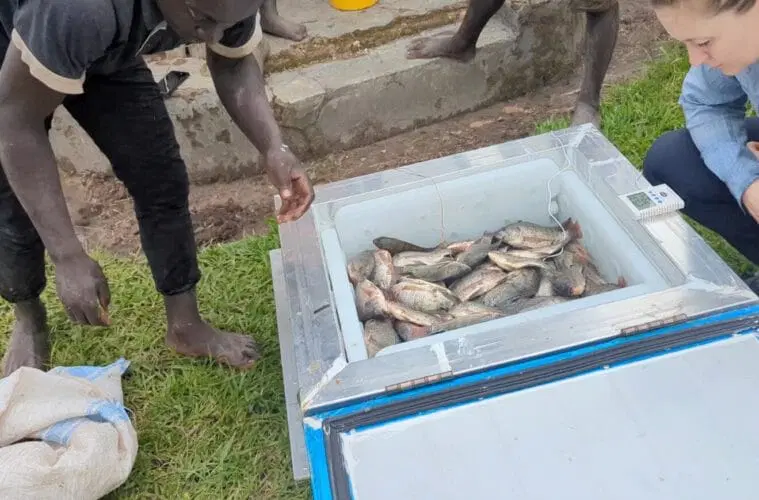
Developed with funding support from the Efficiency for Access Research and Development Fund, the RADiCool cold box uses phase change material (PCM) to maintain refrigeration temperatures for more than 24 hours without grid electricity.
The PCM panels are frozen using solar-powered hubs, making the technology ideal for off-grid rural communities.
The cold box is lightweight and specifically designed to fit on motorbikes – the most common means of transport in rural Tanzania and neighbouring countries.
The system cools produce or fish from 25°C to refrigeration temperature within four hours, ensuring freshness even during long transport journeys from farms to markets.
Integrated Internet of Things (IoT) sensors allow real-time temperature and GPS monitoring, giving farmers and vendors confidence in maintaining quality control from field to market.
Direct impact for farmers
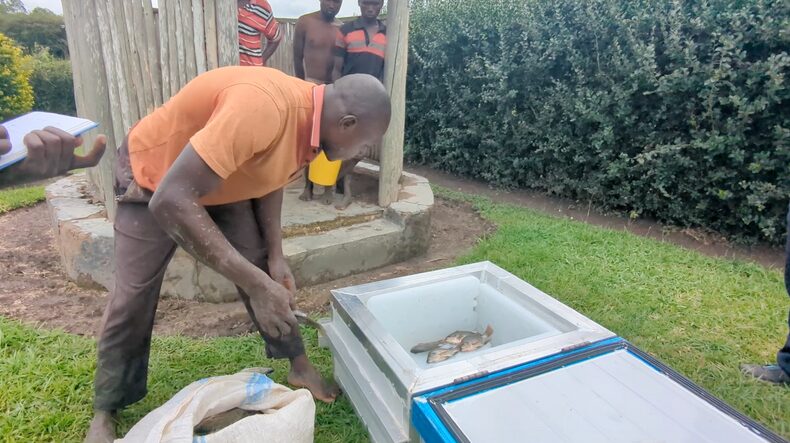
For Tanzanian smallholder farmers and women fish vendors – many of whom transport goods over long distances in the hot sun – the ability to preserve food for 24 to 48 hours could significantly reduce waste and improve profits.
Field studies in Uganda showed that 42% of fish traders regularly suffer financial losses due to spoilage.
In Tanzania, the situation is comparable, especially in remote agricultural regions where markets are several hours away from production areas.
“This innovation directly addresses the needs of small-scale traders like us,” said Maria Temba, a fish vendor in Mwanza. “If we can keep our catch fresh longer, we sell more, waste less, and earn better income.”
Scalable and sustainable
RAD Global and Aston University are now preparing for commercial rollout in Tanzania, Uganda, and beyond.
The next phase includes partnerships with local manufacturers and expanding field trials across East Africa. A pay-per-use model is being introduced to make the boxes more accessible to low-income users, particularly women and youth-led enterprises.
Supporting partners, including ThinkAqua UK, Therma-Inova, and Dulotrop Uganda, will help with community training, impact evaluation, and long-term sustainability of the cold chain ecosystem.
“RADiCool demonstrates the power of innovation for development,” said Dr Ahmed Rezk, senior lecturer at Aston University. “Our goal is to offer affordable, practical tools that empower communities.”
A Boost for agriculture agenda
Tanzania’s agriculture and fisheries sectors have been earmarked for modernisation under the Agricultural Sector Development Programme II (ASDP II) and the national Blue Economy framework. Cold chain logistics is a critical missing link in reducing post-harvest losses, improving food safety, and connecting rural producers to urban and export markets. With climate change and food insecurity becoming pressing challenges, the rollout of off-grid cold storage solutions like RADiCool could help build resilience in Tanzania’s food systems and support the country’s goal of reducing food waste by 50% by 2030.