

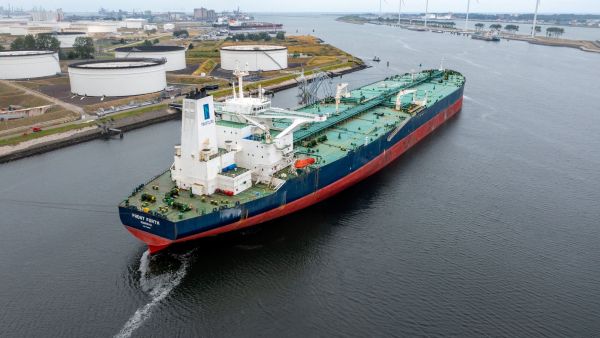
London. The price of oil fell below US$90 a barrel on Tuesday for the first time since August, after President Donald Trump said that renewed US attacks on Iran were “highly unlikely”.
Brent crude, the global oil benchmark, fell as much as 3.7 percent to US$89.16 a barrel in morning trading in New York before settling 1.2 percent lower at US$91.49. West Texas Intermediate, the US benchmark, fell as low as US$83.88 a barrel.
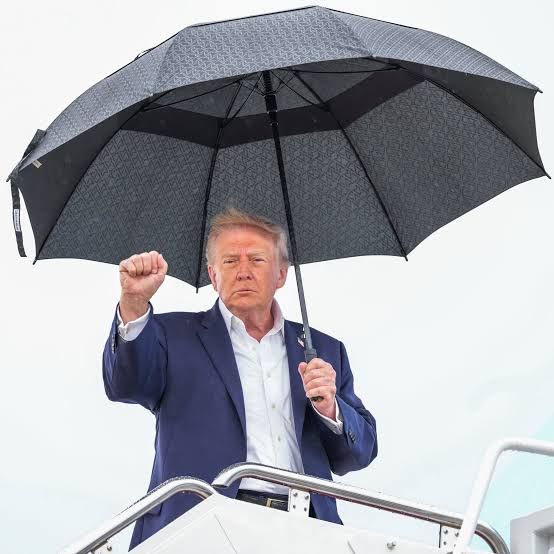
The easing of prices came after Trump said late on Monday that there was “positive momentum” behind US-Iran negotiations, adding that “Iran militarily is over”. Before the Republicans’ historic defeat in last week’s US midterm elections, the president had threatened to “finish” the war by striking Iran again, which he said “would be very easy to do”.
Brent crude prices have fallen about 22 percent in November, which, if it holds, would be the biggest monthly drop since 2020.
The fall in oil has boosted stock markets globally, helping them rebound from last week’s sharp technology-led sell-off. The Stoxx Europe 600 index rose 0.4 percent on Tuesday, adding to a 1.3 percent increase on Monday. Japan’s Topix climbed two percent on Tuesday.
However, US stocks dropped after higher-than-expected inflation data prompted traders to add to their expectations of rising interest rates — highlighting the economic impact of this year’s surge in energy prices.
The S&P 500 closed 0.4 percent lower and the Nasdaq 100 was down 0.6 percent. But analysts have pointed out that a sustained fall in oil prices could lift stocks and bonds further.
“If there is further progress towards a US-Iran deal to end the conflict, it would help to sustain lower energy prices and ease pressure on major central banks, including the Fed, to keep hiking rates,” said Lee Hardman, senior currency economist at MUFG.
Global energy prices have soared this year, sparked by the de facto closure of the crucial Strait of Hormuz shipping lane after the US and Israel began their military campaign against Iran at the end of February.
Higher energy prices have prompted major central banks to reverse plans to cut interest rates this year, with most banks instead raising rates to tackle the risk of inflation. The Federal Reserve, European Central Bank, Bank of England and Bank of Japan have all raised rates this year.
But oil prices have dropped over the past week, following signs that Washington’s resolve to continue the war could be waning. Vice-president JD Vance pointed directly to the Iran war as the reason for the Republicans’ drubbing last week, raising hopes that further escalation might be less likely.
Government bonds have also strengthened in recent weeks, pushing yields lower as energy prices have fallen. Yields rose across government bond markets on Tuesday, however, after the US inflation data.
Evelyne Gomez-Liechti, multi-asset strategist at Mizuho, said that “with no formal deal confirmed and disruption around Hormuz not fully resolved”, she would be “wary” of adding to long positions in government bonds “purely on the back of cheaper oil”.