By A Correspondent, Dubai
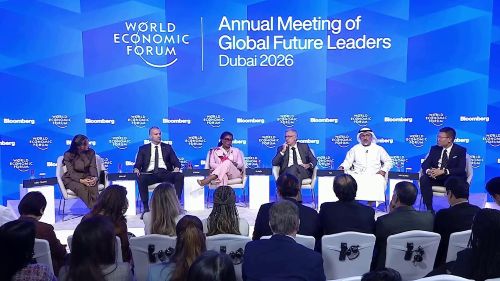
The World Economic Forum (WEF) has brought together more than 500 global leaders and experts in Dubai to advance practical solutions for resilient economic growth, artificial intelligence (AI), climate challenges and leadership in an increasingly uncertain world.
The inaugural Annual Meeting of Global Future Leaders, held from October 13 to 15 in collaboration with the United Arab Emirates (UAE) Government, brought together 78 senior officials from governments and international organisations, alongside more than 150 chief executives and board chairs.
The three-day meeting focused on how governments, businesses and emerging leaders can translate technological advances and changing global conditions into economic opportunities while strengthening resilience against geopolitical, demographic and environmental shocks.
Key outcomes included the launch of a Leadership Commitment Framework, recognition of 20 emerging leaders through the Future 20 initiative, a global challenge to apply agentic AI to community problems, and new research examining AI-driven growth and digital infrastructure.
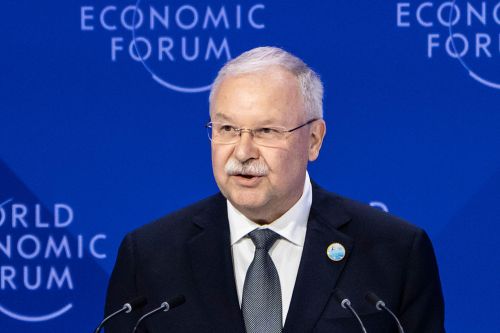
“The future should not be governed by yesterday’s assumptions,” said Alois Zwinggi, WEF President and Chief Executive Officer, emphasising the need to turn dialogue into action and build resilience for the years ahead.
UAE Minister of Cabinet Affairs Mohammad Al Gergawi said the meeting aimed to foster partnerships that deliver tangible results and opportunities with lasting benefits for future generations.
AI and resilient growth
Artificial intelligence emerged as a central theme, with participants examining its potential to improve productivity, create better jobs and expand human capabilities, alongside concerns about accountability, cybersecurity and public trust.
The UAE Government and the WEF’s Global Shapers Community launched the Global Agentic AI Award and Innovation Challenge, a year-long initiative inviting all 500 Global Shapers hubs to use agentic AI – systems capable of undertaking tasks with varying degrees of autonomy – to address challenges in their communities.
The initiative will award US$1 million annually over five years, with winners recognised at the 2027 meeting.
The Centre for Intelligent Future and Mohamed bin Zayed University of Artificial Intelligence also expanded access to AI training through the AI for All programme, which aims to equip young leaders in 100 cities with practical skills in emerging AI technologies and responsible governance.
Research released at the meeting highlighted the economic potential of AI across the Middle East and North Africa (MENA). The report Unlocking Value: AI for Resilient Growth in MENA estimates that AI could unlock more than $1 trillion in economic and sustainability value across the region by 2030.
However, realising this potential will require stronger collaboration between governments, financial institutions, energy providers and businesses to close the gap between AI adoption ambitions and actual implementation.
Another report, Powering AI at Scale: Optimizing Hyperscale Data Centre Infrastructure in MENA, examined the infrastructure required to support expanding AI use, including electricity, water and data-centre capacity.
It found that new data centres in the region could connect to electricity grids within two to five years, compared with more than a decade in mature markets, while underscoring the need for integrated planning and sustainable resource management.
Resilience beyond technology
Economic resilience also featured prominently, particularly as supply-chain disruptions, geopolitical uncertainty and rising government borrowing costs complicate policy decisions.
Participants explored approaches to reducing business vulnerability to external shocks, including lowering fixed operating costs and improving the ability of economies to adapt to changing conditions.
Opportunity Labs, introduced during the meeting, brought participants together to work backwards from desired future outcomes and identify practical actions that could be taken over the next decade.
Discussions included the potential development of a resilience index to measure progress and help direct investment towards climate adaptation.
The WEF, UAE Government and Dubai Future Foundation also expressed their intention to establish a Centre for Global Opportunities to expand access to opportunities for current and future generations of leaders. Other initiatives addressed water scarcity, cybersecurity and the conversion of measurable social outcomes into economically viable investments.
Preparing the next generation
The meeting also sought to connect emerging leaders with established decision-makers across government, business, academia, science and civil society. The Future 20 initiative spotlighted 20 young leaders developing approaches to technology, economic growth, resilience and sustainability, while the Leadership Commitment Framework introduced a self-assessment tool to help leaders evaluate their readiness for an increasingly complex world.