
By Our Correspondent, Kigali
Tanzania has established a legal framework for sharing revenues generated from carbon trading, in a move aimed at ensuring that communities involved in carbon projects receive a fair share of the economic benefits from climate change mitigation initiatives.
The framework is expected to strengthen investor confidence, improve transparency in carbon project management and reduce potential disputes over revenue distribution among investors, the government and communities that provide the natural resources underpinning carbon credit generation.
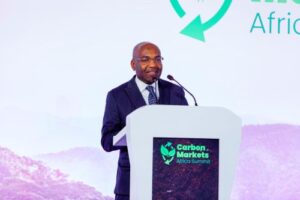
Speaking at a ministerial and technical leaders’ meeting held on the sidelines of the Africa Carbon Markets Summit 2026, which concluded in Kigali on October 15, 2026, Minister of State in the Vice-President’s Office (Union Affairs and Environment), Engineer Hamad Yussuf Masauni, said Tanzania’s revenue-sharing arrangement allocates the largest share of proceeds from forestry projects to resource owners.
Under the arrangement outlined by the minister, resource owners receive 61 per cent of the revenue, project developers take 31 per cent, while the government receives eight per cent.
The allocation provides a framework for determining how financial returns from carbon projects are distributed, addressing one of the key issues facing the development of credible carbon markets: ensuring that the communities protecting forests and other natural resources benefit from the commercial value generated through conservation.
For investors, a clear revenue-sharing mechanism can help reduce uncertainty over project economics, clarify the interests of participating stakeholders and support the development of long-term partnerships with local communities.
Masauni said carbon trading was an important component of Tanzania’s efforts to meet its commitments under the Paris Agreement, including its target of reducing greenhouse gas emissions by 30 to 35 per cent by 2030.
He emphasised that the country’s experience demonstrated the importance of strong legislation, clearly defined institutional responsibilities, digital management systems and equitable benefit-sharing arrangements in ensuring that carbon projects deliver measurable environmental and socio-economic outcomes.
“Tanzania is ready to cooperate with investors and other African and international partners in developing high-integrity, high-quality carbon projects to ensure that carbon trading benefits citizens and contributes to efforts to address climate change,” Masauni said.
The minister added that Tanzania supported greater cooperation among African countries to establish a coordinated carbon market framework that safeguards the continent’s interests and ensures that the benefits of carbon trading reach local populations.
“We want to see carbon markets working for the benefit of our people, while cooperating with our African brothers and sisters to build a common framework that protects the interests of our continent,” he said.
Tanzania advances carbon market participation
In a further step towards expanding its participation in international carbon markets, Tanzania has begun implementing carbon trading projects in line with the requirements of the Paris Agreement.

Masauni said that in August 2026, Tanzania signed four letters of authorisation for carbon credits eligible for use outside the country, following assessments by the National Carbon Project Assessment Committee.
Such authorisations are significant in international carbon markets because they can enable approved credits to be used towards climate commitments or other permitted purposes beyond the country where the underlying emission reductions or removals occur, subject to the applicable rules.
Their implementation also makes robust oversight important, particularly in accounting for authorised credits and ensuring that the same emission reductions are not claimed more than once.
For Tanzania, the challenge is to translate its regulatory framework into commercially viable projects that attract credible investment while delivering tangible benefits to communities and protecting the environment.
The country’s forests and other natural ecosystems can support carbon projects that generate income through activities such as conservation, restoration and improved land management. However, the long-term commercial viability of such investments depends on credible carbon accounting, independent verification, clear land and resource rights, and transparent arrangements for distributing revenues.
A well-regulated market could create opportunities for project developers, environmental service providers, local enterprises and communities, while helping Tanzania mobilise private capital for climate action.

The revenue-sharing framework is therefore an important step in aligning environmental conservation with investment and local economic development. Its effectiveness will ultimately depend on consistent implementation, transparent financial reporting and the ability of participating communities to verify that they receive the benefits to which they are entitled.
As African countries seek to strengthen their position in the global carbon economy, Tanzania is positioning a rules-based approach as a foundation for attracting investment, supporting climate commitments and ensuring that the economic value of environmental protection is shared more equitably.