By Our Correspondent
The East African Community (EAC) and Germany are seeking to deepen cooperation in pandemic preparedness, climate finance, pharmaceutical manufacturing and regional integration, in a partnership that could strengthen the region’s investment environment and resilience to economic shocks.
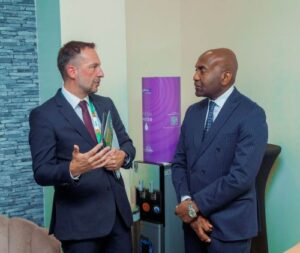
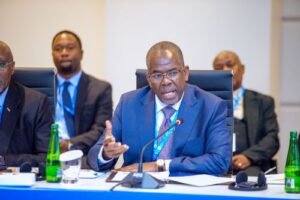
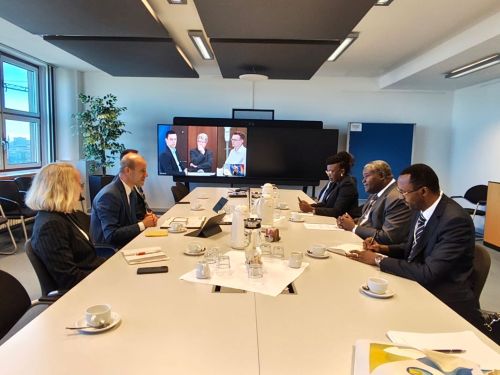
The renewed engagement follows high-level discussions in Berlin between EAC Secretary General Ambassador Stephen P. Mbundi, Germany’s Federal Minister for Economic Cooperation and Development, Reem Alabali-Radovan, and Philipp Knill, Head of the Africa Department at Germany’s Federal Ministry for Economic Cooperation and Development (BMZ).
According to an EAC statement dated 14 October 2026, the discussions focused on strengthening regional health systems, mobilising climate finance, improving trade infrastructure and expanding investment opportunities across the bloc.
A statement released recently say that the partnership comes as East African countries seek to strengthen their capacity to manage infectious disease outbreaks while developing more resilient health systems and attracting investment into strategic sectors.
For businesses, stronger regional preparedness could help reduce disruptions to trade, transport, tourism and supply chains caused by public health emergencies. Better regional infrastructure and closer policy coordination could also support cross-border investment and the movement of goods and services.
Health security investment expands
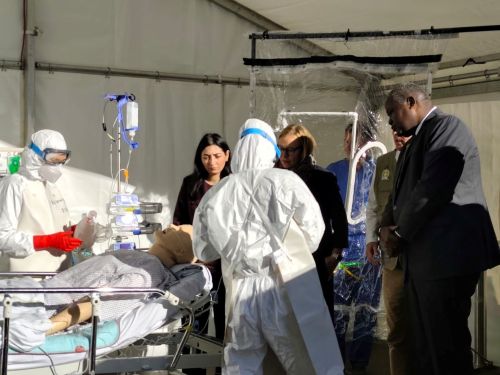
Germany’s support for regional health security has included training 500 laboratory specialists, procuring and deploying 10 mobile laboratories across EAC Partner States, and training 80 frontline experts to manage Ebola and other highly infectious diseases.
A further 30 clinical workers are undergoing training in Kinshasa, while another 50 are expected to begin frontline training in eastern Democratic Republic of Congo in November 2026.
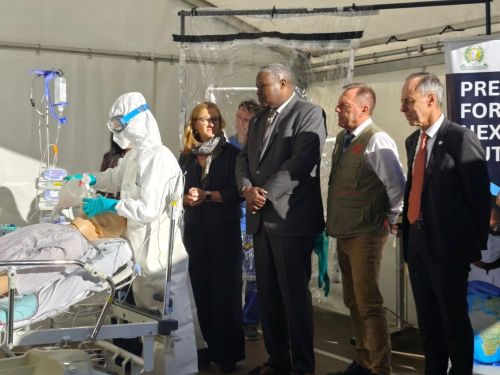
The initiatives were highlighted during an Ebola clinical management simulation exercise organised with support from Charité – Universitätsmedizin Berlin and the German development agency, Deutsche Gesellschaft für Internationale Zusammenarbeit (GIZ).
Mbundi commended Germany’s contribution, emphasising that infectious disease outbreaks pose substantial social and economic risks and require coordinated responses across national borders.
“The EAC has mobilised available resources to support the response to the Ebola outbreak in eastern DRC and strengthen preparedness in all EAC Partner States,” he said.
Germany’s development cooperation minister stressed the importance of rapid response, international solidarity and sustained investment in global health security to prevent and contain infectious disease outbreaks.
Beyond protecting public health, investment in laboratory capacity, trained personnel and disease surveillance can help countries identify outbreaks earlier and reduce the economic costs associated with prolonged emergencies.
Climate finance opens investment opportunities
Climate finance was another major item on the agenda, with Germany committing between €3 million and €5 million towards the development and co-financing of a regional climate project.
The EAC said it had made progress in developing a pipeline of climate finance projects and called for stronger partnerships to mobilise additional public and private investment.
The proposed financing could help advance regional climate initiatives, although the specific projects, implementation arrangements and expected investment returns were not detailed in the statement.
For East Africa, where agriculture, transport, energy and other economic activities face climate-related risks, greater access to climate finance could create opportunities for businesses involved in renewable energy, climate-resilient infrastructure, sustainable agriculture and environmental management.
Mobilising private capital alongside development finance will be important in scaling up projects beyond the limits of public funding. This will require clear project preparation, credible financial structures and transparent arrangements for measuring development and climate benefits.
Regional pharmaceutical manufacturing in focus
The talks also highlighted the need to strengthen pharmaceutical manufacturing within the region and explore pooled procurement of medicines, vaccines and other essential medical products.
Regional manufacturing could reduce dependence on external suppliers, improve the resilience of medical supply chains and create opportunities for investment in pharmaceutical production, distribution, storage and logistics.
Pooled procurement, meanwhile, could enable participating countries to combine demand when purchasing essential products, potentially improving purchasing power and supply coordination where appropriate systems are in place.
For investors, progress in these areas could open opportunities across manufacturing, packaging, cold-chain logistics and regional distribution. Realising these benefits, however, would depend on regulatory harmonisation, quality assurance, reliable demand and viable production capacity.
Germany has also supported the EAC’s broader integration agenda through initiatives covering institutional strengthening, education, trade infrastructure and climate resilience.
Its contributions include support for the EAC’s Seventh Development Strategy, the regional network of public health reference laboratories and the EAC Regional Centre of Excellence for Vaccines, Immunisation and Health Supply Chain Management in Kigali, Rwanda.
Private sector cooperation
During the Berlin engagements, Mbundi also met Bayer AG Vice-President and Head of the Global Health Unit Hugo Hagen, GIZ Managing Director Anna Sophie Herken, and Equity Group Foundation Associate Director for Health Dr Patricia Owira to explore further cooperation in strengthening regional health systems.
The meetings signal the importance of engaging businesses, development agencies and philanthropic institutions alongside governments in addressing regional development priorities.
For the EAC, the challenge will be to translate these partnerships and financing commitments into projects that deliver measurable outcomes, strengthen local production and improve the operating environment for businesses across Partner States.
Greater regional coordination in health security, climate resilience and trade-related infrastructure could help reduce investment risks while creating new opportunities for cross-border commerce. The longer-term economic value of the partnership will depend on how effectively the proposed initiatives are financed, implemented and integrated into the EAC’s wider regional development agenda.