By Costantine Muganyizi
The International Monetary Fund (IMF) has raised its 2026 economic growth forecast for sub-Saharan Africa to 4.5 percent from 4.3 percent in July, reinforcing the region’s position among the world’s faster-growing economic regions despite mounting external pressures.
The revised projection, published in the IMF’s October 2026 World Economic Outlook, reflects the region’s continued economic resilience. However, the regional average masks significant differences between countries, with some economies expanding rapidly while others face stagnation or contraction.
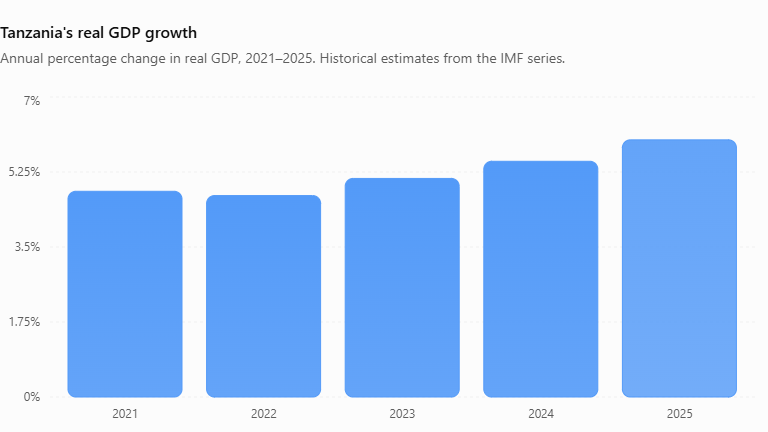
Tanzania is projected to grow by 6.0 percent in 2026, placing it above the regional average and ahead of several larger African economies. The IMF projects the country’s growth at 5.9 percent in 2027, suggesting that economic expansion will remain relatively strong over the medium term.
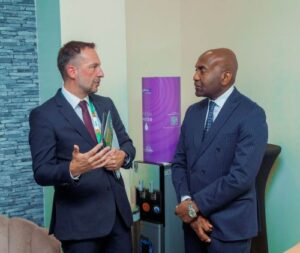
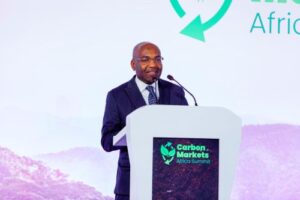
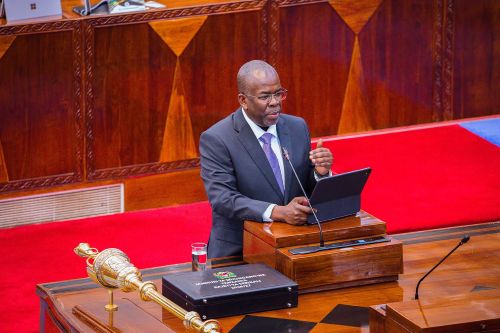
Tabling the 2026/27 national budget on June 11, 2026, in Dodoma, Finance Minister Ambassador Khamis Mussa Omar told Parliament that the government targets real GDP growth of 6.3 percent in calendar year 2026, up from 5.9 per cent in 2025.
“The Government will expedite strategic investments and the development of large economy through industries that rely on minerals and energy particularly rare earth minerals, natural gas, iron ore, and coal,” he pointed out.
The budget identifies investment in mining and energy, particularly rare-earth minerals, natural gas, iron ore and coal, alongside the development of industries that process these resources, as key drivers of economic growth. In transport and logistics, the Government plans to revitalise the TAZARA railway and continue construction of the Standard Gauge Railway (SGR), including the Dodoma–Mwanza and Isaka–Kigoma sections, to improve connectivity and facilitate the movement of goods and people.
The Government also expects increased participation by domestic and foreign private-sector investors in business activities and development projects to support economic expansion. In agriculture, the focus is on transforming production and increasing the processing and value addition of locally produced agricultural, fisheries, livestock and mineral products, thereby strengthening domestic industries and expanding economic opportunities.
Industrialisation and digital transformation are also expected to contribute to growth through greater domestic production, improvements to the investment climate, wider use of information and communication technology (ICT), and reforms aimed at raising productivity. Meanwhile, the Government considers macroeconomic stability essential to achieving its growth target, emphasising price stability, food security, peace and security, and resilience to natural disasters and geopolitical tensions.
Africa’s fastest-growing economies
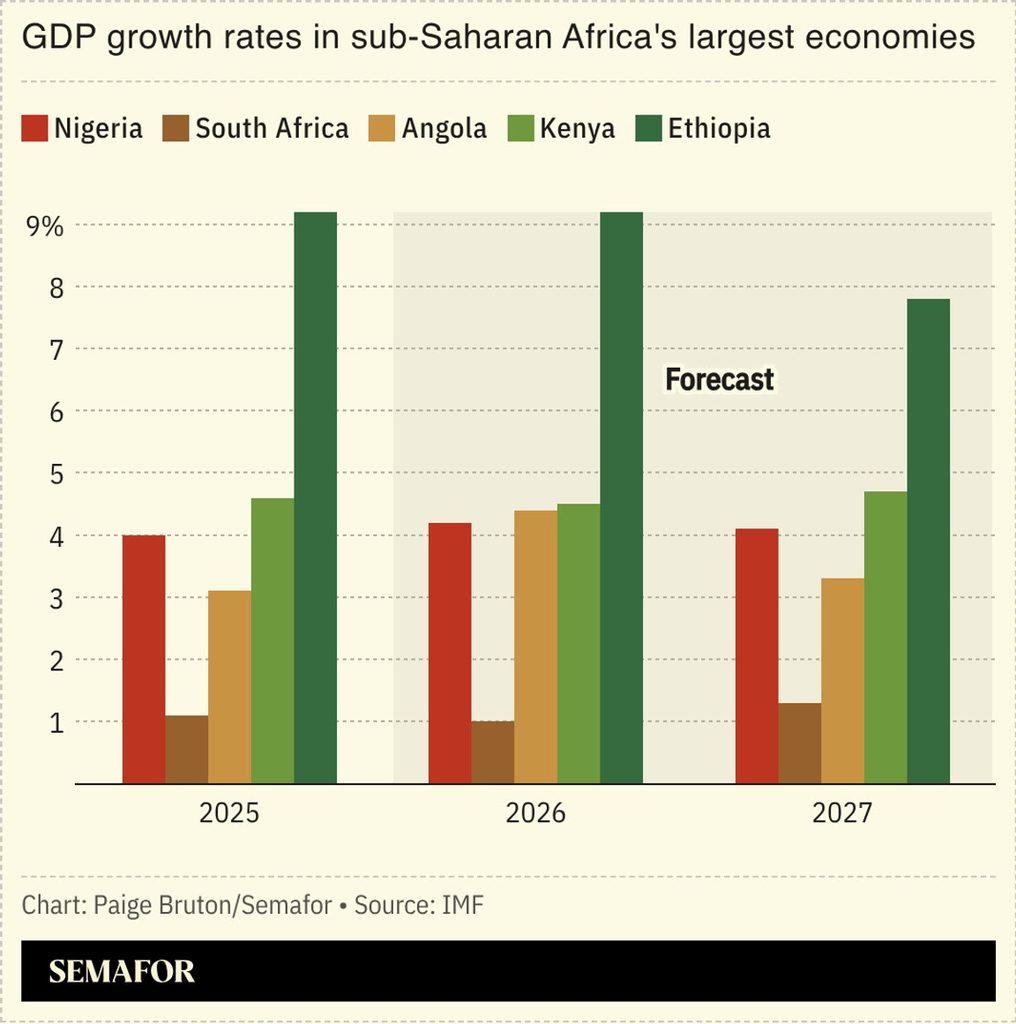
Ethiopia is among the continent’s strongest performers, with the IMF projecting real GDP growth of 9.2 per cent in 2026. Its projected expansion is approximately twice the sub-Saharan African average.
Other fast-growing economies include Rwanda, projected to grow by 7.4 per cent, Benin and Niger at around 7.0 per cent, and Uganda at 6.2 per cent. Tanzania’s 6.0 per cent projection places it in the same group of relatively fast-growing economies. The IMF’s October data also put Côte d’Ivoire’s growth at approximately 6.0 per cent. The Democratic Republic of Congo, Djibouti, Zambia and Mali are among other economies recording comparatively strong projected growth.
These differences illustrate the diversity of Africa’s economic performance. Growth rates vary according to domestic reforms, investment, commodity production, agricultural performance, infrastructure development and exposure to external shocks.
For investors, rapidly growing economies can offer opportunities in manufacturing, energy, transport, agriculture, financial services and consumer markets. Nevertheless, GDP growth alone is not a sufficient investment criterion; business conditions, political and macroeconomic risks, infrastructure and market access also matter.
Economies facing weaker growth
The outlook is less favourable for countries confronting structural economic difficulties, conflict-related disruptions or persistent weaknesses in production.
South Africa, the continent’s largest industrial economy, is projected to grow by only about 1.0 per cent in 2026. Its comparatively slow expansion highlights the challenges facing a mature economy affected by structural constraints and weak growth momentum.
Mozambique is also projected to expand by approximately 1.0 per cent, while Namibia’s growth is expected to remain modest at around 2.0 per cent. Equatorial Guinea faces a contraction, with the IMF projecting negative growth of approximately 1.7 per cent.
These weaker performances demonstrate that Africa’s favourable regional average should not be interpreted as evidence of a broad-based economic boom. Some countries continue to struggle to convert their natural resources and economic potential into sustained expansion.
Global risks remain significant
The IMF’s revised regional outlook comes amid a challenging international environment. Higher energy and food prices are placing pressure on import-dependent economies, while supply-chain disruptions are increasing uncertainty for businesses and governments.
Oil-importing countries are particularly vulnerable because higher fuel prices can increase production and transport costs, worsen trade balances and intensify inflationary pressures. Higher food prices can also reduce household purchasing power, particularly among lower-income groups. The IMF has additionally warned about rising public debt and the financial risks associated with high borrowing costs. Governments facing larger debt-service obligations may have less room to finance infrastructure, healthcare, education and other development priorities.