By Correspondent Chedaiwe Msuya, Kampala
The East African Development Bank (EADB) is expanding its financing footprint in Tanzania, backing major infrastructure and productive sectors as the country seeks more long-term capital to accelerate investment and economic growth.
The regional development finance institution has channelled financing into sectors ranging from transport infrastructure and housing to financial services, manufacturing and social services, strengthening its role as a source of development capital for one of East Africa’s largest economies.
Among the major projects highlighted is Tanzania’s Standard Gauge Railway (SGR), where EADB financing supports Lots 3 and 4 of the network.
The two sections cover the 294-kilometre Makutopora–Tabora railway and the 130-kilometre Tabora–Isaka stretch, critical components of Tanzania’s wider effort to modernise its rail network and improve connectivity between the country’s commercial centres, production zones and regional markets.
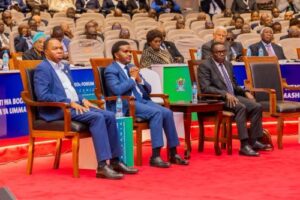
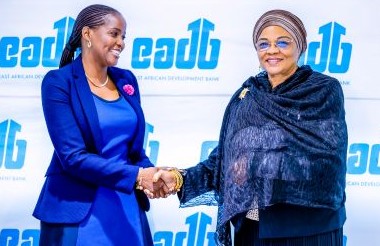
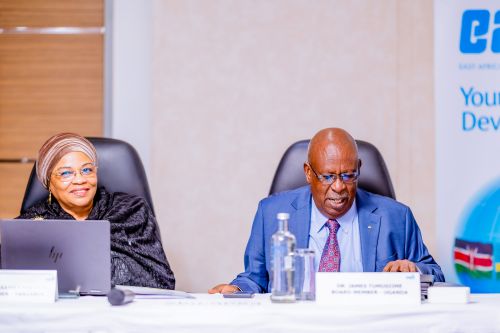
The investments were highlighted during a meeting of the EADB Governing Council in Kampala, Uganda, where the bank’s board and management considered measures aimed at strengthening its operations, expanding financial capacity and supporting sustainable economic growth across member states.
Tanzania was represented by Finance Ministry Permanent Secretary Dr Natu El-Maamry Mwamba, who sits on the EADB Board of Directors on behalf of Finance Minister Ambassador Khamis Mussa Omar, a member of the bank’s Governing Council.
SGR at heart of infrastructure financing
Investment in Tanzania’s SGR is particularly significant because of the scale of the government’s effort to reduce transport costs and strengthen the Central Corridor as a trade route linking the Indian Ocean with markets in East and Central Africa.

The Makutopora–Tabora and Tabora–Isaka sections extend the railway deeper into western Tanzania, potentially improving movement of passengers and freight while connecting agricultural, mining and industrial production areas with domestic and regional markets.
For businesses, more efficient rail transport could help lower logistics costs, shorten transit times and improve the reliability of supply chains — factors that remain critical to Tanzania’s ambition to become a regional manufacturing and logistics hub.
EADB’s involvement also illustrates the growing importance of development finance institutions in funding infrastructure projects that require large amounts of patient, long-term capital.
Capital channeled through local banks
Beyond major infrastructure, EADB’s relationship with Tanzania is increasingly important to productive sectors such as agriculture, manufacturing and trade.
The bank works with domestic financial institutions, including the Tanzania Agricultural Development Bank (TADB), Azania Bank Plc and TIB Development Bank, to expand access to financing for businesses and investment projects.
Such partnerships provide another channel through which regional development finance can reach businesses that might otherwise struggle to secure sufficiently long-term funding from conventional commercial sources.
Improved access to capital can enable farmers, manufacturers, traders and other businesses to invest in equipment, increase production, enter new markets and create jobs.
For Tanzania, the relationship with EADB therefore goes beyond individual projects. It provides an additional source of long-term financing as the country pursues large infrastructure investments while seeking to expand private-sector participation in economic growth.
Tanzania’s continued participation in the bank also reinforces its position in regional economic cooperation, particularly as East African economies seek deeper trade, investment and infrastructure integration.
Anne Juuko takes EADB helm
The Kampala meeting also marked a leadership transition at the regional lender, with the Governing Council appointing Anne Juuko as EADB Director-General with effect from October 2, 2026.
Juuko brings extensive banking and financial markets experience, having previously served in senior positions including as chief executive of Stanbic Bank Uganda and in Global Markets for East Africa under Standard Bank Group.
She takes over following an interim leadership period under Bernard Mono, EADB’s senior executive responsible for finance and treasury.
Her appointment comes as the bank faces growing demand for development financing across East Africa, where governments are pursuing expensive infrastructure programmes while businesses require longer-term capital to expand productive capacity.
EADB is a regional development finance institution whose member countries include Tanzania, Kenya, Uganda and Rwanda. It also has other financial and development institutional shareholders.
The bank’s mandate centres on promoting economic and social development and regional integration by financing projects across its member states. For Tanzania, EADB’s growing portfolio – from the SGR to financing channelled through domestic banks – positions the institution as an increasingly important source of capital as the country seeks to translate major infrastructure investment into higher trade, industrial output and broader economic growth.