By Correspondent Benny Mwaipaja, Dodoma
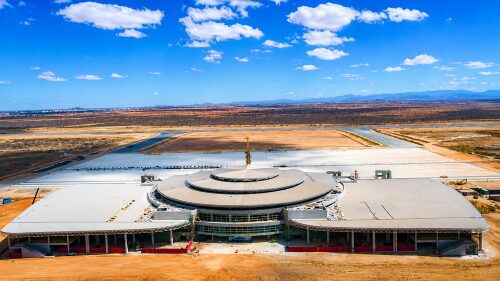
Tanzania is preparing to open one of its most ambitious aviation infrastructure projects as the Msalato International Airport in Dodoma enters its final phase of construction, a development expected to strengthen the country’s air transport network and accelerate the transformation of the political capital into a major business and investment destination.
The government has announced that the airport is on track for commissioning in September this year, marking a significant milestone in Tanzania’s broader strategy to modernise transport infrastructure and position Dodoma as a fully-fledged administrative, commercial and logistics hub.
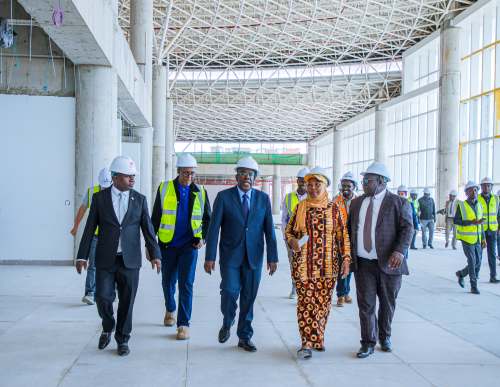
Speaking during an inspection tour of the project, Finance Minister Mr. Khamis Mussa Omar said construction works had reached advanced stages, with key infrastructure including the runway and aircraft parking apron substantially completed.
The project, which commenced in 2022, is being financed through a partnership between the Government of Tanzania, the African Development Bank (AfDB) and the Africa Growing Together Fund (AGTF). It forms part of a wider effort to equip Dodoma with infrastructure befitting its status as the nation’s capital.
“Dodoma is the seat of government. It is therefore essential that it has a modern airport capable of supporting the growing volume of economic, administrative and social activities taking place in the city,” said Dr Omar.
According to project implementation reports presented during the visit, the first phase covering core airport infrastructure has reached 86.73 percent completion, while the second phase, involving critical facilities such as the passenger terminal, air traffic control tower and fire and rescue station, is 75.1 percent complete.
Once operational, Msalato International Airport will rank among Tanzania’s largest aviation facilities. The airport features a 3.6-kilometre runway and a 60-metre width, enabling it to accommodate larger aircraft and increased traffic volumes.
It will also include extensive aircraft parking facilities capable of serving multiple aircraft simultaneously.
A key economic feature of the project is its planned passenger terminal, which will have the capacity to handle up to 1.5 million passengers annually. Industry observers say this capacity could significantly improve Dodoma’s connectivity to both domestic and international markets while supporting tourism, trade and investment flows.
The airport is expected to reduce travel bottlenecks for government officials, business executives, investors and development partners who frequently travel to the capital. It is also anticipated to strengthen Dodoma’s attractiveness as a destination for conferences, exhibitions and regional business events.
Beyond passenger services, the project is expected to create opportunities across several sectors, including hospitality, logistics, real estate and transport. As air connectivity improves, businesses are likely to benefit from faster movement of people and goods, helping stimulate economic activity across central Tanzania.
The airport development also includes a modern 56.2-metre air traffic control tower, an international-standard fire and rescue facility, power generation infrastructure and a state-of-the-art meteorological centre equipped with advanced aviation management technology.
Deputy Minister for Works Godfrey Kasekenya described the airport as one of Tanzania’s flagship strategic infrastructure projects under President Samia Suluhu Hassan’s administration.
“This airport has been designed with a long-term vision. It has the capacity for phased expansion as demand for air transport continues to grow,” he said.
According to Mr. Kasekenya, the facility has been built to international standards and is expected to become one of the most modern airports in the country once operational.
The government has pledged to ensure the remaining works are completed on schedule to meet the September launch target.
For Tanzania, the significance of the Msalato project extends beyond aviation. It represents part of a broader national investment drive aimed at strengthening transport infrastructure, attracting private investment and supporting economic diversification. As East African economies compete to become regional transport and logistics hubs, improved aviation infrastructure is increasingly viewed as a critical enabler of growth. For Dodoma, the opening of Msalato International Airport could mark the beginning of a new chapter – one in which the capital city evolves from an administrative centre into a dynamic gateway for business, investment and regional connectivity.