By Peter Nyanje
Tanzania has secured another major vote of confidence from the International Monetary Fund (IMF), after the global lender reached a staff-level agreement with the government on the final reviews of the country’s Extended Credit Facility (ECF) and Resilience and Sustainability Facility (RSF) programmes.
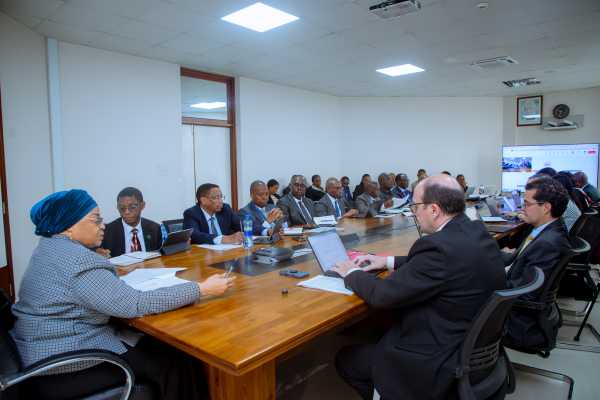
The agreement, announced after high-level discussions between IMF officials and Tanzanian authorities in Dar es Salaam and Dodoma, could unlock approximately US$375.5 million in additional financing once approved by the IMF Executive Board.
The development comes at a time when many emerging economies are grappling with rising geopolitical tensions, high energy costs, slowing global trade and shrinking development assistance flows.
For Tanzania, however, the IMF assessment signals growing international confidence in the country’s macroeconomic management, fiscal discipline and long-term reform agenda under Dira 2050.
Tanzania’s economic resilience earns IMF confidence
According to the IMF, Tanzania’s economy has remained resilient despite growing external shocks linked to conflicts in the Middle East and broader global economic uncertainty.
The Fund noted that economic growth remains strong, inflation is relatively stable and within the Bank of Tanzania’s target range, while foreign exchange reserves remain adequate.
The IMF projects Tanzania’s economy to grow by 5.9 percent in 2026, supported largely by mining, tourism, agriculture and infrastructure investment.
Over the medium term, growth is expected to rise further toward 6.3 percent, positioning Tanzania among Africa’s faster-growing economies.
The assessment is particularly significant given mounting global concerns over rising oil prices, disruptions in global supply chains, declining aid flows and geopolitical fragmentation affecting emerging markets.
The IMF said Tanzania’s ability to absorb global shocks has been supported by gradual fuel price adjustments, exchange rate flexibility and relatively prudent fiscal and monetary management.
Strategic sectors under pressure
Despite the positive outlook, the IMF warned that Tanzania’s economy still faces significant vulnerabilities.
The ongoing conflict in the Middle East is expected to increase pressure on fuel prices, fertiliser imports, transportation costs, tourism and agricultural production.
Higher global oil and fertiliser prices are expected to widen Tanzania’s current account deficit to 2.9 percent of GDP in 2026, while also contributing to inflationary pressure.
The agriculture sector – which employs the majority of Tanzanians – remains particularly exposed due to rising input costs and climate-related shocks.
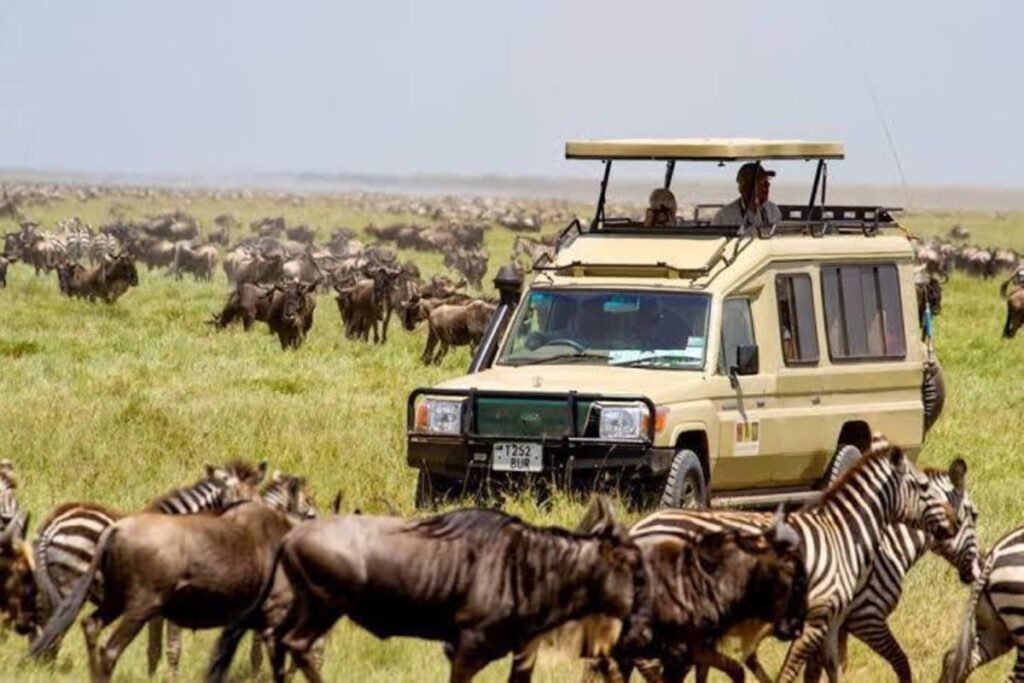
Tourism, another critical foreign exchange earner, also faces uncertainty as higher aviation costs and disruptions in global travel routes threaten international tourism demand.
However, strong global gold prices are expected to cushion some of the pressure by boosting export earnings from Tanzania’s mining sector.
IMF backing reinforces investor confidence
Economists say the IMF agreement is likely to strengthen Tanzania’s attractiveness to international investors and development financiers.
An IMF-supported programme often serves as a signal of policy stability and economic credibility, particularly for countries seeking long-term capital inflows.
The latest agreement also reflects Tanzania’s growing emphasis on climate resilience financing through the Resilience and Sustainability Facility.
The RSF programme is designed to help countries strengthen their capacity to respond to climate change risks while supporting sustainable economic transformation.
For Tanzania, climate resilience is increasingly becoming a strategic economic issue rather than simply an environmental concern.
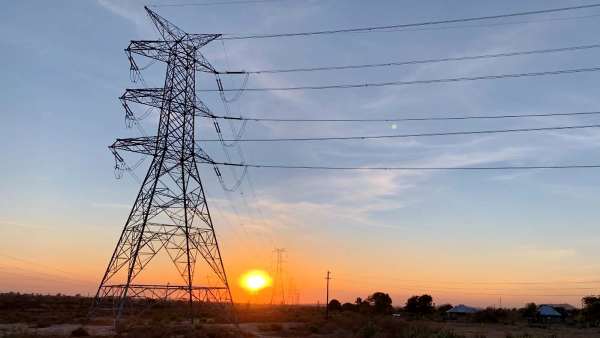
Recurring droughts, floods and unpredictable weather patterns continue to affect agriculture, energy generation, food security and rural incomes.
The IMF acknowledged Tanzania’s efforts to strengthen climate resilience, expand social protection systems and support investment in renewable energy and sustainable infrastructure.
Pressure for deeper reforms
While praising Tanzania’s economic progress, the IMF also issued a clear message that sustaining long-term growth will require accelerated structural reforms.
The Fund identified several priority areas, including improving domestic revenue collection, strengthening public financial management, enhancing central bank independence, improving the business environment and investing more heavily in human capital development.
The IMF also emphasised the importance of supporting private sector-led growth and job creation, particularly as Tanzania seeks to industrialise and absorb its rapidly growing youth population.
Analysts say this could place renewed pressure on policymakers to address persistent concerns around bureaucracy, tax administration, regulatory uncertainty, access to finance and investor confidence.
The IMF further warned that risks to Tanzania’s outlook remain tilted to the downside due to potential global economic slowdown, declining donor support and domestic fiscal pressures.
Dira 2050 enters sharper focus
The latest IMF review comes as Tanzania intensifies preparations for implementation of its Development Vision 2050, a long-term blueprint expected to shape the country’s next phase of economic transformation.
Under the vision, Tanzania aims to transition toward a more industrialised, knowledge-driven and climate-resilient economy capable of generating higher incomes, stronger private sector growth and improved social welfare.
The IMF’s endorsement suggests that Tanzania has made notable progress in stabilising its macroeconomic fundamentals.
However, the message from Washington is equally clear: sustaining that momentum will depend not only on infrastructure spending and natural resource growth, but also on governance reforms, institutional efficiency and the country’s ability to unlock private sector productivity. For investors, financial markets and development partners, the agreement reinforces the perception that Tanzania is increasingly positioning itself as one of East Africa’s more stable and reform-oriented economies – even as global uncertainty continues to intensify.