By Business Insider Reporter, Dodoma
The government has announced plans to finalise the Public Investment Bill in the 2026/27 financial year, marking a significant step in its broader strategy to overhaul the performance of state-owned enterprises (SOEs) and align them with the country’s long-term development ambitions under Dira 2050.
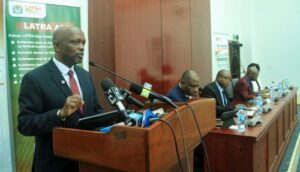
Presenting his ministry’s Sh144.85 billion budget proposals in Parliament on Thursday, April 16, 2026, Minister of State in the President’s Office for Planning and Investment, Prof. Kitila Mkumbo (pictured above), said the proposed law will establish a modern legal framework to improve efficiency, accountability and the economic contribution of public investments.
At the core of the Bill is the proposed establishment of a Public Investment Management Authority, which will centralise the coordination and oversight of government investments across public institutions under a unified national framework. The legislation also seeks to create a Public Investment Fund to mobilise capital for strategic investments through state-owned entities, while safeguarding revenues destined for the Government Consolidated Fund.
The reforms extend to governance, where the Bill proposes a competitive recruitment system for chief executives and boards of directors. The move is intended to strengthen professionalism and improve operational discipline across public institutions.
In tandem, the government plans to grant greater operational autonomy to commercially oriented SOEs, enabling them to compete more effectively, reduce reliance on state subsidies and enhance their financial performance. However, this autonomy will be matched with stricter performance management systems to ensure accountability and results.
The reforms come against the backdrop of an expansive public investment portfolio overseen by the Office of the Treasury Registrar, which manages 308 entities with a combined investment value of TSh92.3 trillion, including 91 commercial enterprises.
As part of ongoing restructuring efforts, the government is continuing a comprehensive review of public institutions. This includes merging entities with overlapping mandates, dissolving those deemed obsolete and restructuring underperforming organisations. A 2023 review led to the directive to merge 14 entities and dissolve three, with progress already underway.
Notably, the consolidation of the Tanzania Investment Centre and the Export Processing Zones Authority into the Tanzania Investment and Special Economic Zones Authority signals a shift towards streamlined investment facilitation. Legal processes to complete remaining mergers are ongoing.
Revenue performance from public entities is also on an upward trajectory. The government projects non-tax revenue collections of TSh1.79 trillion in 2026/27, up from TSh1.69 trillion in the current financial year. By March 2026, collections had already reached TSh773.37 billion, compared to TSh664.53 billion over the same period in the previous year.
These revenues are derived from dividends, statutory contributions from selected entities, income from systems such as the Tanzania Telecommunications Traffic Monitoring System (TTMS), as well as loan repayments and interest.
Meanwhile, the government is advancing privatisation efforts involving six re-vested industries, including NMC Mzizima, NMC Isaka, CDA Integrated Industry Limited, Kilimanjaro Paddy, Moshi Pesticides and Unique Steel Rolling. Asset valuations have also been conducted across several properties, including agricultural estates and industrial facilities, to attract strategic investors and boost productivity. Looking ahead, the reforms are expected to play a central role in increasing the contribution of public entities to the national economy, with the government targeting a rise to 8 percent of GDP by 2050.