

By Business Insider Reporter
East Africa is positioning itself for a new phase of digital industrialisation following a landmark decision by the East African Community (EAC) to establish a Regional Artificial Intelligence (AI) Technologies Fund – an initiative that could reshape how businesses across the region innovate, compete and scale.
The fund, designed to mobilise blended finance and crowd in private investment, marks a strategic shift from policy ambition to capital-backed execution. For businesses, the implications are immediate: access to funding, infrastructure and regional markets for AI-driven solutions is set to expand significantly.
From innovation gap to investment pipeline
For years, East Africa’s innovation ecosystem has been characterised by strong ideas but weak commercialisation pathways. Start-ups and research institutions have often struggled to move from prototypes to scalable, bankable products.
The proposed AI fund directly addresses this gap by creating a structured financing pipeline for locally developed technologies. By blending public resources with private capital, the fund is expected to de-risk early-stage investments and unlock new opportunities for venture capital, development finance institutions and corporate investors.
For SMEs and tech start-ups, this could mean improved access to growth capital, while for established firms, it opens avenues to integrate AI into operations – from logistics and finance to agriculture and manufacturing.
AI sovereignty as a business strategy
A defining feature of the initiative is its emphasis on AI sovereignty – developing systems trained on East African data, operating in local languages such as Kiswahili, and hosted on regional infrastructure.
This is more than a policy stance; it is a commercial strategy.
For businesses, locally trained AI models promise higher relevance and accuracy in applications such as credit scoring, crop advisory, healthcare diagnostics and customer analytics. At the same time, regional data governance frameworks reduce reliance on external platforms, lowering costs and enhancing data security.
In sectors like fintech, agri-tech and e-commerce, this could accelerate the development of tailored solutions that better reflect local market realities.
Regional integration meets digital transformation
The AI fund also reinforces the EAC’s broader integration agenda by creating a unified digital innovation ecosystem.
Through proposed structures such as a regional Centre of Excellence and an AI Alliance, businesses will gain access to shared infrastructure, research networks and cross-border markets. This reduces duplication of investment while enabling companies to scale regionally rather than being confined to national markets.
For example, a logistics optimisation platform developed in Kenya could be deployed seamlessly in Tanzania, Uganda or Rwanda – creating economies of scale that were previously difficult to achieve.
Infrastructure as a growth enabler
The success of the AI agenda will hinge on investments in enabling infrastructure – high-performance computing, data centres, cloud systems and connectivity.
Coordinated regional investment in these areas is expected to lower the cost of accessing advanced computing resources, which have traditionally been prohibitive for many businesses.
For data-intensive sectors such as banking, telecoms and insurance, this could unlock new capabilities in risk modelling, fraud detection and customer engagement. Meanwhile, manufacturers and logistics firms stand to benefit from predictive analytics and automation tools.
Talent pipeline reshaping the labour market
The declaration’s focus on skills development carries significant implications for the business environment.
Plans to harmonise AI curricula and strengthen technical training systems aim to build a workforce capable of supporting AI-driven industries. For employers, this addresses one of the most persistent constraints in the digital economy: access to skilled talent.
In the medium term, businesses can expect a growing pool of data scientists, software engineers and AI specialists – reducing reliance on imported expertise and lowering operational costs.
Start-ups and sectoral disruption
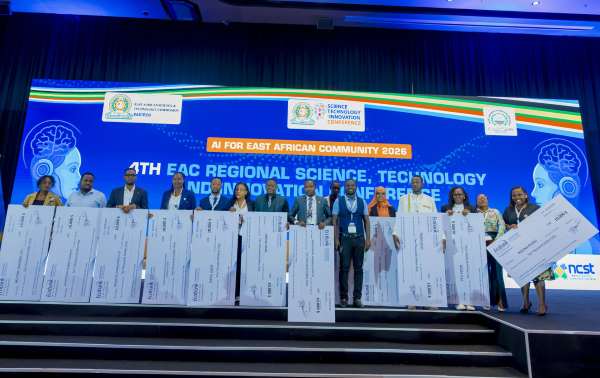
Early-stage initiatives under the programme, including grants to youth- and women-led enterprises, signal a deliberate push to stimulate innovation at the grassroots level.
Sectors such as agriculture, healthcare, energy and education are likely to see the most immediate disruption. AI-powered solutions in these areas – ranging from precision farming tools to digital health platforms – have the potential to improve productivity and expand access to services.
For traditional businesses, this creates both opportunities and competitive pressure, as new entrants leverage technology to redefine market dynamics.
A trillion-dollar opportunity – with execution risks
According to the African Development Bank, AI could add up to $1 trillion to Africa’s GDP by 2035 while creating millions of jobs. For East Africa, the new fund represents a vehicle to capture a share of that value.
However, the transition from declaration to delivery will be critical. Key challenges include governance, coordination across member states, and the ability to attract sustained private sector participation.
Without efficient execution, there is a risk that the initiative could remain a policy framework rather than a transformative economic tool.
A turning point for regional business
The launch of the EAC AI fund marks a defining moment in East Africa’s digital journey. It signals a shift towards coordinated, investment-led transformation – one that places technology at the centre of economic strategy.
For businesses, the message is clear: AI is no longer a peripheral innovation but an emerging core driver of competitiveness. Those that position early – by investing in data capabilities, forming partnerships and aligning with the region’s evolving digital infrastructure – stand to benefit most from what could become one of East Africa’s most significant economic shifts in the coming decade.