
By Business Insider Reporter
Tanzania’s decision to acquire eight additional aircraft for Air Tanzania Company Limited by 2030 is emerging as a pivotal intervention aimed at revitalising the national carrier and repositioning it as a competitive player in regional and international aviation.
Media reports quoted the Deputy Minister for Transport David Kihenzile, announcing the plan in South Africa while meeting company workers.
He noted that the fleet expansion will increase ATCL’s aircraft count from 16 to 24 – marking a new phase in the airline’s recovery strategy after years of operational challenges and limited capacity.
Rebuilding a national carrier
The planned acquisition is not merely an expansion exercise but a deliberate effort to restore ATCL’s operational strength, market relevance, and financial sustainability.
Since 2016, when the airline operated with just a single aircraft, the government has pursued an aggressive revival programme – transforming the carrier into a growing aviation player within East Africa.
Under the leadership of Samia Suluhu Hassan, the addition of modern aircraft has already enhanced reliability, safety standards, and passenger confidence. The next phase – anchored on acquiring eight new aircraft – aims to consolidate these gains by addressing capacity constraints and enabling network expansion.
A larger and more modern fleet will allow ATCL to optimise route scheduling, reduce operational bottlenecks, and improve aircraft utilisation rates – key factors in restoring profitability and long-term viability.
Expanding connectivity and market share
The revitalisation of ATCL is closely tied to its ability to expand both domestic and international connectivity. With additional aircraft, the airline is better positioned to deepen its footprint across Tanzania while scaling up regional and global routes.
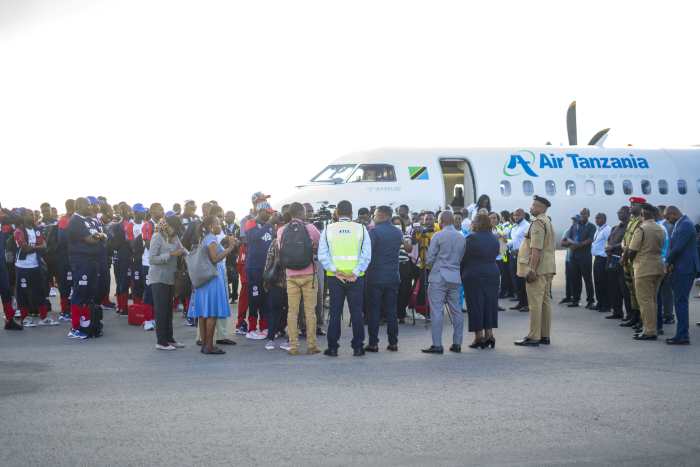
Domestically, ATCL has already connected key economic centres such as Dar es Salaam, Dodoma, and Mwanza, while extending services to previously underserved regions.
The expanded fleet will enable more frequent flights, improved route reliability, and access to emerging destinations—unlocking local tourism and trade.
Internationally, increased capacity strengthens ATCL’s competitiveness on routes linking Tanzania to Africa, Asia, and the Middle East. This is critical in positioning the airline against established regional giants and in supporting the country’s ambition to become an aviation hub.
Driving tourism and economic recovery
A revitalised ATCL is expected to play a central role in boosting Tanzania’s tourism sector, which remains one of the country’s largest foreign exchange earners.
Improved air connectivity reduces travel barriers and enhances the country’s appeal as a destination.
With global attractions such as Serengeti National Park, Mount Kilimanjaro, and the Zanzibar, increased flight capacity allows Tanzania to capture a larger share of international турист flows.
Beyond passenger travel, the expansion of cargo capabilities – supported by a growing fleet – will further integrate Tanzania into regional and global supply chains.
This is particularly important for export-oriented sectors such as horticulture, fisheries, and light manufacturing.
Enhancing competitiveness in East Africa
The move comes at a time when East Africa is experiencing rapid aviation growth, with rising passenger demand and increasing competition among regional hubs.
By expanding its fleet, Tanzania is positioning ATCL to compete more effectively with airlines operating out of established hubs like Nairobi and Addis Ababa.

A stronger national carrier enhances Tanzania’s strategic autonomy in air transport while reducing reliance on foreign airlines for connectivity. It also creates spillover benefits for related sectors, including hospitality, logistics, and airport services.
The fleet expansion aligns with ongoing investments in aviation infrastructure, including the development of new airports and upgrades to existing facilities. Projects such as the construction of Dodoma’s international airport and improvements in regional airstrips are designed to support increased traffic and operational efficiency.
These developments are anchored in Tanzania Development Vision 2050, which identifies aviation as a strategic enabler of economic transformation.
A modern fleet, combined with world-class infrastructure, is expected to underpin Tanzania’s ambitions in trade, tourism, and regional integration.
From recovery to growth
While challenges remain – including operational costs, competition, and the need for strong management – the acquisition of new aircraft provides a critical foundation for ATCL’s turnaround.
If effectively managed, the expansion could transform the airline from a state-supported entity into a commercially viable carrier capable of driving economic growth. More importantly, it signals a broader shift in Tanzania’s aviation strategy – from recovery to expansion, and from survival to competitiveness. In this context, ATCL’s fleet growth is not just about adding aircraft – it is about restoring national pride, unlocking economic potential, and positioning Tanzania at the centre of East Africa’s aviation future.