By Business Insider Reporter
The Ministry of Natural Resources and Tourism has formally recognised the outstanding performance of the Tanzania Forestry Research Institute (TAFORI), praising the institute’s leadership in environmental conservation and its growing role in shaping sustainable livelihoods across the country.
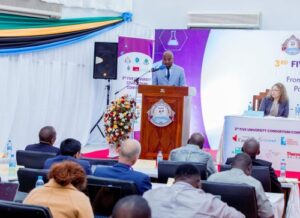
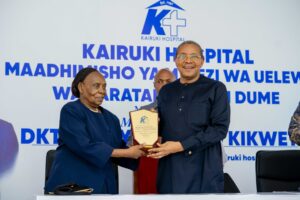
The recognition was announced in Morogoro during an awards ceremony honouring TAFORI’s Board of Directors, led by Deputy Minister Hamad Hassan Chande.
Officials said the accolade reflects years of research, innovation and fieldwork that have strengthened forest management at a time when climate change, deforestation and land-use pressures are intensifying across East Africa.
“TAFORI’s work demonstrates why science must sit at the centre of our conservation agenda,” Chande said. “Their research supports policy decisions, protects our forests and helps communities earn sustainable incomes while conserving natural resources.”
Championing science in conservation
Founded to serve as Tanzania’s national centre of excellence for forestry and beekeeping research, TAFORI plays a pivotal role in generating data that informs forest restoration, biodiversity protection and climate-resilience strategies. Its work has become increasingly critical as charcoal production, agricultural expansion and population growth place pressure on fragile ecosystems.
Among those recognised at the ceremony was Professor Dos Santos Silayo of the Tanzania Forest Services Agency (TFS), whose leadership in forest protection and enforcement has complemented TAFORI’s research-driven approach.
“Effective conservation cannot rely on enforcement alone,” Silayo said. “It must be guided by sound research. TAFORI provides the evidence we need to plan sustainably and safeguard Tanzania’s green belts for future generations.”
Linking conservation to livelihoods
A key theme at the Morogoro event was the close link between environmental protection and economic empowerment.
TAFORI’s promotion of sustainable beekeeping featured prominently as a model that aligns conservation with income generation for rural communities.
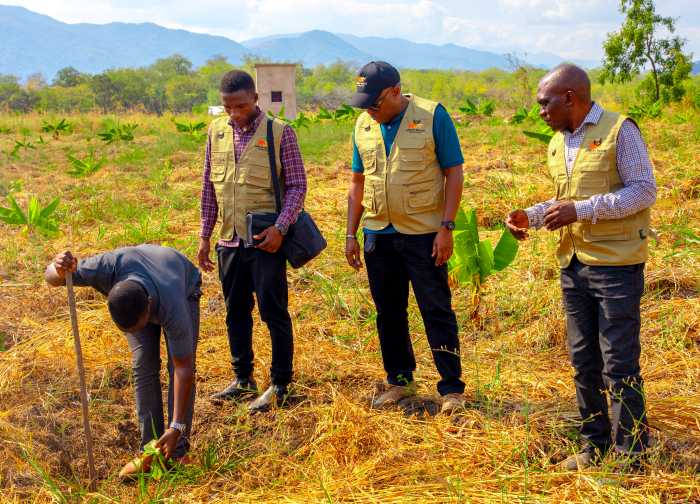
By training communities to harvest honey and beeswax sustainably, the institute has helped reduce destructive practices such as illegal logging and charcoal burning. Stakeholders noted that commercial apiculture is transforming forest-adjacent households into active custodians of natural resources.
“When communities benefit directly from conservation, forests gain protectors rather than threats,” said a senior TAFORI researcher. “Our goal is to ensure people can improve their livelihoods while keeping ecosystems intact.”
Economic and regional significance
Healthy forests underpin Tanzania’s wider economy, supporting water catchments for agriculture and hydropower, preserving biodiversity and sustaining tourism – one of the country’s largest sources of foreign exchange.
Ministry officials stressed that investment in forestry research is therefore an investment in long-term economic resilience.
The Ministry also highlighted the regional relevance of TAFORI’s work, noting that climate risks do not respect national borders.
Lessons from Tanzania’s research-led conservation approach, officials said, could inform strategies across East Africa, where countries face recurring droughts, floods and land degradation.
As neighbouring states strengthen their own research institutions, including Kenya’s Kenya Forestry Research Institute (KEFRI), the Ministry called for deeper cross-border collaboration to protect shared ecosystems such as the Mara–Serengeti landscape.
A signal of policy direction
The public commendation of TAFORI sends a clear signal that environmental research is moving closer to the centre of Tanzania’s development agenda.
With climate impacts accelerating, policymakers argue that long-term sustainability will depend on institutions capable of translating science into practical, community-based solutions.
“True conservation is never a solo effort,” Chande said in closing. “It is a collaborative science – one that balances nature, people and prosperity to secure our shared future.” As East Africa confronts the realities of a warming climate, the Ministry’s endorsement of TAFORI underscores a growing consensus: rigorous research, backed by policy and community engagement, remains the most reliable pathway to sustainable conservation.