
By Business Insider Reporter
The Parliamentary watchdog committee on infrastructure has directed the government to formulate a comprehensive strategy to curb the proliferation of illegal and unregulated ports, warning that the informal landing sites are fuelling smuggling, undermining safety standards and denying the Treasury much-needed revenue.
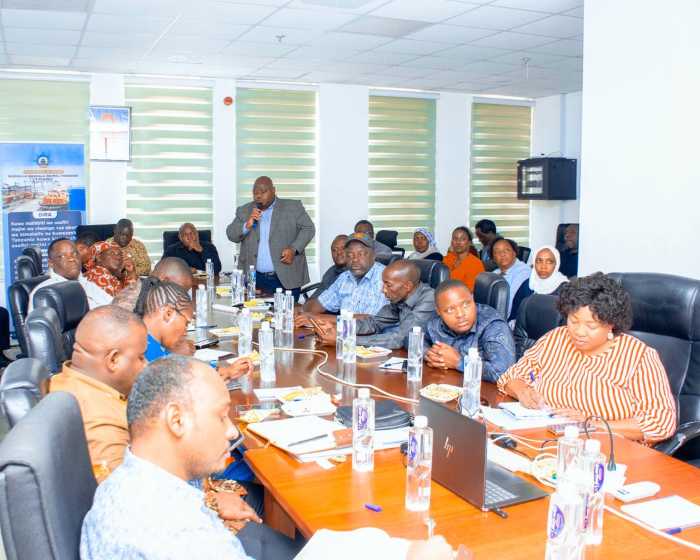
During an oversight visit to the Tanzania Shipping Agencies Corporation (TASAC) in Dar es Salaam, the Parliamentary Standing Committee on Infrastructure raised concerns over the growing number of so-called “bandari bubu” – unofficial ports operating without formal recognition, infrastructure or regulatory oversight.
The Committee Chairperson, Selemani Kakoso, said the illegal ports had effectively become conduits for unregulated and, in some cases, illicit trade.
He directed the government to move swiftly to formalise viable sites, invest in infrastructure and integrate them into the national ports system to improve compliance and enhance revenue collection.
“Illegal ports are being used as corridors to move goods that are not properly declared,” Kakoso told journalists after the visit. “Where these sites are economically active, they should be regularised and developed so that the Government can collect revenue and enforce standards.”
Revenue, safety and regulatory gaps
The TASAC Director General Mohamed Salum, acknowledged the challenge, noting that some coastal and lakeside areas lack formal port infrastructure and effective state control, yet commercial activities continue to take place.
He revealed that between the 2022/23 and 2023/24 financial years, TASAC – working in collaboration with the Tanzania Ports Authority (TPA) – had formalised 20 previously illegal ports across the Indian Ocean coastline and major inland lakes. However, many unregulated sites remain operational.
The lakes most affected include Lake Victoria, Lake Tanganyika and Lake Nyasa, which are vital trade corridors for cross-border commerce within the East African Community and the wider Great Lakes region.
Beyond revenue leakages, the Committee highlighted safety risks arising from inadequate rescue equipment and weak enforcement capacity.
Members called for increased budget allocations to enable TASAC to invest in maritime safety infrastructure, including search-and-rescue equipment across the coastal belt and inland waterways.
“We have advised the Government to strengthen systems that will reduce recurring maritime accidents,” Kakoso said, adding that Parliament stands ready to expedite legislative amendments where legal bottlenecks hinder effective enforcement.
Legal and institutional context
Under the Ports Act No. 17, the Tanzania Ports Authority is mandated to establish, operate and manage all seaports and lake ports in the country. The law sets out strict procedures for the establishment of ports and prohibits the operation of unauthorised facilities.

However, enforcement challenges, limited infrastructure investment and growing localised trade activity have created regulatory grey areas, particularly in remote fishing communities and cross-border trading points.
Strategic implications for the economy
The push to formalise illegal ports comes at a time when Tanzania is positioning itself as a regional logistics hub, leveraging major infrastructure investments such as port upgrades, standard gauge railway expansion and inland water transport improvements.

For policymakers, bringing informal ports into the formal economy is not merely a compliance issue – it is a fiscal and strategic imperative. Formalisation would widen the tax base, strengthen trade statistics, enhance maritime safety and curb smuggling, while also improving Tanzania’s credibility in regional trade facilitation frameworks. As Parliament intensifies oversight of maritime governance, the spotlight is now on whether the Government can translate these directives into coordinated regulatory reforms and targeted infrastructure spending – steps that could unlock both revenue gains and safer trade corridors across Tanzania’s vast maritime and inland water networks.