By Business Insider Reporter
As Tanzania marks 67 years since the discovery of the skull of early man at Olduvai Gorge, the milestone is not only a scientific anniversary – it is a powerful tourism asset that continues to elevate the country’s global profile.
The July 17, 1959 discovery by Dr. Mary Leakey at Olduvai Gorge, within the Ngorongoro Conservation Area, fundamentally reshaped humanity’s understanding of its origins.
Today, that same discovery anchors Tanzania’s positioning as the “Cradle of Humankind” – a title that carries enormous tourism value.
From scientific breakthrough to tourism magnet
When Mary Leakey unearthed the 1.75-million-year-old hominid skull – later known as Zinjanthropus – the finding placed Tanzania at the centre of global human evolution studies.
Decades later, the site continues to draw thousands of visitors annually, including researchers, students and high-value cultural tourists seeking more than traditional wildlife safaris.
Unlike many safari destinations that rely solely on wildlife, Tanzania offers a rare fusion of natural beauty and deep human history. Olduvai Gorge and the nearby Laetoli Footprints site, where 3.6-million-year-old hominid footprints were discovered, add intellectual and cultural depth to the country’s tourism portfolio.
This dual appeal strengthens Tanzania’s competitive edge in global tourism markets.
A UNESCO-backed heritage asset
Olduvai Gorge forms part of the Ngorongoro Conservation Area, which was inscribed as a UNESCO World Heritage Site in 1979. The global recognition enhances Tanzania’s credibility as a heritage tourism destination and attracts visitors interested in archaeology, anthropology and educational travel.
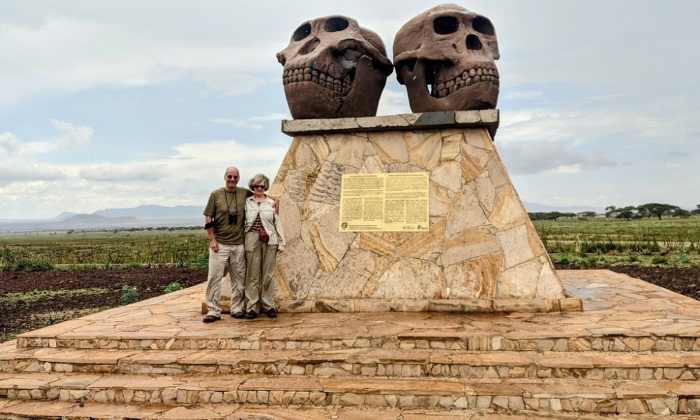
The conservation area’s management has increasingly leveraged this status in international tourism marketing campaigns, particularly in Europe, North America and Asia, where heritage tourism demand is growing steadily.
The role of the Olduvai Museum
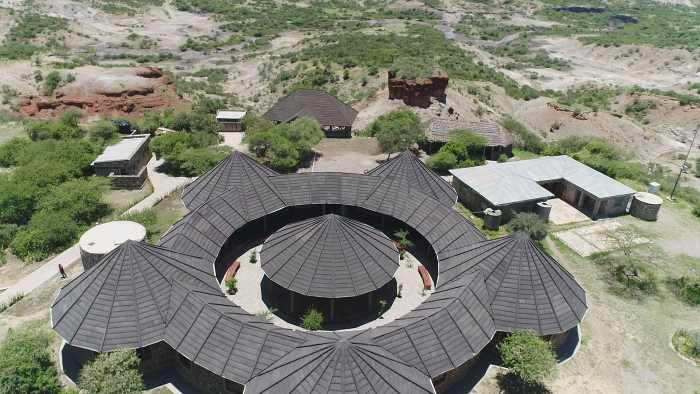
A major tourism draw is the Olduvai Gorge Museum, now regarded as one of Africa’s leading natural history and archaeological interpretation centres.
The museum houses fossil remains, detailed exhibits on human evolution and even Mary Leakey’s preserved Land Rover – a symbolic reminder of the groundbreaking excavations.
The expansion of the museum, initiated during the presidency of Jakaya Kikwete, has significantly enhanced visitor experience.
The upgraded facility supports educational tourism, conference tourism and scientific research, broadening Tanzania’s market beyond leisure travellers.
Diversifying tourism product
For decades, Tanzania’s tourism brand has been heavily associated with the Serengeti migration and Mount Kilimanjaro. However, the Olduvai discovery provides an opportunity to diversify tourism offerings into:
- Cultural and heritage tourism
- Academic and research tourism
- Documentary and scientific expeditions
- High-end niche travel focused on human origins
This diversification is critical in building resilience within the tourism sector, particularly in times when wildlife-based tourism faces global shocks such as pandemics or climate-related disruptions.
Economic impact and regional spillover
Located approximately 250 kilometres from Arusha and positioned between the Ngorongoro Crater and Serengeti National Park, Olduvai Gorge benefits from existing tourist circuits. Visitors on safari itineraries increasingly add the site as a historical extension to their wildlife experience.
This integration generates additional revenue streams for:
- Tour operators
- Local guides and cultural interpreters
- Community-based tourism initiatives
- Hospitality businesses in Arusha and Karatu
The involvement of indigenous communities such as the Tatoga and Hadzabe also enriches cultural tourism experiences, ensuring that economic benefits extend to local populations.
A Timely boost ahead of AFCON 2027
With Tanzania set to co-host the 2027 Africa Cup of Nations, heritage attractions such as Olduvai Gorge and the wider Ngorongoro Conservation Area are expected to attract football enthusiasts seeking safari and cultural excursions before and after matches.
This presents an opportunity to position Tanzania not just as a sporting host nation, but as a destination of global historical significance.
More than a site — A National Brand
Sixty-seven years after the discovery, Olduvai Gorge remains more than an archaeological landmark. It is a national icon that strengthens Tanzania’s identity in global tourism markets.
As travellers increasingly seek meaningful, story-driven experiences, the narrative of human origins – rooted in Tanzanian soil – offers something few destinations can match. In a competitive global tourism industry, the discovery of early man at Olduvai is not merely a chapter in history. It is a strategic asset – one that continues to generate intellectual curiosity, international prestige and sustainable tourism revenue for Tanzania.