By Business Insider Reporter
The Ntorya natural gas field, located in the Ruvuma Block in Ntorya, Mtwara Region, continues to advance toward production, its owners and developers have said.
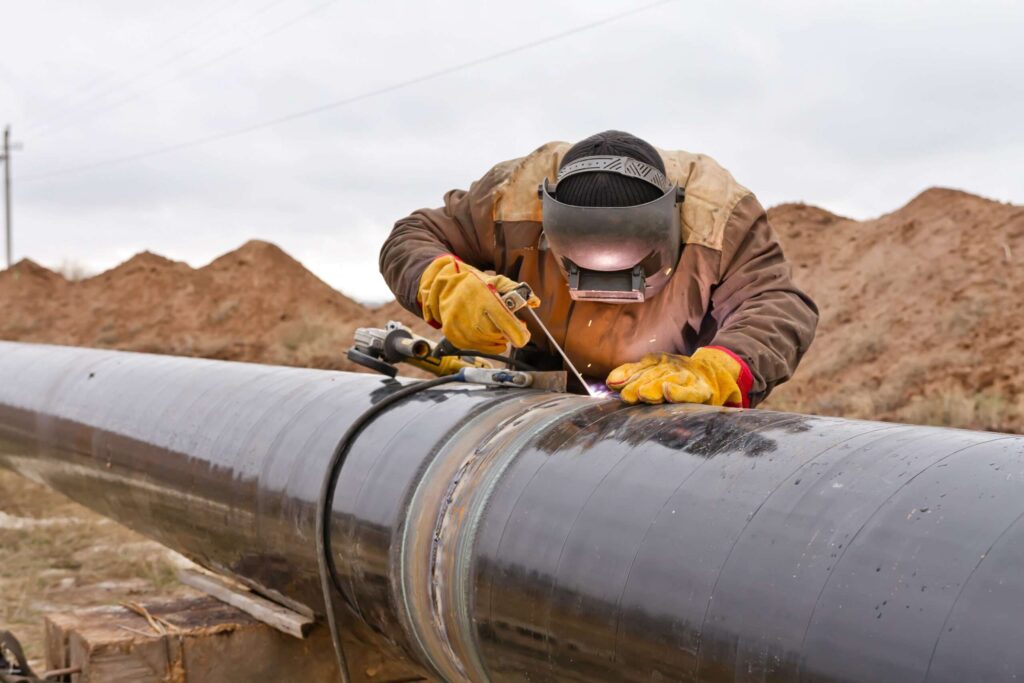
The development partners expect to complete and commission a 35-kilometre pipeline connecting Ntorya to the 210 million cubic feet per day (MMcfd) Madimba gas processing plant by the third quarter of 2026.
“Line pipe for the project has already been manufactured and is set to arrive in Tanzania in late January 2026,” they noted in a December 23 presser.
ARA Petroleum Tanzania
The operator, ARA Petroleum Tanzania (APT), reports that contracting is well advanced to bring the Ntorya-2 (NT-2) well into production in line with the pipeline’s commissioning, with the main contract due to be awarded in January 2026.
Sources at the Petroleum Upstream Regulatory Authority (PURA) confirmed that preparatory work for drilling the CH-1 well and conducting a workover of NT-1 is also underway, with all equipment on site.
“Civil works by a local construction company will begin next month and include well-pad preparation, infrastructure setup, and access road works,” a senior PURA official said on Wednesday.
Significance to Tanzania’s gas sector
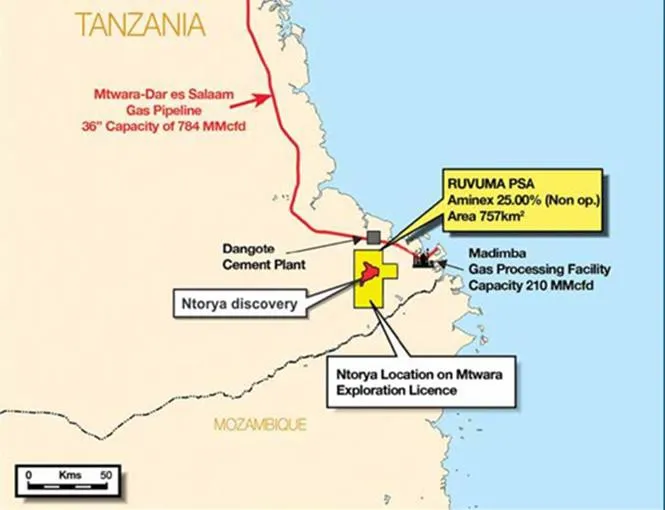
Ntorya is positioned to become a key contributor to domestic gas supply. The field has 1.8 trillion cubic feet (tcf) of proven gas confirmed by tests, with two wells each producing around 20 million standard cubic feet per day (MMscfd).
Local reports cite an unaudited contingent resource of about 3.45 tcf, while internal assessments indicate a total unrisked gas initially in place (GIIP) potential of 16.4 tcf and a risked GIIP potential of 6.9 tcf across the broader block.
This development supports Tanzania’s broader energy strategy to expand gas utilization for power generation, industry, transport, and household use, while underpinning future LNG export plans.
Other major gas projects in Tanzania
Tanzania has multiple gas fields — both producing and prospective — contributing to a growing natural gas economy. Total discovered gas (both onshore and offshore) is estimated at about 57.5 tcf of natural gas initially in place.
1. Songo Songo Gas Field
Location: Off and onshore around Songo Songo Island, Kilwa District, Lindi Region.
Status: Producing since 2004.
Volume: Historically cited as around 2.5 tcf of gas initially in place, with proven and probable reserves around ~0.3–0.9 tcf and production capacity reaching 100–165 MMscfd at times.
2. Mnazi Bay Gas Field
Location: Mnazi Bay‑Ruvuma Estuary Block, Mtwara Region.
Status: Producing since 2006.
Volume: Typically estimated around 3–5 tcf initially in place, with production from existing wells averaging roughly 90–100 MMscfd; additional wells are planned to boost output.
3. Kiliwani North Gas Field
Location: Adjacent to Songo Songo, Lindi Region.
Status: Smaller field that has produced intermittently.
Volume: Around 31 billion cubic feet of gas resources.
Mkuranga and Other Small Onshore Fields
Mkuranga (Coast Region): Around 0.2 tcf discovered.
Other minor discoveries: Including Mambakofi (~0.16 tcf) and earlier shallow-water finds such as Pweza-1, Chewa-1 and Chaza-1 contribute smaller additional volumes.
Gas production and use in Tanzania
Annual production:
Over recent years, Tanzania has ramped up output, with Mnazi Bay and Songo Songo producing over 300 billion cubic feet collectively from 2021 to 2025.
Domestic consumption:
Gas is used for power generation, industrial processes, household fuel, and increasingly as CNG for vehicles.
Pipeline infrastructure:
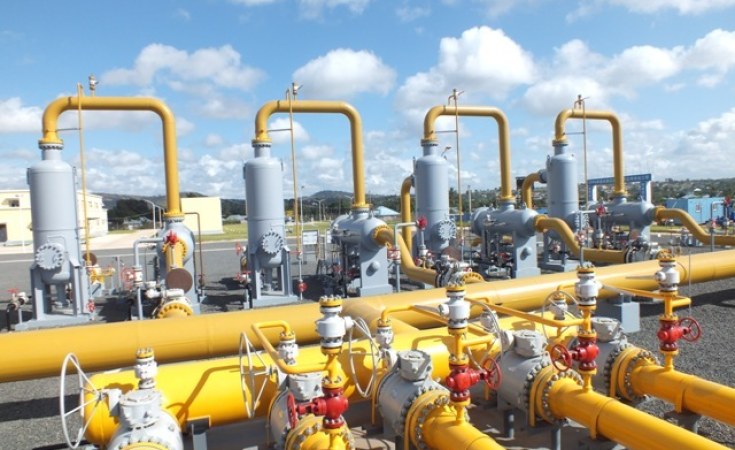
The Mtwara–Dar es Salaam Natural Gas Pipeline links fields in the south to markets in the coastal commercial hub, enabling broader distribution.
Tanzania’s broader gas potential
Tanzania’s gas resources extend far beyond onshore and shallow fields. Offshore deepwater discoveries – notably in the Indian Ocean – contribute the majority of the country’s total resource base, which stands at approximately 57.5 tcf of GIIP as of the latest assessments. These deep offshore basins hold the potential for LNG export projects, which could transform Tanzania into a significant regional and global gas supplier.