By Business Insider Reporter
In a major development for the market’s future, the Kariakoo Market Corporation (KMC) has officially commenced preparations for its five-year strategic plan for 2026–2031.
KMC leaders say the new roadmap aims at transforming the site into a modern, internationally competitive market hub aligned with global technology trends and evolving trade dynamics.
The initiative follows the successful conclusion of the 2021–2025 strategic plan implementation period.
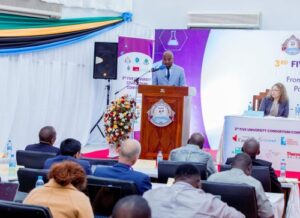
Speaking recently at the opening of a training workshop on strategic analysis and formulation, General Manager CPA Ashiraf Abdulkarim said that preparation of the blueprint has brought together key stakeholders of the market.
These include the Prime Minister’s Office – regional administration and local government (Tamisemi), traders, tenants and other partners to ensure the strategy reflects collective aspirations and is practical in implementation.
“The goal is to develop a strong, actionable and measurable strategic plan that will position Kariakoo market as a leading hub providing diversified services beyond agricultural produce and traditional commerce,” CPA Abdulkarim said.
“The plan will be anchored in national frameworks including Tanzania’s Development Vision 2025–2050 (Dira 2050), the Fourth National Development Plan, the President’s address to the 13th parliament, and the 2025–2030 CCM Election Manifesto.
Once completed, the strategy is expected to guide the transformation of Kariakoo into a modern commercial centre with advanced systems for operations and service delivery, boosting efficiency, safety, and business competitiveness.
Under the new strategic vision, kariakoo will feature enhanced infrastructure, including structured parking, modern fire safety and emergency systems, improved ventilation, advanced technological platforms and digital market solutions to serve traders and customers in a world-class environment.
“We want to serve Tanzanians and regional traders in safe, efficient and modern business environments,” said CPA Abdulkarim.
Mwinga Luhoyo, planning and business manager for the corporation, explained that development of the new plan involves a thorough review of the achievements and challenges of the 2021–2025 strategy to identify improvement areas and align future initiatives with national priorities.
She noted that the aim is to boost efficiency, strengthen business growth, and enhance Kariakoo’s contribution to the national economy.

As the market embraces a new chapter, its combination of historic legacy, strategic legislative foundation, and forward-looking planning underscores its continuing role as a cornerstone of commercial growth – not just for Dar es Salaam, but for Tanzania and its regional trading partners.
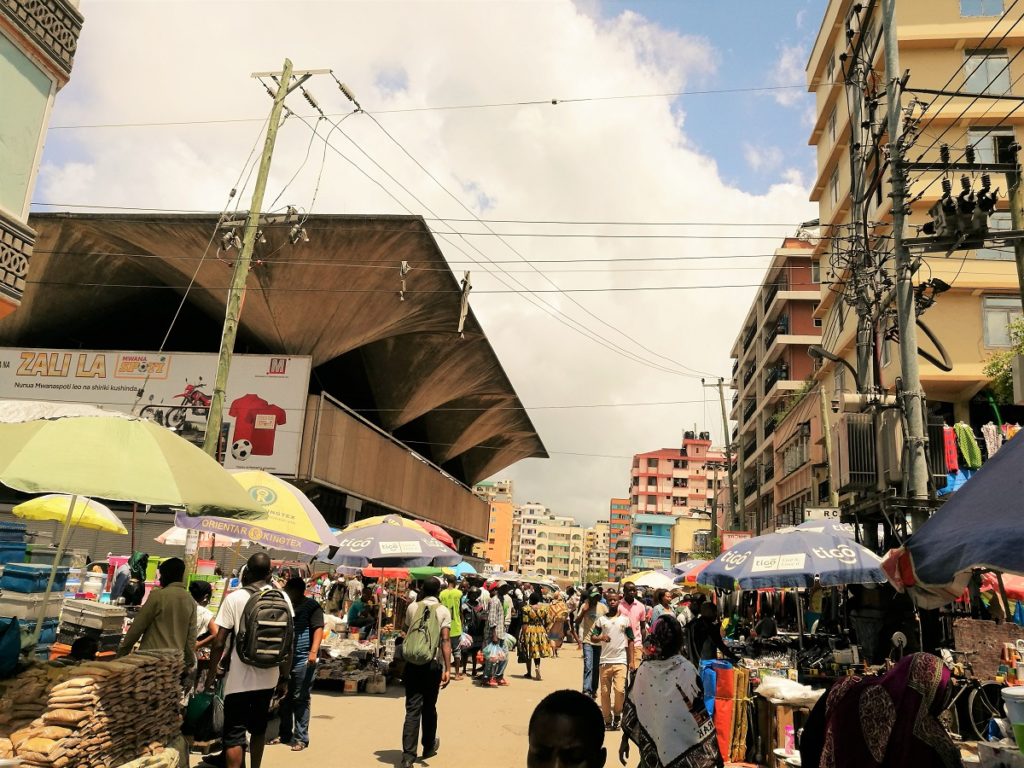
For more than 50 years, Kariakoo market has been more than a marketplace – it has been the heartbeat of commerce, a symbol of opportunity, and one of the most influential trading hubs in east and central Africa. Serving traders from Tanzania, Zambia, Malawi, Rwanda, Burundi, the DR Congo and the Comoros, Kariakoo has transformed livelihoods, powered enterprise, and strengthened Tanzania’s economic growth.
Historically rooted in the colonial era as the “carrier corps” base during world War I, the modern Kariakoo market was developed between 1971–1974 and officially inaugurated by the late President Julius Nyerere on December 8, 1975. Its governance is anchored in the Kariakoo Market Corporation Act No. 36 of 1974, which empowers the corporation to manage, regulate, expand, and modernize the market.
Today, strategically located in Ilala District, Kariakoo remains one of Africa’s most dynamic commercial ecosystems – a vital national and regional supply hub for agricultural produce, manufactured goods, textiles, and fast moving consumer goods (fmcgs). Despite emerging competitors, its extensive networks, diversity of goods, and strong market systems continue to support SMEs, create jobs, and significantly contribute to the national economy.