
By Business Insider Correspondent, Dodoma
The Ministry of Finance has called on stakeholders to submit views and proposals that will help refine the draft public Assets Management Guidelines for 2025, with the aim of improving efficiency, accountability and value-for-money in the By Business Insider Correspondent, Dodoma
The Ministry of Finance has called on stakeholders to submit views and proposals that will help refine the draft public Assets Management Guidelines for 2025, with the aim of improving efficiency, accountability and value-for-money in the management of assets held by public institutions.
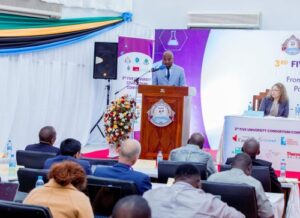
The appeal was made by the Director of the Government Assets Management Department (GAMD) at the Ministry of Finance, Mr. Chotto Sendo, while opening a stakeholders’ consultative workshop in Dodoma. The meeting brought together representatives from 25 public institutions in Dodoma Region, regional government asset managers from seven regions, as well as asset managers from the Ministry’s headquarters and Dodoma Region.
Speaking at the workshop held at the Kilimanjaro Hall, Treasury Square, Mr. Sendo said the draft 2025 guidelines were informed by lessons, gaps and emerging opportunities identified during the implementation of the 2019 Public Assets Management Guidelines.
He urged participants to engage actively and constructively, emphasising that the new guidelines will serve as a critical tool for strengthening the governance and utilisation of public assets across the country. He noted that the draft clearly outlines roles and responsibilities for public officials, heads of departments, unit managers and accounting officers in public institutions.
“The effective management of public assets is fundamental to ensuring quality public service delivery, financial accountability and long-term value from government investments,” Mr. Sendo said.
He explained that the draft guidelines expand the scope of asset management to cover public-private partnership (PPP) projects, asset acquisition and utilisation, management of project assets, handling of losses and accidents involving public assets, disposal of obsolete assets, and the registration and management of government motor vehicles.
Mr. Sendo added that once finalised and signed by the Paymaster General, the 2025 Guidelines will come into force alongside the Public Assets Management Regulations of 2024. He stressed the importance of open discussions during the consultation process to build a shared understanding and ensure smooth implementation once the guidelines are adopted.

He further encouraged stakeholders to ensure full compliance with the guidelines once they take effect, noting that effective implementation will enable government institutions to seize existing and future opportunities in public asset management.
Mr. Sendo highlighted that the Ministry of Finance is mandated to oversee public assets under the Public Finance Act, Cap. 348, and its 2024 Regulations. This responsibility is carried out through the Government Assets Management Department, which operates regional offices serving all public institutions across Tanzania Mainland’s 26 regions.
Given the scale and value of public assets owned by the government, Mr. Sendo said there is a clear need for robust strategies to ensure assets are properly safeguarded, utilised for their intended purposes and maintained to deliver long-term returns on public investment.
As part of ongoing reforms, he noted that the Ministry has made significant progress in modernising asset management through the deployment of the Government Assets Management Information System (GAMIS). The electronic system is now used nationwide to record, manage and process data on assets owned by public institutions, enhancing transparency and decision-making.
One of the participants, Tabora Regional Government Asset Manager Ms. Karerema Kwareh, said the workshop provided a valuable platform for in-depth discussion and consensus-building among stakeholders. She noted that such engagements are essential in developing practical and effective guidelines that reflect realities on the ground. The one-day workshop was organised by the Ministry of Finance through the Government Assets Management Department and formed part of a broader national consultation process aimed at strengthening public asset governance and improving service delivery across government institutions.
The appeal was made by the Director of the Government Assets Management Department (GAMD) at the Ministry of Finance, Mr. Chotto Sendo, while opening a stakeholders’ consultative workshop in Dodoma. The meeting brought together representatives from 25 public institutions in Dodoma Region, regional government asset managers from seven regions, as well as asset managers from the Ministry’s headquarters and Dodoma Region.
Speaking at the workshop held at the Kilimanjaro Hall, Treasury Square, Mr. Sendo said the draft 2025 guidelines were informed by lessons, gaps and emerging opportunities identified during the implementation of the 2019 Public Assets Management Guidelines.
He urged participants to engage actively and constructively, emphasising that the new guidelines will serve as a critical tool for strengthening the governance and utilisation of public assets across the country. He noted that the draft clearly outlines roles and responsibilities for public officials, heads of departments, unit managers and accounting officers in public institutions.
“The effective management of public assets is fundamental to ensuring quality public service delivery, financial accountability and long-term value from government investments,” Mr. Sendo said.

He explained that the draft guidelines expand the scope of asset management to cover public-private partnership (PPP) projects, asset acquisition and utilisation, management of project assets, handling of losses and accidents involving public assets, disposal of obsolete assets, and the registration and management of government motor vehicles.
Mr. Sendo added that once finalised and signed by the Paymaster General, the 2025 Guidelines will come into force alongside the Public Assets Management Regulations of 2024. He stressed the importance of open discussions during the consultation process to build a shared understanding and ensure smooth implementation once the guidelines are adopted.
He further encouraged stakeholders to ensure full compliance with the guidelines once they take effect, noting that effective implementation will enable government institutions to seize existing and future opportunities in public asset management.
Mr. Sendo highlighted that the Ministry of Finance is mandated to oversee public assets under the Public Finance Act, Cap. 348, and its 2024 Regulations. This responsibility is carried out through the Government Assets Management Department, which operates regional offices serving all public institutions across Tanzania Mainland’s 26 regions.
Given the scale and value of public assets owned by the government, Mr. Sendo said there is a clear need for robust strategies to ensure assets are properly safeguarded, utilised for their intended purposes and maintained to deliver long-term returns on public investment.
As part of ongoing reforms, he noted that the Ministry has made significant progress in modernising asset management through the deployment of the Government Assets Management Information System (GAMIS). The electronic system is now used nationwide to record, manage and process data on assets owned by public institutions, enhancing transparency and decision-making.
One of the participants, Tabora Regional Government Asset Manager Ms. Karerema Kwareh, said the workshop provided a valuable platform for in-depth discussion and consensus-building among stakeholders. She noted that such engagements are essential in developing practical and effective guidelines that reflect realities on the ground. The one-day workshop was organised by the Ministry of Finance through the Government Assets Management Department and formed part of a broader national consultation process aimed at strengthening public asset governance and improving service delivery across government institutions.