
By Peter Nyanje
The alarm bells ringing over the Congo Basin’s rapid deforestation may seem distant to many Tanzanians – but scientists warn that its decline could have profound and lasting consequences across East Africa.
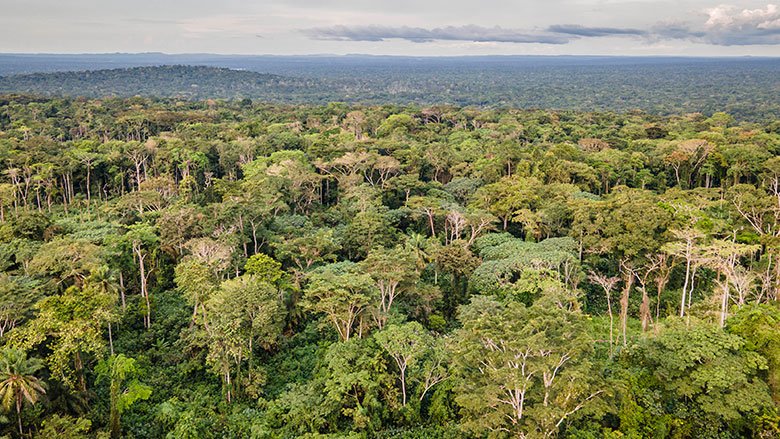
The newly released State of the Congo Basin Environment Report – presented ahead of COP30 in Belém, Brazil – describes the Basin as the planet’s largest tropical carbon sink and a vital regulator of rainfall patterns extending from the Atlantic to the Indian Ocean.
Spanning an area larger than India and absorbing more than 600 million tons of carbon dioxide annually, the Congo Basin’s forests are crucial to stabilising Africa’s climate. Yet the report warns that unchecked logging, charcoal demand, and slash-and-burn farming are pushing the ecosystem toward collapse. If this continues, the Basin could flip from absorbing carbon to emitting it – an outcome scientists call “a global climate catastrophe.”
“If you lose the Congo Basin, you lose the water,” said Lee White, Gabon’s former environment minister and one of the lead scientists behind the report.
Why it matters for Tanzania
Tanzania may sit more than a thousand kilometres from the heart of the Congo rainforest, but its rainfall patterns – and by extension, its agriculture, hydropower, and ecosystems — are closely tied to the Basin’s health. About 70 percent of the Congo Basin’s rainfall is recycled moisture that feeds weather systems across East, West, and North Africa. When the Basin’s forests are degraded, the entire continent’s water cycle begins to falter.
Tanzanian climatologist Dr. Stella Mrema from the University of Dar es Salaam explains:
“The Congo Basin acts like a giant water pump. It feeds the atmospheric systems that influence rainfall in Lake Victoria, the Rufiji Basin, and even the coastal belt. If forest loss continues, Tanzania could face more erratic rains – droughts in some regions, floods in others.”
This dynamic is already visible. Unpredictable rainfall has disrupted the country’s key agricultural zones, from maize fields in Mbeya to rice paddies in Morogoro. Hydropower projects like Julius Nyerere and Kihansi depend on stable water flows that could become more volatile if regional precipitation shifts.
A shared African responsibility
The Congo Basin’s degradation also exposes Tanzania to broader economic and environmental shocks. Diminished rainfall threatens hydropower reliability, affecting industries and urban energy supply. Moreover, the Basin’s collapse would accelerate global warming, further straining Tanzania’s vulnerable ecosystems – from coastal mangroves to the Kilimanjaro glaciers.
At COP30, African nations including Tanzania are expected to push for climate finance mechanisms that reward forest protection.
Brazil’s new Tropical Forest Forever Facility – which has already attracted US$5 billion in pledges – proposes paying tropical nations per hectare of preserved forest.
The Democratic Republic of Congo (DRC), home to most of the Basin, stands to gain the most, but Tanzania could benefit indirectly through regional climate funds and cross-border forest conservation partnerships.
The policy imperative for Tanzania
Tanzania has already taken steps to align its conservation agenda with climate action. The National Climate Change Strategy (2021–2026) emphasises sustainable forestry and ecosystem protection, while initiatives like Southern Highlands REDD+ projects have shown how local communities can earn from carbon credits.
Experts now argue that Tanzania should broaden its diplomacy to include joint conservation programs with Congo Basin countries. “We need a unified East and Central African approach to climate resilience,” said Dr. Elinami Swai, an environmental economist based in Arusha. “Protecting the Congo Basin protects our food systems, our rivers, and our future economic stability.”
A decade to act
The message from the scientific community is unambiguous: the world has ten years to avert irreversible damage to the Congo Basin. That decade could define the fate of not just Central Africa, but the entire continent’s environmental balance.
For Tanzania – whose economy and livelihoods remain tightly linked to rain-fed agriculture and nature-based tourism – the warning is a reminder that climate stability does not end at its borders.
As global leaders gather in Brazil to discuss new climate pledges, Tanzania’s voice may be crucial in championing a continental vision: one where forests are valued not just for timber, but for the rain, carbon storage, and resilience they sustain. “Africa’s green lungs are interconnected,” said the lecturer. “Saving the Congo Basin is saving Tanzania’s climate future.”