

By Business Insider Reporter
Tanzania has made history in Africa’s continental football – but now comes the hard part.
For the first time ever, four Tanzanian clubs – Simba SC, Young Africans SC (Yanga), Azam FC, and Singida Black Stars – have all qualified for the CAF 2025/26 group stages, marking an unprecedented milestone for East African football.
The achievement is a source of immense pride. Yet beneath the celebrations lies a sobering reality: the group stage is a battlefield, and the four country representatives face some of the most formidable challenges in African football.
Simba SC: Experience meets expectation
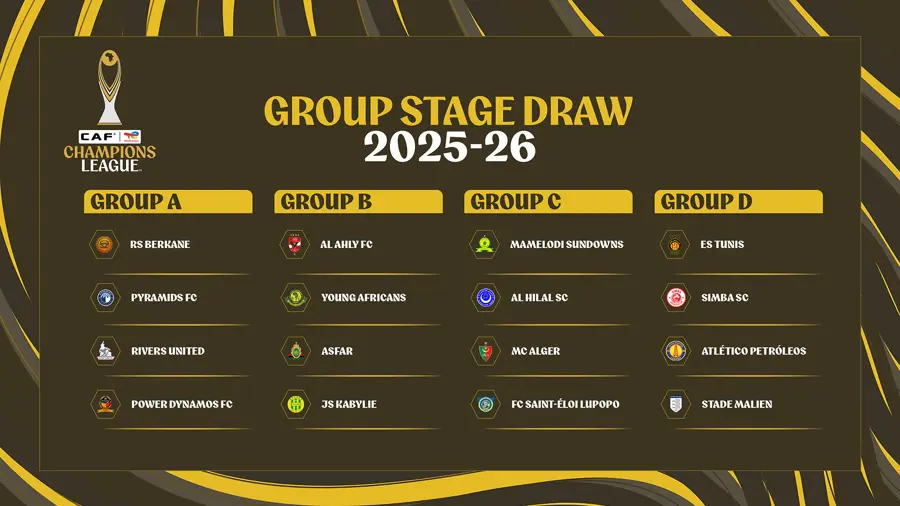
Simba SC, popularly referred locally as the Reds of Msimbazi – have become Tanzania’s continental standard-bearers. But their Group D draw – featuring Espérance de Tunis, Petro de Luanda, and Stade Malien – leaves no room for complacency.
A Simba fan in Kibaha, Coast Region, Haruna Shabani knows the stakes.
“We’ve been here before, but each year it gets tougher,” he said. “African football is evolving fast. To survive this group, we must improve our mentality, and our finishing.”
Simba’s challenge isn’t just the opposition – it’s also the grind of long travel distances, fixture congestion, and the financial strain of sustaining a high-performance squad.
Despite improved club management, Tanzanian sides still operate on smaller budgets compared to North African giants, making consistency a constant uphill battle.
Yanga SC: Dreaming big in the ‘group of death’
Yanga, Tanzania’s most popular club, enter a daunting Group B with Al Ahly (Egypt), AS FAR Rabat (Morocco), and JS Kabylie (Algeria) – a lineup packed with continental pedigree.
After their near-miss in the 2023 CAF Confederation Cup, Yanga’s ambitions have grown. But so have the challenges. Competing against clubs with decades of continental experience and deep financial backing will test every aspect of Yanga’s structure – from tactical discipline to squad depth.
“We will not be tourists although the task ahead is formidable,” boda boda ride Pascali of Bungo, Mkuza in Kibaha said.
For Yanga, the real battle lies in proving that their domestic dominance can translate into consistent success against Africa’s elite.
Azam FC: Learning fast on the biggest stage
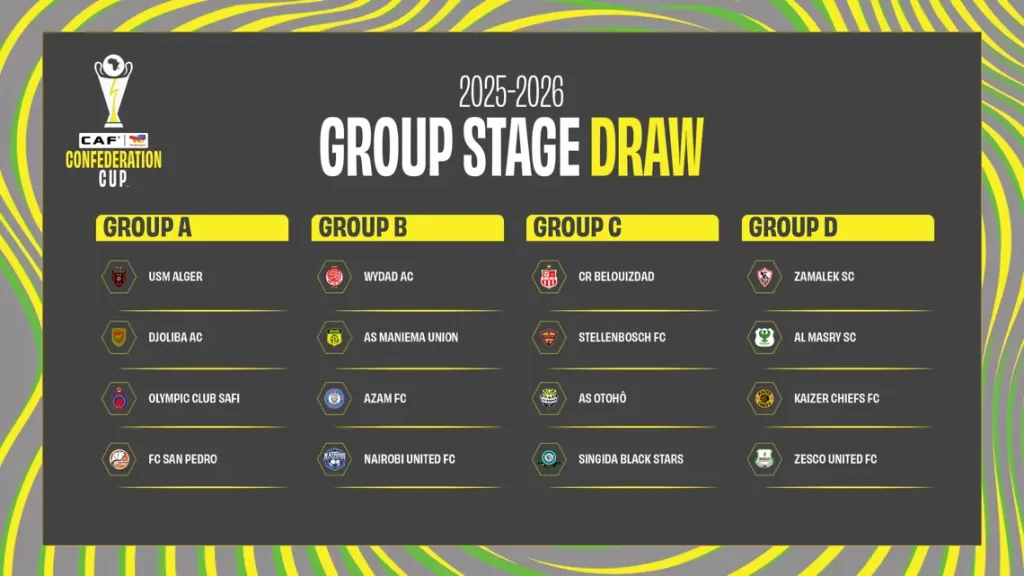
Azam FC’s qualification for the CAF Confederation Cup group stage marks a new chapter for the Chamazi-based outfit – and for Tanzanian football development. Their modern academy and professional setup have long been praised, but Group C – featuring Mamelodi Sundowns, TP Mazembe, and APR FC – is a ruthless classroom.
For Azam, the lack of continental experience may be their greatest hurdle. Competing against giants with established continental systems will expose every weakness – tactical, technical, and logistical.
Singida Black Stars: Underdogs with everything to prove
Singida Black Stars’ rise from domestic obscurity to the CAF Confederation Cup group stage is a fairytale – but their Group C assignment (with CR Belouizdad, Stellenbosch FC, and AS Otohô) is as tough as it gets.
Their biggest test? Experience and resources. Competing on multiple fronts — local league, travel, and CAF logistics – stretches the squad’s limits.
The hidden battle: Financing, fatigue and infrastructure
The country’s progress in continental soccer is undeniable, but the group stage exposes the gap that still exists between emerging and established football nations.
Financial pressure: Travel to North and West Africa can cost clubs hundreds of thousands of dollars per trip, straining already tight budgets.
Squad depth: Injuries and fixture congestion test local talent pipelines that are still developing.
Facilities and infrastructure: While Dar es Salaam boasts modern stadiums, regional clubs still struggle with training resources and matchday logistics.
Continental experience: Competing against clubs that have made the CAF knockout rounds for decades is a steep learning curve.
Despite these hurdles, the shared determination across all four clubs speaks volumes about Tanzania’s football evolution.
A test of progress
A decade ago, Tanzania celebrated having even one club in the CAF group stages. Today, there are four – a testament to investment, professionalization, and ambition.
Yet the next chapter will be defined not by qualification, but by how the four teams handle adversity at this level.
As the CAF group stages kick off, Tanzanian football stands on a knife’s edge between pride and pressure. The country has made history – but sustaining it will require more than talent. It will demand endurance, investment, and unity. Local and international soccer analysts agree that Tanzania has finally announced its arrival on the African football stage – but maintaining that momentum will be the real test.