
By Business Insider Correspondent, Mombasa
Marine scientists and policymakers have called on countries bordering the Indian Ocean to adopt a holistic “Blue Values” framework that balances economic growth with environmental protection and community well-being.
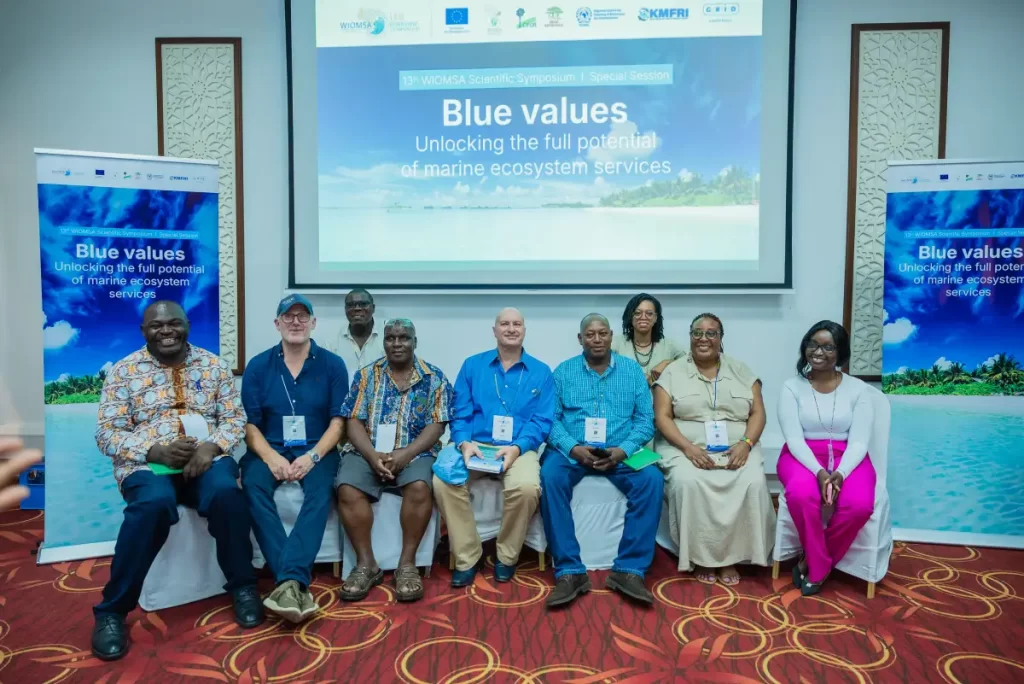
The appeal was made at the 13ᵗʰ Western Indian Ocean Marine Science Association (WIOMSA) Scientific Symposium held in Mombasa, Kenya, from September 28 to October 3, 2025.
The biennial symposium – the largest marine science gathering in the region – brought together experts from across Africa to discuss solutions for the sustainable management of ocean resources.
The Indian Ocean sustains millions of lives by providing food, livelihoods, climate regulation, and cultural heritage. Yet, these benefits are increasingly threatened by climate change, pollution, overfishing, and habitat destruction. Experts argue that traditional management approaches focusing only on fisheries and tourism fail to capture the full value of ocean ecosystems.
“The ocean is more than a source of fish or tourism revenue. It regulates climate, protects coastlines, supports biodiversity, and shapes cultural identity,” said Dr. James Kairo, Chief Scientist at the Kenya Marine and Fisheries Research Institute (KMFRI). “These values must be integrated into national planning to guide investment, restoration, and governance.”
According to the World Wide Fund for Nature (WWF), the Western Indian Ocean’s “Gross Marine Product” – the ocean’s equivalent of GDP – is worth at least US$20.8 billion annually.
The region covers ten countries including Kenya, Tanzania, Mozambique, Madagascar, Seychelles, Comoros, Mauritius, Somalia, South Africa, and France’s Indian Ocean territories.
The “Blue Values” approach – jointly championed by KMFRI, the Kenya Forest Service (KFS), CIFOR-ICRAF, the Regional Centre for Mapping of Resources for Development (RCMRD) and GRID-Arendal – seeks to redefine ocean governance by including ecological, social, and cultural dimensions in decision-making.
Mangroves: The frontline guardians
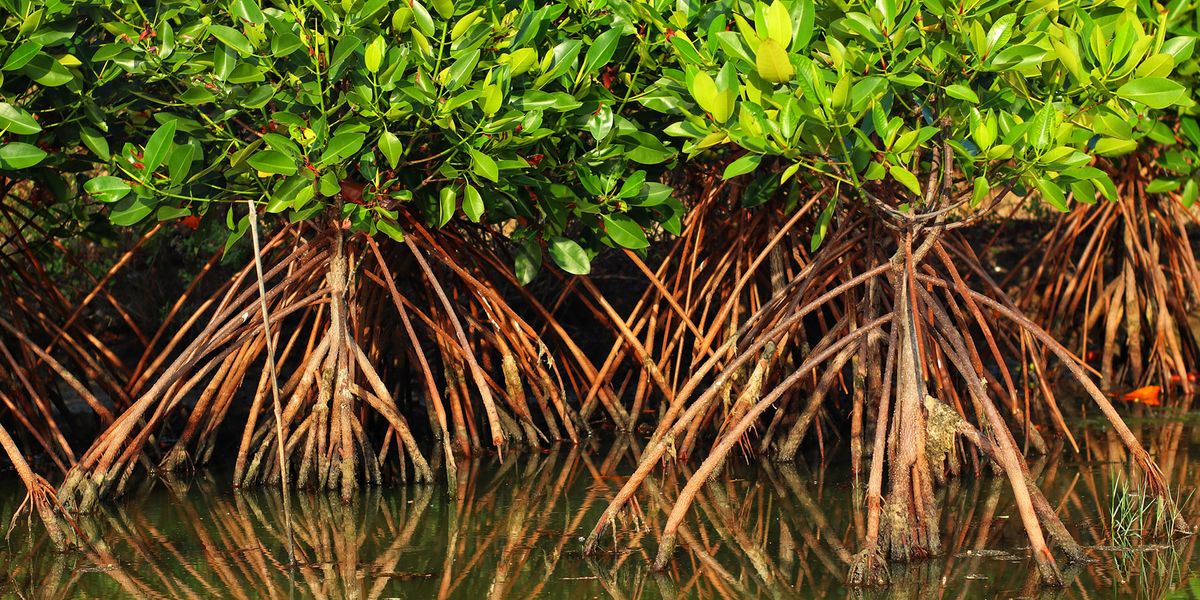
Mangrove forests were highlighted as a cornerstone of ocean health.
“Mangroves are the frontline defenders of the Indian Ocean. They protect our coastlines from erosion, store vast amounts of carbon, and provide nurseries for fish,” said James Mburu, Coast Regional Forest Conservator at KFS. “Restoring them strengthens both ecosystems and the communities that rely on them.”
Investing in ocean restoration
Experts emphasised that future ocean investments must prioritise activities that restore and enhance ecosystem health, rather than merely reduce damage.
“The Blue Values framework ensures that development decisions improve the health of the ocean while generating sustainable economic returns,” said Ivy Amugune, Research and Development Specialist at CIFOR-ICRAF.
To make informed decisions, scientists underscored the importance of data and spatial mapping.
“Decision-makers must see the invisible – the unseen benefits of coastal ecosystems,” said Josphat Nguu, Ecosystem Ecology Specialist at RCMRD.
Through the EU-funded Regional Centre of Excellence for Biodiversity, Forests and Seascape Ecosystems Management in Eastern and Southern Africa (RCOE-ESA), institutions like CIFOR-ICRAF and RCMRD are helping governments access credible data to support evidence-based ocean management.
Communities at the centre
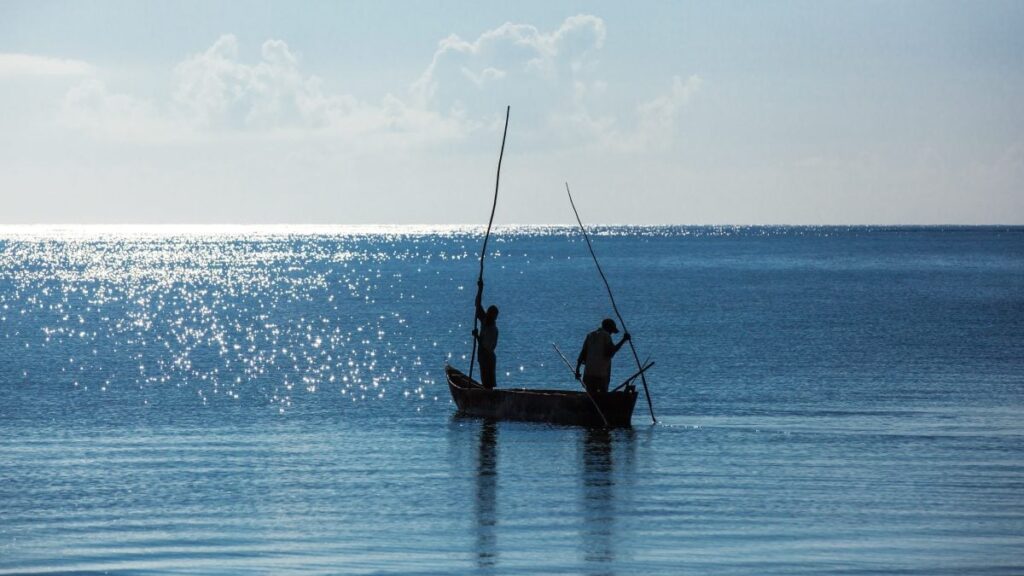
At the heart of the Blue Values framework is the inclusion of coastal communities in restoration, conservation, and nature-based enterprises.
“To sustainably manage our marine ecosystems, communities must be meaningfully involved. Their local knowledge and leadership are critical for durable and just solutions,” said Lorna Nyaga, Community Engagement Specialist at CIFOR-ICRAF.
Experts concluded that embedding Blue Values into national and regional policies would be key to long-term prosperity.
“Policies must go beyond short-term gains and recognise the ocean as the foundation for lasting development,” said Jacklin Karimi, Policy Engagement Specialist at RCMRD. “By integrating Blue Values into fisheries, climate, and spatial planning, countries can secure livelihoods and build resilient ocean economies.” As the Western Indian Ocean faces mounting pressures, the message from Mombasa was clear: the region’s prosperity depends on recognising the ocean not just as a resource to exploit, but as a shared life-support system that sustains people, nature, and future generations.