
By Business Insider Reporter
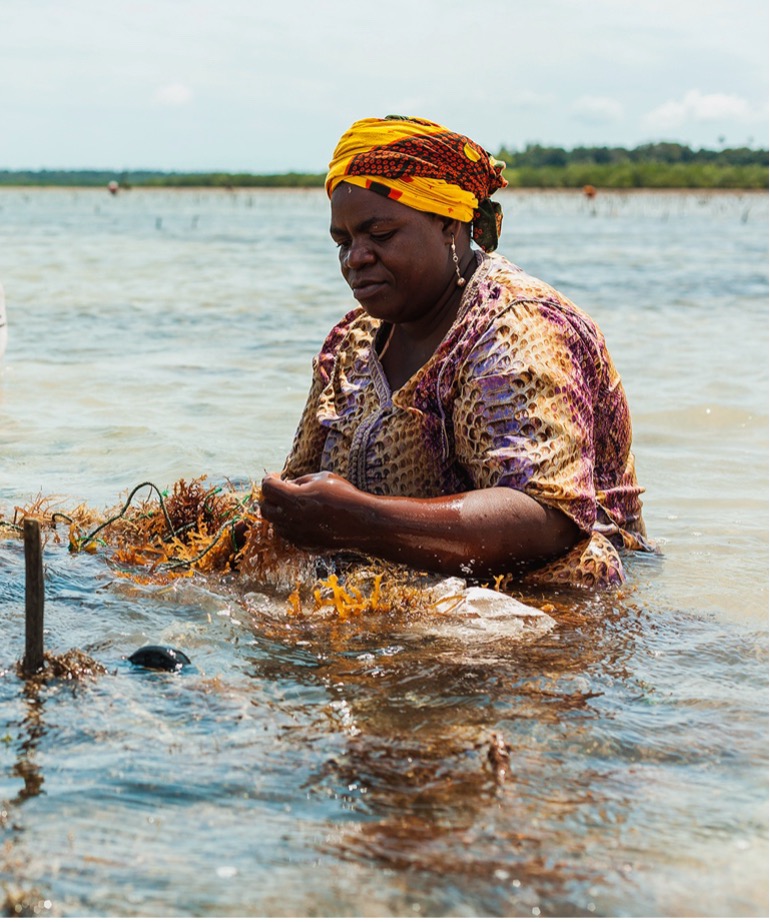
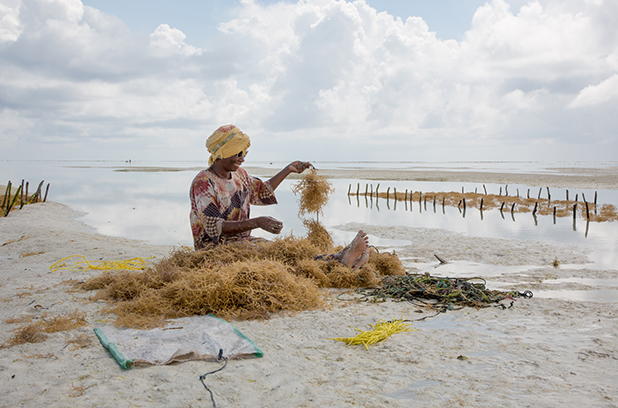
In Zanzibar’s fishing villages, seaweed farming has long been a way of life.
Now, a Tanzanian start-up, Coastal Biotech, is turning this traditional practice into a modern business opportunity with the potential to transform both agriculture and industry.
By converting locally farmed seaweed into natural fertilisers and compostable materials, Coastal Biotech offers farmers a cost-effective alternative to chemical fertilisers while building a pipeline of sustainable biomaterials for industries looking to reduce their reliance on plastics.
In doing so, the company is positioning itself at the intersection of climate resilience and commercial growth.
From local innovation to scalable business
Coastal Biotech validated its concept not in a laboratory but directly with smallholder farmers.
Early field trials showed that seaweed-based bio-stimulants improved soil health and boosted crop resilience in the face of unpredictable weather.
That success caught the attention of the Adaptation & Resilience ClimAccelerator, which is supporting start-ups that deliver commercially viable solutions to climate challenges in Tanzania.
“This isn’t just a biotech product; it’s a business that addresses one of Tanzania’s biggest economic risks – climate vulnerability in agriculture,” says Steven Sillah, Coastal Biotech’s Director of Business.
Agriculture contributes nearly a quarter of Tanzania’s GDP and employs two-thirds of the population.
Yet climate shocks – from droughts to floods – regularly disrupt supply chains, farm incomes, and national food security. For investors, companies like Coastal Biotech offer a unique opportunity: businesses that solve systemic risks while building new industries.
Untapped blue economy potential
Globally, the sustainable blue economy is projected to be worth US$3.2 trillion by 2030, according to the OECD.
For Tanzania, with its 1,400 km of coastline, that represents massive potential.
Seaweed alone offers pathways into fertilisers, food additives, pharmaceuticals, and biomaterials. Coastal Biotech is already targeting niche markets in natural fertilisers and compostable plastics, but with the right financing, the company could scale to become a major player in East Africa’s bio-based economy.
The missing link: Access to finance
Despite strong proof-of-concept and market demand, Coastal Biotech faces the same barrier as many African climate innovators: a financing gap between pilot projects and commercial scale.
“We’ve bootstrapped R&D and pilots with personal funds and small grants,” explains Sillah. “But scaling requires blended finance – grants to support risk-heavy innovation and private capital for commercialisation.”
Traditional investors remain hesitant. Unlike solar energy or electric vehicles – technologies that benefit from global markets and predictable returns – adaptation-focused businesses like Coastal Biotech are often community-driven and context-specific.
This makes them less attractive to conventional investors chasing fast returns.
Yet the business case is clear: Tanzania’s climate risk translates into real economic losses. Companies that mitigate those risks while creating jobs, boosting exports, and diversifying industries represent a strategic investment opportunity.
Investment environment
To unlock this potential, experts say Tanzania needs financial instruments tailored to early-stage climate ventures – tools like blended capital, revenue-based finance, and impact investment frameworks that value resilience and social impact.
“Adaptation ventures don’t scale like apps,” notes Larry Ayo, Business Director at SmartLab, a Tanzanian innovation accelerator. “But they deliver resilience metrics and co-benefits that, if properly measured, represent long-term economic stability.” Policy reforms will also play a critical role. Reducing bureaucratic hurdles, eliminating pre-revenue taxation for start-ups, and improving access to bank credit would help climate innovators scale faster and attract regional and global investors.