By Business Insider Reporter
SELF Microfinance (SELF MF), a government-owned institution under the Ministry of Finance, has set its sights on an ambitious five-year growth plan after recording strong performance in expanding access to credit for low-income Tanzanians.
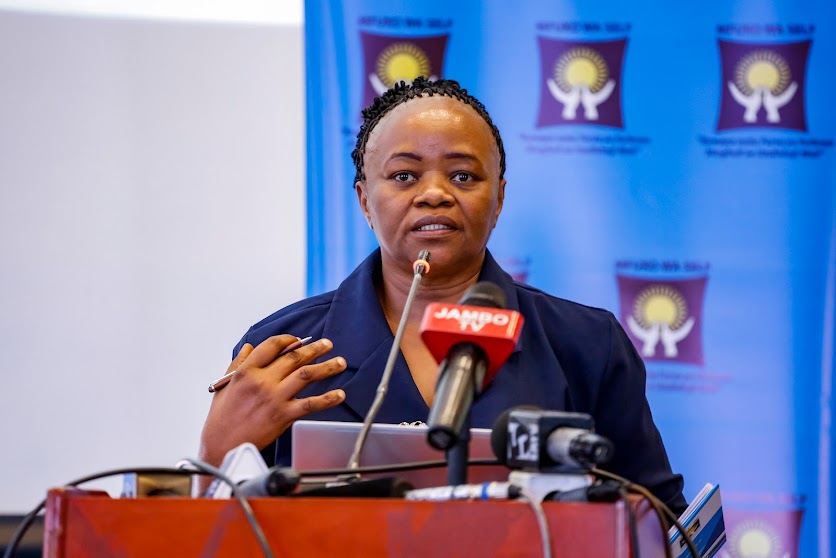
Addressing reporters in dar es Salaam today August 15, 2025, SELF MF Chief Executive Officer, Santiel Yona said the fund had disbursed loans worth TSh 196.9 billion between 2021 and June 2025, reaching 183,381 beneficiaries. Women accounted for 53 percent of the recipients.
“Our mission has always been to empower low-income communities through affordable financial services, and the results speak for themselves,” said Ms. Yona.
The institution, which began operations in July 2015 after evolving from the Small Entrepreneurs Loan Facility Project, provides both wholesale lending to microfinance institutions (MFIs) and direct loans to small businesses, farmers, pastoralists and public servants.
In the past four years, SELF MF has extended loans to 549 MFIs, created an estimated 183,381 jobs and rolled out financing for clean cooking energy solutions.
“We are not just lending money; we are building capacity, supporting livelihoods, and fostering sustainable economic growth,” Ms. Yona noted, highlighting the financial literacy training provided to over 10,000 people during the same period.
Success stories
Among the notable impact cases is WODESU Microcredit in Dodoma, which has grown its client base from 500 to nearly 4,900 women across seven districts, thanks to successive SELF MF loans – culminating in a facility worth over TSh 500 million.
Similarly, Ms. Yona noted that a Dar es Salaam based livestock farmer, Hosiana Swai, has managed to expand her herd from four to 24 cattle, along with goats and pigs, boosting her milk and meat business.
“These are the kinds of transformations that inspire us to deepen our outreach,” Yona said.
Future plans
Looking ahead, SELF MF’s 2026–2030 strategic plan aims to disburse TSh 300 billion in loans to 200,000 beneficiaries, expand its branch network from 12 to 22 locations and leverage technology to enhance operational efficiency.
“Financial sustainability is key,” Yona stressed. “We will continue to ensure our loans are repaid, our services remain high-quality, and our operations generate surplus for reinvestment.”
The CEO acknowledged persistent challenges, including low financial literacy, weak repayment culture and the dominance of informal businesses among target clients.
To address these, SELF MF plans to scale up financial education, improve loan monitoring, and diversify its product offerings. “Our call is for stakeholders – government, media, and partners – to continue working with us in making financial inclusion a reality for all Tanzanians,” Ms. Yona concluded.