By Business Insider Reporter
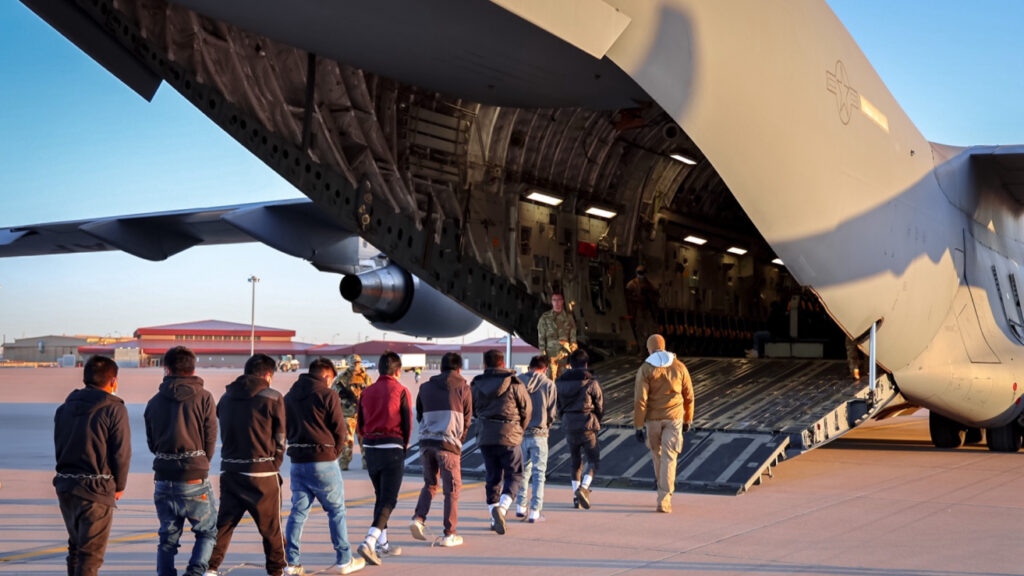
The United States has quietly struck deals with three African nations – including two in East Africa – to accept deportees, some of whom are not citizens of the countries receiving them.
Rwanda and South Sudan are now part of a controversial U.S. third-country deportation programme, raising serious diplomatic and human rights concerns across the region.
Earlier this week Rwanda confirmed that it has agreed to accept up to 250 deportees from the US for resettlement, although the government did not disclose when arrivals would begin or what compensation it would receive in return. The agreement follows earlier deportations of eight men to South Sudan and five to Eswatini, prompting a wave of criticism and legal challenges.
A new deportation pipeline
These secretive agreements mark the expansion of US President Donald Trump’s third-country deportation strategy into East Africa, with potentially far-reaching consequences.
While Washington says it is targeting individuals with criminal convictions who are in the US illegally, the opacity of these deals and the choice of receiving countries – many of them politically fragile or authoritarian – is causing alarm.
In early July, the US deported eight men of various nationalities to South Sudan, including individuals from Cuba, Laos, Mexico, Myanmar and Vietnam.
All had previously been convicted of violent crimes. After weeks of detention at a US military facility in Djibouti, they were quietly flown to South Sudan, a country still reeling from years of civil conflict and chronic political instability.
South Sudanese authorities promised to ensure the deportees’ “safety and wellbeing,” but have refused to provide further details and their current whereabouts remain unknown.
Rwanda’s role and regional ramifications
Rwanda’s acceptance of deportees follows the collapse of its 2022 migrant deal with the United Kingdom, which was ruled unlawful by the British Supreme Court.
The failed UK-Rwanda scheme, designed to offload asylum seekers, ended up costing UK taxpayers nearly US$1 billion, including US$300 million paid directly to Rwanda.
Kigali kept the funds despite the deal never being implemented.
Now, under the US arrangement, Rwanda says deportees will be resettled with access to health care, vocational training and housing support.
Analysts believe the Rwandan government may be positioning itself for diplomatic and economic concessions, such as increased aid, favourable trade terms under AGOA (African Growth and Opportunity Act), or even the lifting of individual US sanctions.
The implications for East Africa are profound.
Rwanda’s willingness to act as a processing hub for foreign deportees could set a precedent for other countries in the region.
Yet human rights observers worry that this creates a market for outsourcing migration control – with vulnerable individuals caught in the middle.
Risk of destabilisation
The case of South Sudan, in particular, raises urgent questions.
The nation has barely emerged from a bloody civil war, and observers say it lacks the infrastructure, rule of law, and governance capacity to safely accommodate foreign deportees, let alone integrate them into society.
“There’s a real risk that these individuals will be detained indefinitely or become pawns in local power struggles,” says Dr. Emmanuel Nyabera, a Nairobi-based migration policy analyst. “These deals are being made behind closed doors, and the lack of transparency opens the door to abuse.”
Eswatini, though located in southern Africa, offers another cautionary tale.
The five men deported there are reportedly being held in maximum-security solitary confinement, with no access to legal counsel.
A human rights lawyer has already taken the Eswatini government to court, arguing that the detentions are illegal and inhumane – particularly as some of the deportees had completed their sentences before being removed from the US.
What’s in it for African governments?
Experts suggest that for African governments, accepting deportees may come with economic and political rewards.
In exchange, Washington could offer aid packages, debt relief, or political cover – including potential silence on internal repression or governance failures.
For example, Rwanda has long enjoyed close ties with Western donors despite its crackdowns on dissent and political opposition. South Sudan, meanwhile, may see this as an opportunity to gain favour and legitimacy on the global stage – despite its turbulent past.
But such deals may backfire. Critics argue that turning East Africa into a dumping ground for unwanted deportees undermines regional stability, raises complex legal issues, and risks importing new security threats into already fragile states.
Regional silence and policy gaps
So far, the African Union and East African Community (EAC) have remained silent on the matter.
There is no publicly stated policy on third-country deportation deals, and no regional framework to evaluate their legal or human rights implications. This silence could prove costly. Without regional oversight or safeguards, East African nations may become more vulnerable to opaque agreements that place political elites ahead of public welfare.