
By Business Insider Reporter
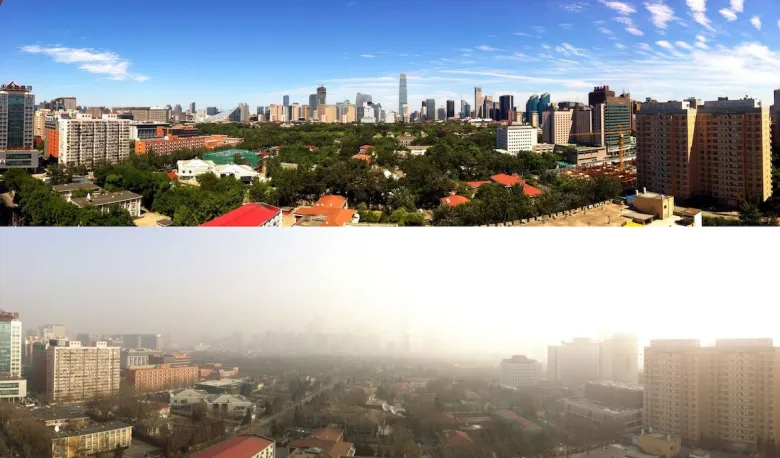
A landmark study by scientists from the University of Reading and several global research centers has found that recent improvements in air quality across East Asia may have unintentionally accelerated global warming.
Published on July 14, the study suggests that cleaner air -particularly the dramatic reduction in sulphur dioxide emissions from China and neighbouring countries – has removed a cooling effect that had been partially shielding the planet from the full impact of greenhouse gases.
“East Asia’s successful efforts to combat air pollution have had tremendous health benefits, but they also lifted what was, in essence, a temporary ‘sunshade’,” said Professor Laura Wilcox of the University of Reading and co-author of the study.
The research highlights that sulphur dioxide emissions in East Asia have dropped by over 75% since 2013, coinciding with a noticeable uptick in global surface temperatures. Using 160 climate simulations from eight international climate models, the team found this cleanup has likely contributed an additional 0.07°C to global temperatures – enough to account for the unexpected warming recorded over the past decade.
While climate scientists expected a rise of around 0.23°C since 2010, actual warming has hit approximately 0.33°C. The difference, the study suggests, is largely due to declining air pollution, alongside other contributing factors such as rising methane emissions and reduced pollution from shipping.

“This study doesn’t mean cleaning the air was a mistake – quite the opposite,” said co-author Bjørn H. Samset from the Center for International Climate and Environment Research in Oslo. “Reducing pollution saves lives. But it also means we’re now seeing more of the real warming caused by greenhouse gases.”
Air pollution cools the planet by reflecting sunlight and altering cloud formation. Its removal has led to reduced cloud reflectivity over the North Pacific, a trend that aligns with satellite observations and has amplified warming in regions downwind of East Asia.
The researchers emphasised that the principal driver of climate change remains greenhouse gas emissions.
However, this unintended side effect of cleaner air highlights the complex interplay between pollution control and climate dynamics. “Air pollution clears from the atmosphere quickly, but greenhouse gases persist for centuries,” the study concludes. “The recent acceleration in warming may be temporary – but the broader climate crisis is far from over.”