


By Business Insider Reporter
Tanzania stands to benefit significantly from a newly launched regional agroforestry policy brief that aims to transform drylands across East Africa into hubs of resilience and sustainable food production.
The policy brief, unveiled on July 3, 2025, proposes a strategic shift in how agroforestry is positioned – as a core solution to the region’s worsening challenges of climate change, land degradation, and food insecurity.
Launched by the East African Dryland Agroforestry Expert Group and supported by Vi Agroforestry and the Swedish International Agricultural Network Initiative (SIANI), the brief – Scaling Agroforestry as a Climate Resilience and Food Security Solution in Drylands of Kenya, Uganda, and Tanzania” – serves as a wake-up call for regional governments to mainstream agroforestry within their development agendas.
Though Kenya’s drylands were the focal point of several remarks at the virtual launch event, experts made it clear that Tanzania shares similar ecological and socio-economic challenges, particularly in regions such as Dodoma, Singida, Manyara, and parts of Arusha and Tabora, where erratic rainfall, overgrazing, and soil erosion have weakened agricultural productivity and community resilience.
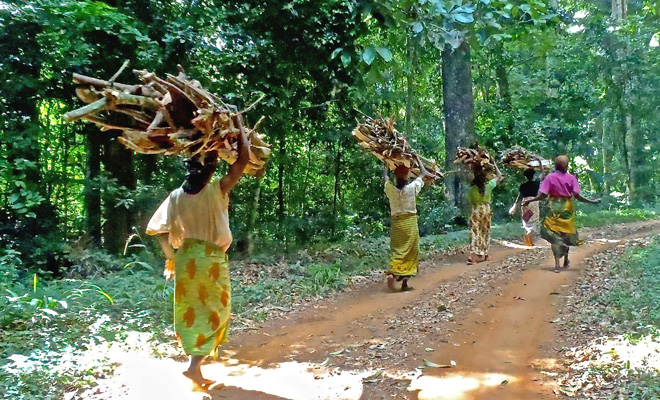
Agroforestry: A climate-smart solution
Agroforestry, which integrates trees and shrubs into agricultural systems, is not new to Tanzania, but its adoption remains scattered and underfunded.
The new policy brief provides evidence-based recommendations for scaling up agroforestry practices, arguing that they offer a low-cost, nature-based alternative to restoring degraded landscapes, enhancing food security, and supporting livelihoods in climate-stressed drylands.
“We have seen the power of agroforestry not as an abstract concept but as a living solution,” said Leif Newman, Vi Agroforestry’s Regional Director. “It restores degraded landscapes, secures livelihoods, empowers communities, and builds resilience.”
For Tanzania, where over 70 percent of the population depends on agriculture, the brief aligns closely with national efforts to combat desertification and improve sustainable land use.
The National Environment Management Council (NEMC) and the Ministry of Agriculture have in recent years advocated for tree planting on farms, but implementation gaps remain.
Regional cooperation
A key proposal from the brief is the formation of a Regional Agroforestry Coordination Platform that would harmonise national strategies, coordinate research, and facilitate knowledge exchange between Kenya, Uganda, and Tanzania.
This platform would serve as a regional think tank and financing hub to promote agroforestry in drylands – many of which span borders and face similar risks.
Kenya’s Environment Principal Secretary, Dr Festus Ng’eno, welcomed the platform, noting the need for shared solutions across East Africa:
“Drylands know no borders. Kenya, Uganda, and Tanzania face similar climate risks and share vast ecological and cultural linkages. We need joint strategies.”
For Tanzania, this presents an opportunity to elevate agroforestry within regional policy spaces such as the East African Legislative Assembly (EALA), and to tap into new financing mechanisms aimed at climate adaptation and rural resilience.

Youth, gender, and private sector inclusion
The policy brief also underscores the importance of making agroforestry inclusive and appealing to youth and women – two groups that are often excluded from land ownership and agricultural decision-making.
For Tanzania, where youth unemployment remains high and women face structural barriers in agriculture, this presents both a challenge and an opportunity.
Youth advocate Elizabeth Githendu highlighted the potential of blending agroforestry with digital storytelling and social media marketing to attract young farmers.
“As young people, we learn a lot about farming from TikTok. Agroforestry can be modern, profitable, and digital.”
Meanwhile, Joan Nyika, a lecturer at the Technical University of Kenya, emphasised the need for gendered agroforestry policies that address land rights, access to credit, and training for women.
These ideas resonate with ongoing efforts in Tanzania to promote women’s land ownership under national land reforms and gender-sensitive agriculture programs.
Implications for Tanzania
Tanzania is currently updating several of its environmental and agricultural policies, and the new agroforestry brief could serve as a timely resource for aligning national priorities with regional goals. Experts suggest that the National Climate Change Strategy, the Agriculture Sector Development Programme (ASDP II), and the Forestry Policy could all be revised to reflect a stronger commitment to agroforestry.