By Business Insider Reporter
Tanzania is set to be one of the key beneficiaries of a transformative US$358.26 million regional dairy development programme spearheaded by the International Fund for Agricultural Development (IFAD), aimed at bolstering dairy production across East Africa.
The initiative, known as DaIMA (Dairy Interventions for Mitigation and Adaptation), was formally approved by the Green Climate Fund (GCF) during its 42nd board session in Papua New Guinea this past week.
The programme will be rolled out in Tanzania, Kenya, Rwanda, and Uganda, with the goal of strengthening climate-resilient dairy systems and reaching 2.5 million people directly across the region.
For Tanzania, which launched its own US$174.3 million national dairy development project in March 2025, DaIMA represents a crucial boost in the country’s broader ambition to transform its livestock sector into a modern, climate-smart and commercially viable industry.
Strategic benefits for Tanzania
According to agricultural policy analysts, Tanzania’s participation in DaIMA presents multiple strategic benefits including increased Productivity through adoption of climate-smart dairy practices and improved feed systems, local farmers stand to significantly increase milk yields.
IFAD estimates a 34% increase in dairy production across the region, a target that aligns well with Tanzania’s national goals under its Livestock Master Plan.
The programme will help reduce post-harvest milk losses – a major issue in Tanzania’s dairy value chain – while aiming to cut greenhouse gas emissions from dairy activities by up to 29%.
This is in line with Tanzania’s National Climate Change Response Strategy.
By valorising manure through biogas digesters and composting, DaIMA will not only enhance rural energy access but also improve soil fertility, reducing dependence on synthetic fertilisers in rural areas.
The programme will support Tanzania in strengthening its dairy policy frameworks, climate services and monitoring and verification systems for emissions.
This institutional capacity is key to ensuring long-term sustainability of the sector.
With growing demand for dairy products in urban centres like Dar es Salaam and Arusha, improved production systems could open up jobs in processing, distribution, veterinary services, and technology innovation.
Young agro-entrepreneurs stand to benefit significantly from these new value chain opportunities.
Regionally integrated approach
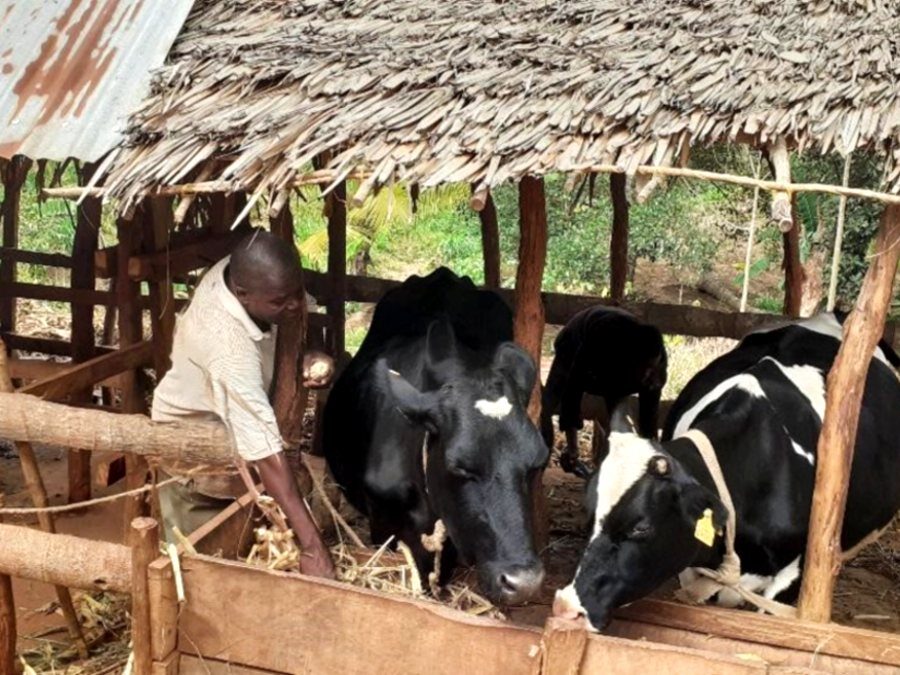
In 2023, Tanzania produced over 3 billion litres of milk, accounting for nearly a quarter of East Africa’s total output. However, most of this comes from smallholder farmers using traditional methods.
The DaIMA programme will introduce regionally coordinated interventions to support small-scale producers with access to knowledge, finance, and improved livestock breeds.
Dr. Elisante Ole Gabriel, Permanent Secretary in the Ministry of Livestock and Fisheries, said the regional scope of DaIMA complements Tanzania’s national efforts:
“This investment brings new energy to our national dairy agenda. Through collaboration with IFAD and our East African neighbours, we will fast-track our move towards a modern, sustainable, and climate-resilient dairy sector.”
Investment momentum in the sector
Tanzania’s recent investment of $174.3 million in March 2025 – funded through a mix of public spending, development loans, and private partnerships – includes plans for milk collection centres, cold chain infrastructure, veterinary training centres, and feed factories.
DaIMA’s implementation through a regional lens not only amplifies these efforts but also helps harmonise standards, policy coordination, and knowledge exchange across borders—especially critical for a sector often affected by cross-border livestock movements and trade flows.
With rising domestic demand for milk and dairy products driven by urbanisation and changing dietary patterns, Tanzania’s dairy sector holds vast untapped potential. The DaIMA programme, underpinned by IFAD, FAO, and government partnerships, could be the accelerator Tanzania needs to leap from subsistence to scale in dairy production—while building resilience against climate shocks and contributing to national food security.