By Costantine Muganyizi
Since joining the International Monetary Fund (IMF) in 1962, Tanzania has built a long-standing and strategic development partnership with the global financial institution – one that has quietly but significantly influenced the country’s economic and social transformation.
Over the last six decades, Tanzania has secured over US$2.2 billion (equivalent to more than TSh5.83 trillion) through 14 financial arrangements with the IMF. As of March 2025, the country’s outstanding IMF-supported loans stood at about US$1.35 billion (roughly TSh3.58 trillion), highlighting its ongoing engagement with the Fund.
But what does this decades-long collaboration really mean for ordinary Tanzanians and the country’s broader development journey?
According to the IMF, the support has helped Tanzania keep its economy stable and moving forward – even during tough times like global financial crises and the COVID-19 pandemic.
This stability has made it easier for the government to deliver essential services such as education, healthcare, electricity, and clean water.
IMF financing has also backed major development goals – building roads, expanding access to schools and hospitals, and helping the country manage inflation so that basic goods remain affordable.
In simple terms, the six-decade relationship between Tanzania and the IMF has been about more than money.
It’s helped lay the groundwork for a stronger economy, better public services, and a brighter future for millions of citizens.
As Tanzania continues to grow, this partnership is expected to remain an important part of the journey – helping the country stay on track toward its long-term development goals.
Beyond Financing: Technical and policy support
In addition to funding, the IMF has provided policy advice on managing inflation, public debt, and investment, along with technical assistance to strengthen institutions.
These efforts have helped improve how public services are delivered, making government agencies more capable and accountable,’ reads one of them.
The IMF has also supported fiscal reforms aimed at improving tax collection, reducing deficits, and increasing the efficiency of public spending.
For the general public, this means taxpayer money is used more effectively – resulting in better schools, health services, and transport systems.
However, critics of the global financial prefect fault its policies, saying IMF support often comes with economic policy conditions, such as spending cuts or tax changes, which can affect household finances if not carefully managed.
“The impact on citizens depends largely on how well the government implements these reforms and protects vulnerable groups,” a senior don at the University of Dar es Salaam, who spoke on condition of anonymity, told Business Insider.
In short, while the IMF’s role is often behind the scenes, its contributions have helped lay the foundation for more inclusive and sustainable growth – benefiting Tanzanians through stronger institutions, improved services, and a more resilient economy.
Impressive economic track record
“Tanzania’s economic performance under IMF-supported programmes has been impressive, with authorities making commendable progress in maintaining macroeconomic stability,” said IMF Resident Representative Sebastian Acevedo in an interview last October. “Inflation has remained consistently low, holding steady at around 3.1% – a sign of effective economic management in a challenging global environment.”
In recent years, Tanzania has secured significant IMF funding to strengthen its economic stability and development efforts. Notably, since mid-2022, the country has received about US$754.3 million under the Extended Credit Facility (ECF) arrangement, which carries a total access limit of US$1.046 billion.
These financial supports are designed to help Tanzania maintain macroeconomic stability, implement essential structural reforms, and address pressing climate-related challenges.
The ECF primarily focuses on economic recovery and sustainable growth, while the RSF provides targeted assistance to enhance climate resilience.
Since 2022 alone, Tanzania has received more than US$750 million (approximately TSh2.01 trillion) from the IMF – a significant infusion of capital in a country where many live on less than US$2 a day and face daily challenges securing basic needs such as food, healthcare, and clean water.
“The economic outlook for Tanzania remains positive, supported by the authorities’ strong track record in implementing key reforms,” said IMF Resident Representative Sebastian Acevedo following the conclusion of the fourth review of the ECF and the first review of the Resilience and Sustainability Facility (RSF).
He noted that the government has been steadily reducing the fiscal deficit while maintaining essential social spending in health and education – demonstrating a balanced approach to fiscal discipline and inclusive development.
Vote of confidence
Economists and fiscal analysts, both local and international, view this IMF support as a strong vote of confidence in Tanzania’s economic management under the Sixth Phase Government.
It signals international recognition of the country’s commitment to maintaining macroeconomic stability, pursuing critical fiscal and structural reforms, and investing in long-term climate resilience.
Tanzania’s current partnership with the IMF revolves around the two key financing programmes: the Extended Credit Facility (ECF) and the Resilience and Sustainability Facility (RSF).
Since mid-2022, the country has received about US$754.3 million through the ECF, with the latest disbursement of US$148.6 million released after a successful fourth review in December 2024.
A fifth review, completed at staff level in April 2025, is expected to unlock an additional US$441 million pending approval by the IMF Executive Board. This funding will help the government maintain budget stability, invest in essential public services, and support recovery amid ongoing global economic uncertainties.
The RSF, launched in June 2024, has provided Tanzania with US$55.9 million following its first review in December 2024. A second review is currently underway, with further disbursements anticipated.
This facility is dedicated to supporting investments in green infrastructure, sustainable agriculture, and disaster preparedness, aligning Tanzania’s development strategy with long-term climate adaptation and sustainability goals.
IMF’s Confidence and Future Disbursements
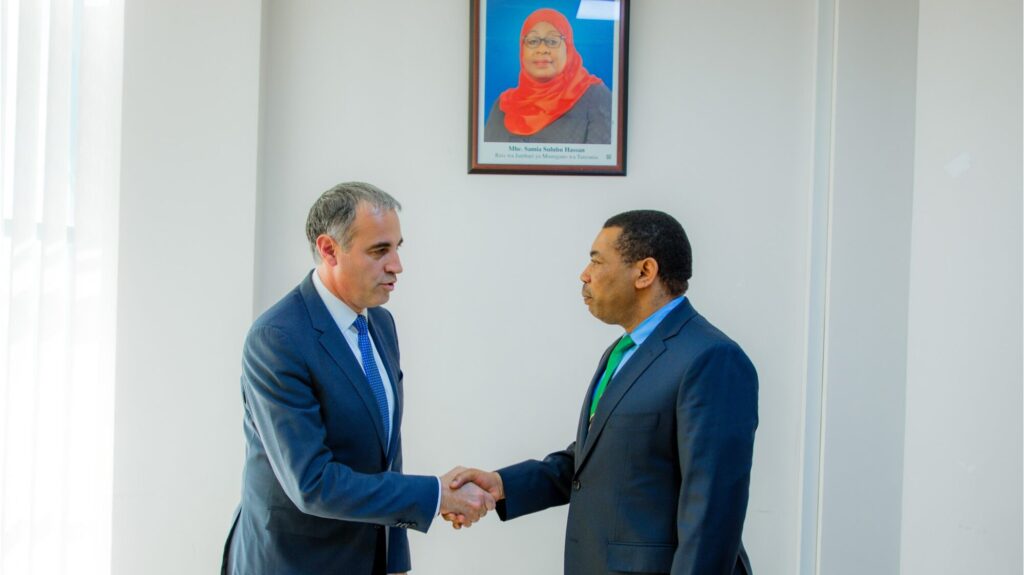
During an April 2025 visit, an IMF staff team led by Nicolas Blancher engaged with Tanzanian officials on the 2025 Article IV consultation, the fifth review under the ECF, and the second review under the RSF.
Mr Blancher noted that once the reviews receive Executive Board approval, nearly US$441 million (about TSh1.17 trillion) will be made available, bringing total IMF support under the ECF to roughly US$907.4 million and US$343.6 million under the RSF.
According to IMF officials, the ongoing financial assistance aims to preserve macroeconomic stability, promote prudent fiscal policies, and ensure continued investments in critical sectors such as education, health, and rural infrastructure.
The support also enables Tanzania to implement structural reforms that enhance governance, improve financial supervision, and create a more favorable business environment, while scaling up climate action through strengthened policy and regulatory frameworks.
What does this mean for Tanzania and its people? Thanks to IMF-backed support, Tanzania has maintained stable inflation at around 3.3% and improved foreign exchange liquidity. This economic stability has allowed the government to sustain social spending, leading to increased public investment in key sectors such as education and health.
Tangible benefits for Tanzanians
Furthermore, Tanzania has strengthened its policy frameworks, fostering an environment conducive to private investment and governance reforms. Considerable progress has also been made in building climate resilience, with notable advances in green infrastructure and disaster management systems.
For ordinary citizens- including farmers, small traders, and public servants – these improvements translate into more predictable prices, better access to essential services, and greater livelihood security. These benefits are particularly significant in rural and climate-vulnerable regions, where communities face the greatest challenges.