By Business Insider Reporter
Tanzania’s ambitions to join the nuclear energy club were given a significant boost this week as the country hosted a high-level international meeting aimed at strengthening nuclear safety protocols and frameworks across Africa.
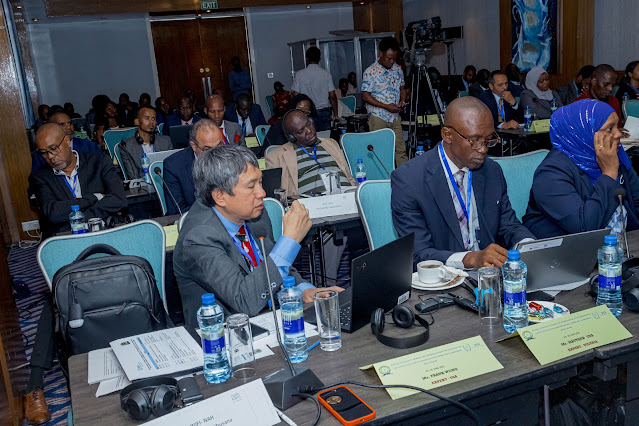
Held in Dar es Salaam, the conference brought together representatives from 15 African countries to discuss updates to nuclear treaties with the aim of enabling the safe implementation of nuclear projects while ensuring their social and economic benefits are fully realised.
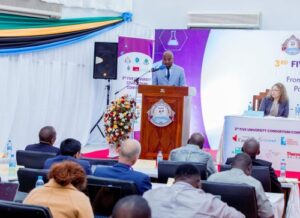
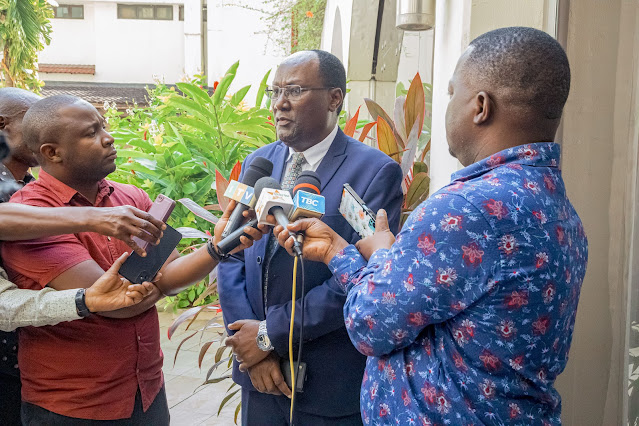
Speaking during the official opening of the conference, Deputy Permanent Secretary in the Ministry of Science and Technology, Professor Daniel Mushi, stressed the importance of regional collaboration and alignment with global nuclear safety standards.
“We have convened today to review and improve nuclear treaties so that each country can undertake its nuclear projects with maximum safety. This marks a crucial first step in ensuring that nuclear sources are harnessed for benefit, not harm,” said Prof Mushi.
The meeting has been held only few days after President Samia Siluhu Hassan insisted on the need for fast tracking of uranium mining projects in the country.
In a decisive shift toward nuclear energy and economic self-reliance, President Samia directed the government to fast-track the development of Tanzania’s uranium resources.
She gave the directive at a State House after swearing-in a new Tanesco Director.
She emphasized: “Tanzania can no longer afford to sit on its uranium deposits while other countries are using the resource as a key component of their energy mix.”
She highlighted the significant reserves – estimated at over 58,500 tonnes – that must be harnessed to bolster national energy security.
“We must manage the Tunduru project so that the investors can start working… If they want to export it later, fine, but we must benefit first,” she stated.
The meeting, co-organised with the International Atomic Energy Agency (IAEA), reflects growing interest in Africa in adopting peaceful nuclear applications – not just in energy, but also in health, agriculture, and industry.
Safeguards and strategic vision
Tanzania’s nuclear development plan is currently in early stages, but government officials have emphasised that safety and public interest will guide all decisions.
Professor Mushi underlined that member states must adhere to stringent protocols and commit to ensuring nuclear technology directly benefits citizens and contributes to national development.
The Director-General of the Tanzania Atomic Energy Commission (TAEC), Prof Najat Kassim Mohamed, noted that the conference was a critical milestone in laying down a shared strategic roadmap.
“Tanzania possesses a variety of nuclear sources that can play a pivotal role in national economic advancement. This forum is helping to align our regulatory efforts and encourage member countries to sign and ratify relevant nuclear treaties,” she said.
She also highlighted that Tanzania’s geographical position -particularly its access to key transport corridors and seaports – places it in a strategic position to support landlocked neighbours in transiting nuclear-related materials, subject to international safety and verification procedures.
Knowledge exchange
Chairman of the TAEC Board, Mr John Simba Chaka, described the event as a unique platform for exchanging experiences on the transport and management of nuclear materials. These substances are increasingly vital in sectors ranging from medicine and food security to energy and environmental monitoring.
Beyond national relevance, the Dar es Salaam meeting also signalled a rising continental consensus: that Africa’s nuclear future must be built on shared knowledge, common standards, and cooperative frameworks.
The summit underscores Tanzania’s growing role as a regional leader in scientific diplomacy, especially as it works to position nuclear technology not just as a technical solution, but as a catalyst for inclusive development.
Implications for Tanzania
Nuclear power could fill Tanzania’s energy demand gap. Presently, generation capacity is around 3,400 MW—58% from hydropower, 35% from gas, and only 7% from other renewable.
Uranium-driven nuclear plants would offer the stable, large-scale output required for industrial expansion and resilient grid operations.
Local uranium use before export could reduce dependence on imported energy, saving foreign exchange. President Samia reiterated that surplus energy could be sold regionally – enhancing Tanzania’s position as an energy exporter. It also potentially sparks job creation and skills development in nuclear science and infrastructure.