By Business Insider Reporter, Serengeti
Fort Ikoma, once a formidable German military stronghold, is rapidly gaining prominence as a compelling blend of history, wildlife, and cultural heritage – offering a fresh reason for Tanzanians to rediscover the riches of their own land.
Located approximately 22 kilometres from the main Ikoma Gate entry into Serengeti National Park, Fort Ikoma stands as one of Tanzania’s most significant historical landmarks, boasting rare colonial-era architecture.
Now part of Serengeti’s official heritage tourism circuit, the fort symbolises a unique convergence between Tanzania’s storied past and its globally renowned biodiversity.
According to Abed Mwesigwa, Community Relations Officer for Serengeti National Park, Fort Ikoma is not merely a relic of colonial rule – it is a living monument that ties together the nation’s military history with its natural legacy.
“Any visitor who comes to Serengeti but misses Fort Ikoma loses a chance to connect with a powerful story,” Mwesigwa told journalists during a media tour of the park on Thursday. “This is where our ecological narrative meets our national history. The fort is full of untold stories – of soldiers, wildlife, and the evolution of Tanzania itself.”
A Fort steeped in history
Constructed in 1905 by German colonial forces, Fort Ikoma was strategically placed on the north-western frontier of the Serengeti to monitor enemy activity.
Its thick stone walls, firing slits, and elevated observation posts are stark reminders of its original purpose as a military outpost.
After the First World War (1914–1918), control of Tanganyika transitioned from Germany to the British Empire, and Fort Ikoma was absorbed under British administration.
Following independence in 1961, Tanzania’s founding President, Mwalimu Julius Nyerere, returned the site to national hands, turning it into a base for the Tanzania People’s Defence Forces (TPDF).
“Fort Ikoma functioned as a military post until 1997,” said Mwesigwa. “That year marked a turning point when the government transferred the site to the Tanzania National Parks Authority (TANAPA), officially making it part of Serengeti National Park and converting it into a protected heritage site.”
Linking nature with national identity
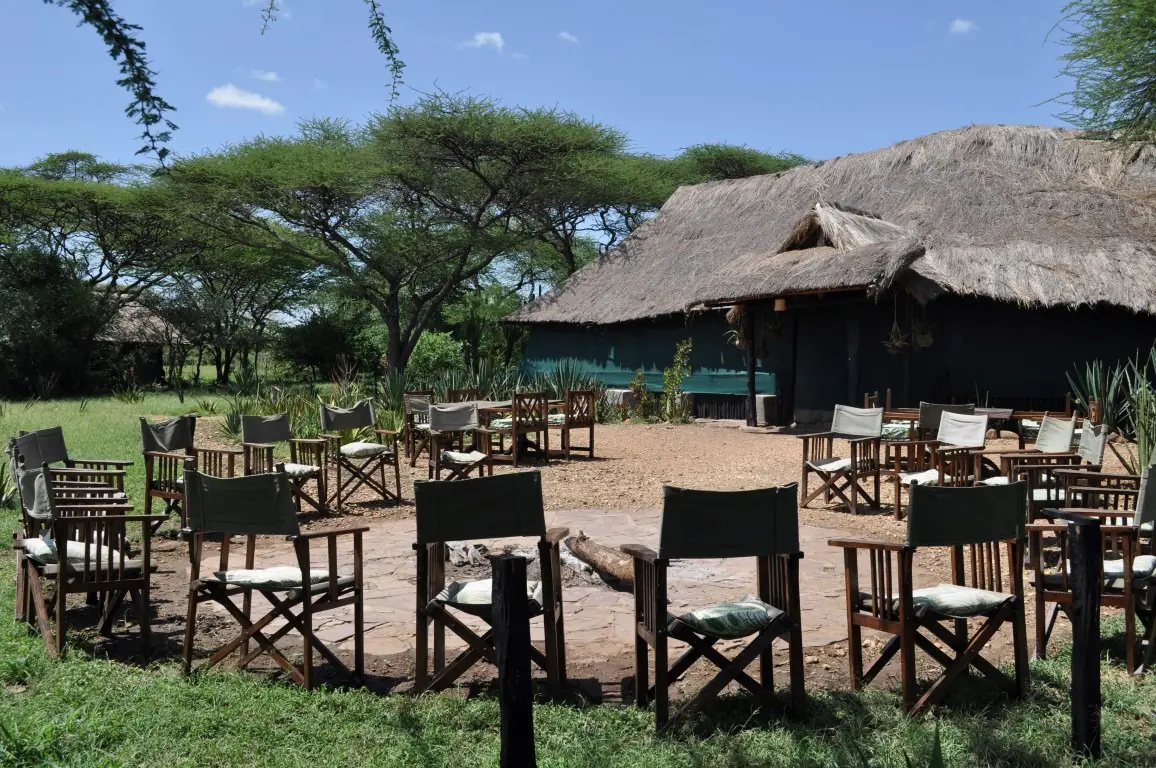
Nestled within Africa’s top-rated national park – voted best on the continent for five consecutive years (2019–2023) – Fort Ikoma today offers an immersive experience for visitors.
From the fortress walls, tourists can witness the Great Migration, observe predators in their natural habitats, and take in golden sunsets that bathe the savannah and ancient structures in a majestic glow.
“Fort Ikoma is not just a scenic viewpoint; it’s a living museum,” Mwesigwa said. “You can walk through historic ruins, explore nearby caves filled with lore, and trace the footsteps of both colonial soldiers and Tanzanian freedom fighters.”
Journalists who toured the site expressed awe at the endurance and design of the stone architecture, with some buildings still in use today.
The intricate carvings, age-worn pathways, and preserved military structures add authenticity to the visitor experience.
Message for domestic tourists
Mwesigwa noted that the rise of Fort Ikoma as a tourist destination aligns with national efforts to promote domestic tourism, urging Tanzanians to embrace the country’s diverse historical and ecological assets.
“Fort Ikoma is not just a stop on a safari – it’s a message,” he said. “A message that the Serengeti is not solely about lions or wildebeests, but also about our shared history, our resilience, and our identity as a people.” As Tanzania positions itself as a leader in sustainable and cultural tourism, Fort Ikoma serves as a prime example of how preserving the past can enhance the future.