
By Business Insider Reporter
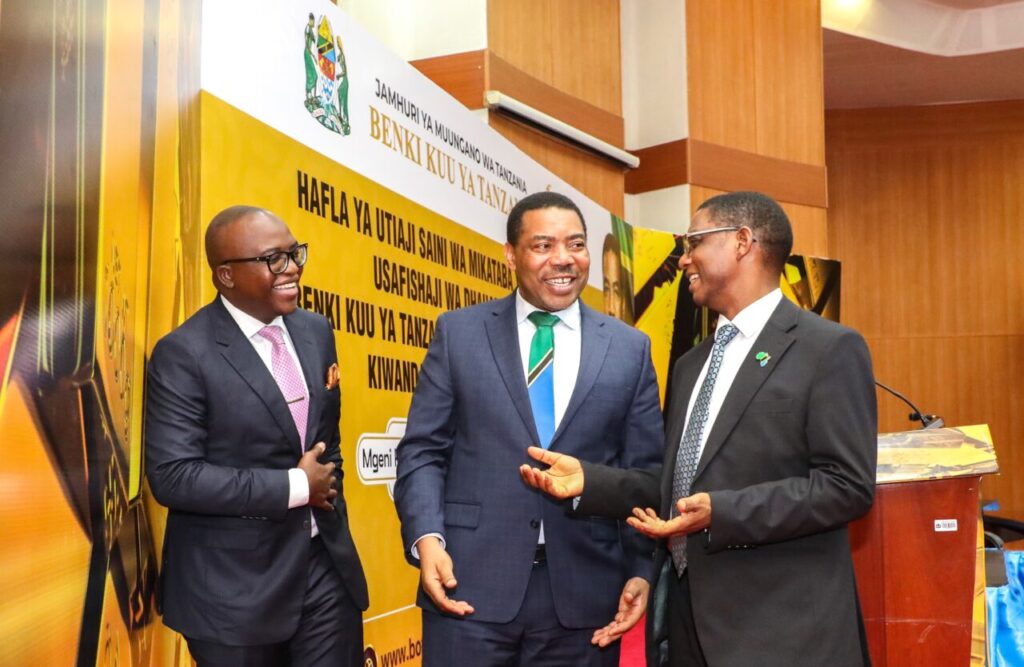
The country’s mining industry is bracing for a surge in value addition and foreign‑exchange inflows after the Bank of Tanzania (BoT) inked landmark gold‑purchase and refining agreements with three leading producers and the Geita Gold Refinery (GGR).
Under the deals, signed on June 15, 2025 in Dodoma, the central bank gains guaranteed access to domestically refined bullion for its Domestic Gold Purchase Programme, while miners secure a ready, competitively priced market at home.
Finance Minister, Dr. Mwigulu Nchemba said the arrangement “locks in a reliable pipeline of monetary gold, deepens local refining capacity and widens minerals’ share of GDP.”
A swift boost to foreign reserves
Since the programme’s launch in July 2022, BoT has acquired 5,022.85 kg of gold worth US$554.28 million, already eclipsing its 2024/25 target of US$350 million. Governor, Mr. Emmanuel Tutuba, expects the fresh agreements to push reserve growth even faster, easing reliance on external borrowing and buffering the shilling against commodity‑price swings.
Economists estimate that every additional US$100 million in gold reserves trims Tanzania’s annual sovereign‑debt servicing costs by up to US $8 million through lower risk premiums.
“The direct link between gold stockpiling and cheaper financing is a game‑changer for fiscal stability,” noted chief economist of one prominent banks in the country.
Value addition and jobs at home
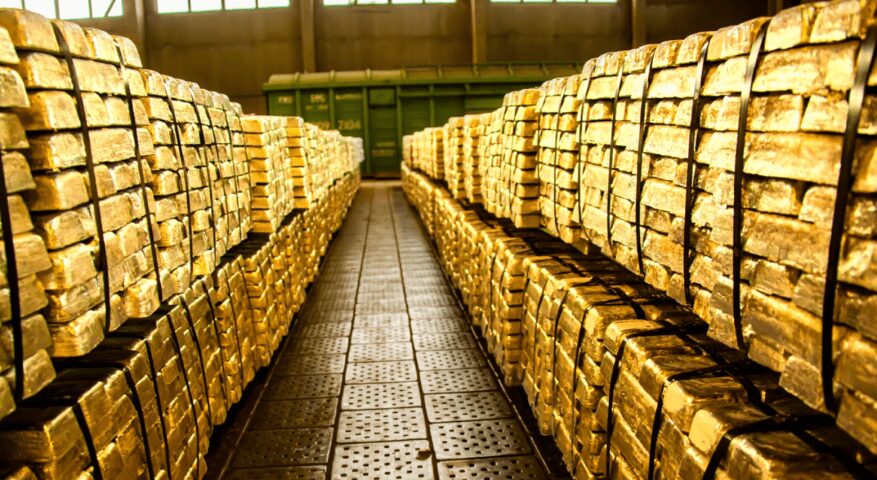
By committing to buy only LBMA‑grade bullion refined domestically, the programme is forcing a shift up the value chain.
Three plants – Mwanza Precious Metals Refinery, Eyes of Africa and GGR – handled the entire 5‑tonne haul between October 2024 and mid‑June 2025.
Their combined throughput, analysts say, sustains more than 600 high‑skill jobs and has sparked a rush of investment in assay labs, logistics and security services.
Minerals Minister, Mr. Antony Mavunde, underscored that Section 100D of the Mining Act already bans raw‑ore exports.
“These contracts operationalise that intent,” he said, adding that local smelters are racing to secure London Bullion Market Association (LBMA) certification, a prerequisite for selling directly to global central banks and jewellery hubs.
Catalysing small‑scale producers
Artisanal miners, who account for roughly 20 percent of Tanzania’s gold output, stand to gain as well.
BoT’s willingness to purchase aggregated lots through accredited refiners guarantees a fair international price without costly middlemen.
The Federation of Miners Associations projects a 15 percent jump in declared artisanal production next year, translating into higher tax and royalty receipts.
Remaining hurdles
Governor Tutuba cautioned that legal roadblocks still prevent BoT from buying silver and other by‑products recovered during refining.
The central bank also faces extra costs when swapping non‑LBMA bars for certified bullion abroad.
Dr. Nchemba promised “prompt statutory tweaks” on both fronts and signalled a review of VAT treatment on refining services to keep margins attractive.
Macro‑economic ripple effects
If implemented fully, the gold‑purchase framework could raise mineral exports’ GDP share from 9.1 percent to 12 percent by 2027, according to the Planning Commission, cut the trade deficit by an estimated US $400 million annually, cushioning the currency and lift government revenue via royalties and corporate taxes by TSh 350 billion (US $130 million) over the same period.
“Tanzania is effectively monetising its geology to build financial firepower,” said economist from University of Dar es Salaam.
As gold prices hover near record highs, officials argue the timing could not be better. “We are converting dust into dollars while nurturing an entire refining ecosystem,” Dr Nchemba told stakeholders. “That is how a resource‑rich nation secures lasting economic resilience.”