By Business Insider Reporter
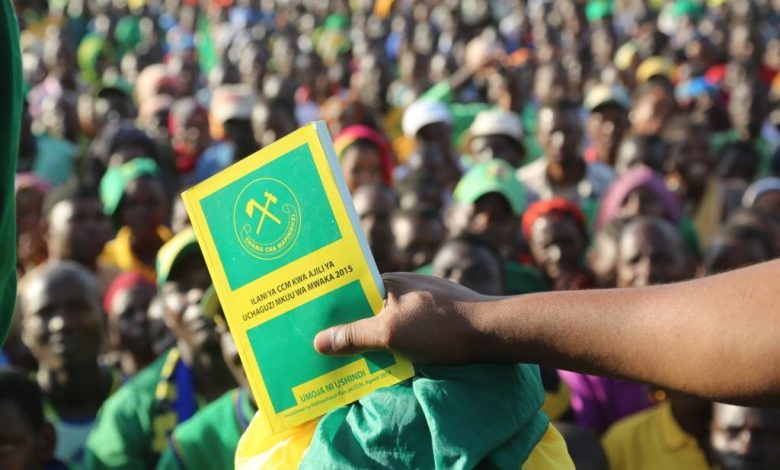
The ruling party Chama Cha Mapinduzi (CCM) has unveiled a bold and ambitious economic agenda in its 2025–2030 election manifesto, outlining key investment priorities aimed at accelerating GDP growth, job creation, and per capita income in both mainland Tanzania and Zanzibar.
The plan aligns closely with the National Development Vision 2050, which targets a US$1 trillion economy by mid-century.
A cornerstone of the manifesto is the emphasis on infrastructure as a driver of private sector investment and economic transformation. Major projects include the 1,108-km Tanga–Arusha–Musoma railway to boost regional trade and connectivity.
Other mega projects are the Bagamoyo Port on the mainland and Mangapwani Port in Zanzibar to strengthen maritime trade as well as new airports in Nungwi and Paje, alongside the 12-km Nungwi Tourism Road, to expand Zanzibar’s tourism potential
These projects aim to lower logistics costs, improve investor access, and support Tanzania’s ambition of becoming a regional trade hub.
The Zanzibar Aspect
Zanzibar plays a central role in CCM’s 2025–2030 economic strategy. Key goals include creation of 350,000 new jobs across tourism, agriculture and the blue economy
There is also expansion of blue economy activities, with a targeted contribution of 300,000 units (jobs or economic output) by 2030 and training of 2,500 cooperative societies to improve productivity and market access
The blueprint also highlights livestock loans, including the provision of two cows per youth per region annually, aimed at youth income generation
The manifesto builds on previous successes, including 304 investment projects worth US$3.74 billion from 2015 to 2020, which created over 16,800 jobs in Zanzibar.
Economic empowerment and job creation
While the manifesto lacks a specific national job target, external references suggest a goal of 8.5 million new jobs by 2030 for mainland Tanzania.
Job creation will be a cornerstone of CCM’s 2025–2030 economic strategy, with efforts centred on three high-impact areas. First, industrial growth is prioritized to significantly expand the manufacturing base, aiming to increase industrial employment from 306,180 in 2020 to 500,000 by 2025.
This reflects a broader push to diversify the economy, reduce reliance on raw commodity exports, and create sustainable formal-sector jobs. Second, tourism development is set to be a major employment driver, with ambitious goals of attracting 5 million tourist arrivals and generating US$6 billion in revenue by 2025.
This growth is expected to stimulate job creation across hospitality, transportation, cultural industries, and tourism-related services, especially in Zanzibar and other high-potential destinations.
Third, targeted youth empowerment programs will address high youth unemployment through increased access to vocational training, entrepreneurship development, digital skills, and soft loan schemes.
These initiatives are designed to equip young people – particularly recent graduates and informal sector participants – with the tools to enter or create jobs, contributing to inclusive and resilient economic growth.
Per capita income, output growth goals
The manifesto prioritizes raising per capita income, especially for youth and marginalized communities. In Zanzibar, income growth is tied to empowerment initiatives like livestock distribution and cooperative training.
Although the manifesto does not quantify specific per capita income or GDP targets for 2030, it emphasises a sustained growth trajectory.
Zanzibar’s per capita income has shown significant progress, rising from TSh942,000 in 2010 to TSh2.3 million in 2018. Similarly, mainland Tanzania’s GDP per capita increased from US$ 981 in 2015 to US$ 1,149 in 2024, with further gains anticipated through expanded job creation and investment.
At the current market exchange rate, the mainland Tanzania figures translate to about TSh2.6 million and TSh3.08 million, respectively. This conversion provides a clearer local currency context for income comparisons and highlights the progress toward improving individual economic well-being.
It also underscores the importance of exchange rate stability in accurately tracking per capita income growth and ensuring that gains in GDP translate into tangible benefits for Tanzanian citizens.
On the growth front, the manifesto outlines projected national output (GDP) growth rates of 6.8% for Zanzibar and 6% for mainland Tanzania in 2025.
These projections are positioned as stepping stones toward achieving the broader ambitions of Vision 2050, which aims for an annual GDP growth rate exceeding 8%, a US$1 trillion national economy, and US$12,000 per capita income by mid-century.
Challenges and considerations
While the CCM 2025–2030 manifesto outlines an ambitious and forward-looking development agenda, several challenges could hinder its effective implementation.
One of the main concerns is the lack of specific GDP and per capita income targets for 2030, which limits transparency and makes it more difficult to measure progress and ensure accountability.
Without clear benchmarks, assessing whether the manifesto’s economic goals are being met becomes challenging for policymakers, stakeholders, and the public.
Another critical issue is the uncertainty surrounding funding mechanisms for major infrastructure projects, such as the 1,108-km Tanga–Arusha–Musoma railway and the Bagamoyo port.
These high-capital undertakings require substantial public and private investment, yet the manifesto does not offer detailed strategies on financing sources, timelines, or risk management – potentially putting delivery at risk.
Additionally, external macroeconomic risks pose significant threats to the realization of the manifesto’s goals. Public debt has risen to 41.1% of GDP as of 2024, and foreign exchange shortages could limit the government’s ability to finance imports, service debt, or support the business environment.
These challenges, if not addressed proactively, could slow down momentum and undermine investor confidence.
Despite those fiscal and policy realities, the CCM’s 2025–2030 manifesto provides a bold and optimistic roadmap to elevate Tanzania and Zanzibar’s socio-economic status through targeted investments, inclusive growth strategies, and empowerment programs.
Its strong alignment with the long-term goals of Vision 2050, including infrastructure development, job creation, and youth empowerment, offers a promising path toward national prosperity.
However, successful execution will require not only political commitment but also well-defined implementation plans, sustainable financing frameworks, and robust mechanisms to mitigate economic vulnerabilities.