
By Raymond Ishengoma, New York
Tanzania has used a global platform in New York to underline how social development and social justice have moved to the centre of its national policy agenda under the leadership of President Samia Suluhu Hassan, positioning inclusion as a key pillar of long-term economic transformation.
Speaking at the 64th Session of the United Nations Commission for Social Development (CSocD64), Tanzania’s Head of Delegation, Deputy Permanent Secretary in the Ministry of Community Development, Gender, Women and Special Groups, Advocate Amon A. Mpanju, said the country has made notable progress in embedding social development and social justice within its policy and legal frameworks. These priorities, he noted, are anchored in the 1977 Constitution of the United Republic of Tanzania and operationalised through the Tanzania Development Vision 2050 (Dira 2050), which aligns national ambitions with regional and global agendas, including the 2030 Sustainable Development Goals (SDGs).
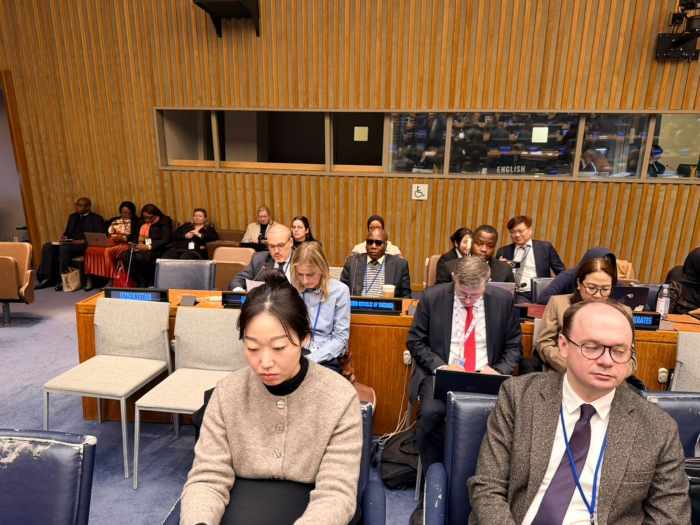
The CSocD64 session, taking place in New York from 2 to 10 February 2026, is focusing on advancing social development and social justice through equitable, inclusive and well-coordinated policies.
Against this backdrop, Tanzania presented its experience as a case study of how social policy reforms can support economic resilience and inclusive growth.
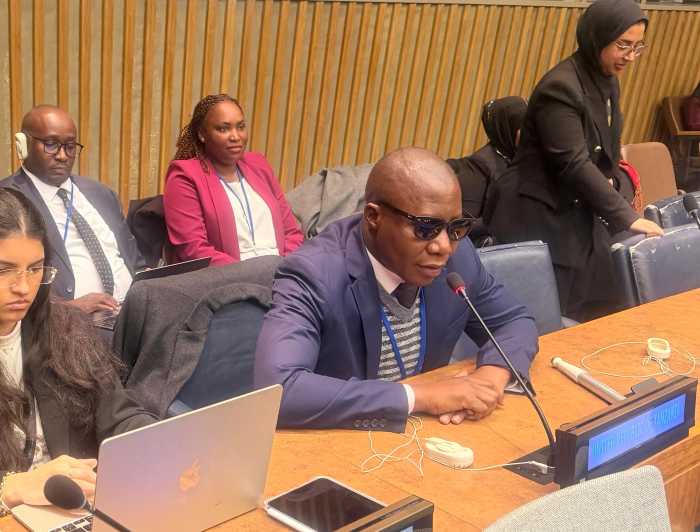
Advocate Mpanju told delegates that Tanzania has pursued well-coordinated policies that link economic growth with social protection, human capital development and equitable access to basic services.
These efforts are reinforced by sectoral policies covering social protection, gender equality, youth development, education, health and the protection of vulnerable groups – particularly women, older persons, children and persons with disabilities – while advancing SDGs 1, 5, 8, 10 and 16.
A flagship pillar of this agenda is social protection. Through the Tanzania Social Action Fund (TASAF), the government has significantly expanded coverage, reaching more than 1.26 million beneficiaries in the 2024/2025 financial year, effectively covering all identified poor households.
Cash transfers under the programme have helped stabilise household incomes, improve access to education and health services, and strengthen resilience to economic shocks and climate-related risks.
Gender equality and inclusion were also highlighted as areas of tangible progress. Women’s participation in leadership and decision-making has continued to rise across government institutions, with female representation in the National Assembly reaching 40.5 per cent.
This trend, Advocate Mpanju said, has been supported by gender-responsive planning and budgeting, including the statutory allocation of 10 per cent of councils’ own-source revenues as interest-free loans for women, youth and persons with disabilities engaged in small-scale economic activities.
In education, Tanzania has sustained its policy of free basic education, which has driven a sharp increase in enrolment, particularly at primary level.
More than two million children, including 3,200 with special needs, have been enrolled under the programme. At the same time, investment in vocational education and training has expanded, with enrolment rising by 43 percent to around 265,000 students in the 2025/2026 academic year.
Teacher training programmes have also been scaled up, reaching more than 300,000 teachers nationwide.
Access to higher education financing has similarly improved. The number of students benefiting from government loans rose from 149,472 in the 2020/2021 academic year to 245,384 in 2024/2025, while the higher education loan budget increased from TSh464 billion to TSh787.4 billion over the same period.
According to Advocate Mpanju, this expansion has reduced financial barriers and widened opportunities for young people to acquire advanced skills.
Health sector reforms featured prominently in Tanzania’s presentation. The country has enacted a Universal Health Insurance Act in 2025, with implementation already under way. The government has allocated resources to ensure access for vulnerable households, including older persons, children, persons with disabilities and those living with chronic illnesses. Investment in health infrastructure has seen the number of dispensaries, health centres and hospitals rise from 8,549 in 2020 to 12,846 in 2025, alongside a more than threefold increase in health sector employment.
These investments have contributed to declines in maternal and under-five mortality and expanded treatment for chronic and non-communicable diseases.
On the economic front, Tanzania is advancing an inclusive growth model by increasing investment in agriculture, industry and mining.
By strengthening production systems, promoting value addition and improving market access, the government has boosted food production and household incomes. Initiatives such as the establishment of commercial farms, the creation of more than 47,000 industries, and the development of special economic and production zones across targeted regions are aimed at expanding employment and raising the value of outputs from key productive sectors.
Looking ahead, Advocate Mpanju reaffirmed Tanzania’s commitment to advancing social development and social justice through equitable, inclusive and well-coordinated policies, guided by the principle that no citizen should be left behind.
He also stressed the importance of sustained international cooperation, particularly in mobilising financing, accessing environmentally friendly technologies and building capacity to implement global commitments.
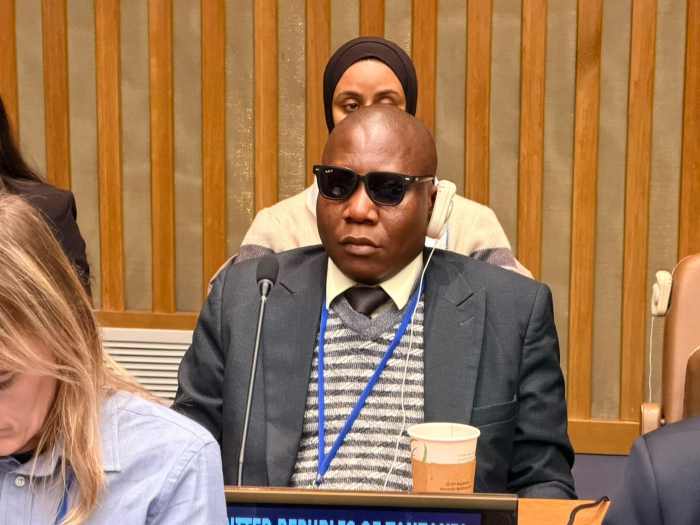
On 4 February 2026, Tanzania formally presented its national report on the implementation of the 1995 Copenhagen Declaration and Programme of Action and the 2025 Doha commitments on social development, adopted by UN Heads of State and Government. The submission reinforced Tanzania’s message at CSocD64: that social investment is not only a moral imperative, but a strategic foundation for long-term economic stability and inclusive national growth.