By Business Insider Reporter
As Tanzania prepares to officially roll out Dira 2050 from July 1, 2026, Stanbic Bank Tanzania has reinforced its role as a catalyst for global trade, facilitating transactions worth TSh 200 billion between Tanzanian and Chinese businesses over the past five years.
The achievement positions the bank – and its parent company, Standard Bank Group – at the forefront of advancing Tanzania’s export-led growth ambitions under the upcoming national development blueprint.
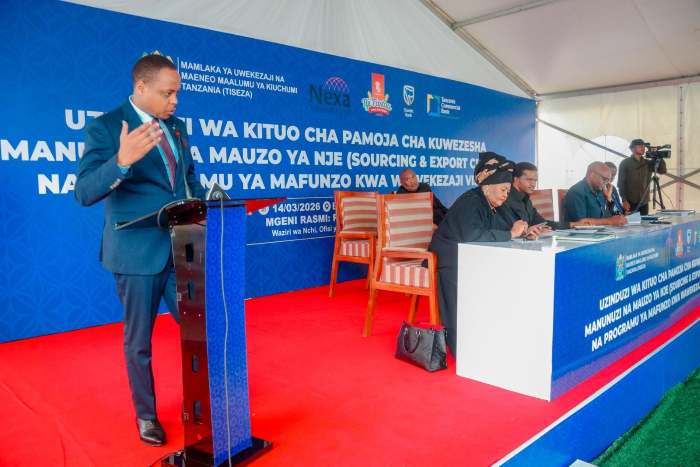
Speaking in Dar es Salaam recently, Stanbic Bank Tanzania’s Head of Business and Commercial Banking, Fredrick Max, said the bank’s Tanzania–China trade window, inspired by the Standard Group’s Africa-China trade desk, has been instrumental in sustaining business linkages during periods of global supply chain disruption.
“This initiative was introduced at a time when global supply chains were under significant strain. The Africa-China trade desk established by Stanbic Bank Tanzania enabled many local businesses to continue trading with their Chinese counterparts despite the global challenges,” he explained.
As the country transitions toward Dira 2050 implementation, such financial innovations are expected to play a pivotal role in integrating local enterprises into international markets and strengthening Tanzania’s position in global value chains.
Mr. Max added that Stanbic’s impact extends beyond trade facilitation. Through its Biashara Incubator Programme, the bank has supported more than 2,000 entrepreneurs to secure contracts worth TSh 32 billion, including participation in strategic projects such as the East African Crude Oil Pipeline (EACOP).
These initiatives are helping build a pipeline of competitive local suppliers – an essential component for industrialisation, job creation and private sector-led growth envisioned under Dira 2050.
The disclosures by Stanbic Bank were made at the launch of a sourcing and export centre by the Tanzania Investment and Special Economic Zones Authority (TISEZA) – a strategic platform aimed at strengthening Tanzania’s export ecosystem and global market integration.
Mr. Max also reaffirmed the lender’s commitment to advancing both regional and international trade. He noted that the bank is leveraging its continental network and financial expertise to position Tanzanian enterprises – particularly MSMEs – to capitalise on emerging opportunities under frameworks such as the African Continental Free Trade Area, as well as broader global value chains.
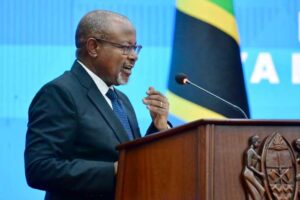
The event, officiated by the Minister of State in the President’s Office for Planning and Investment, Prof. Kitila Mkumbo, also featured the rollout of a special economic zone training programme targeting young investors, alongside the launch of a new digital platform designed to strengthen real-time public engagement and policy feedback.
Speaking at the ceremony, Prof Mkumbo underscored that the government is deliberately laying a strong foundation for the implementation of Dira 2050 by prioritising private sector empowerment, industrial competitiveness and seamless integration into global markets.
“With Dira 2050 set to take effect from July 2026, our focus is on equipping Tanzanian businesses – especially MSMEs – to meet international standards and access global markets,” he said.
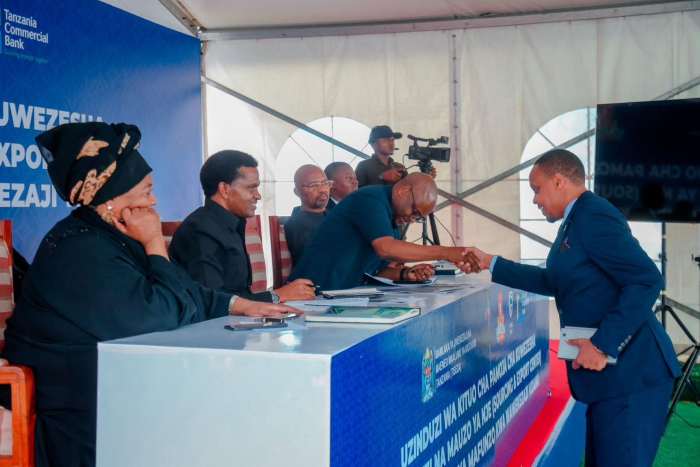
With 76 per cent of the population under 35, the strategy places strong emphasis on youth-driven enterprise development. The newly launched programmes aim to equip young entrepreneurs with skills, infrastructure and market access needed to compete globally.
TISEZA Director General, Gilead Teri, said the initiatives are tailored to address persistent constraints facing entrepreneurs, including limited technical capacity, inadequate production facilities and lack of reliable markets.
“Through these programmes, we are enabling value addition and preparing Tanzanian businesses for both domestic and export opportunities,” he said.
He added that in the 2024/25 financial year, TISEZA registered 940 projects worth US$11 billion, with the potential to create over 342,000 jobs – an indicator of growing investor confidence ahead of Dira 2050’s rollout. As the July 2026 start date approaches, Tanzania’s alignment of financial innovation, industrial policy and youth empowerment signals a decisive shift toward a globally competitive, export-oriented economy – placing institutions like Stanbic Bank at the heart of delivering the country’s long-term development vision.