By Business Insider Reporter and Agencies
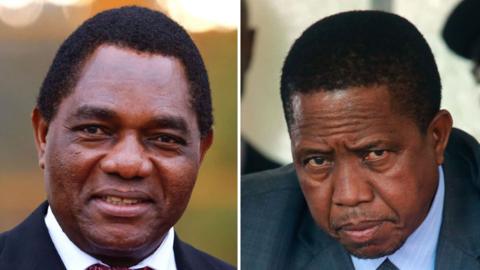
The decision to bury Zambia’s former president, Edgar Lungu, in South Africa rather than in his home country has sent shockwaves through Zambia’s political landscape, raising new questions about national unity, the rule of law, and the ongoing rivalry between Lungu’s camp and the current administration of President Hakainde Hichilema.
Lungu, who died earlier this month in South Africa while receiving medical treatment, was scheduled to receive a state funeral in Lusaka on Sunday, 23 June.
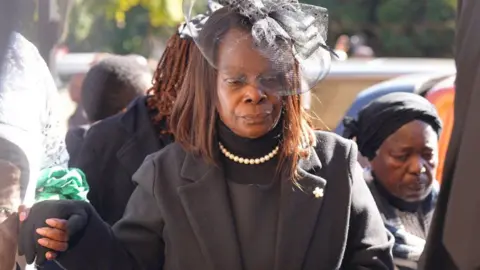
However, after a high-profile fallout between his family and the Zambian government over funeral arrangements, the family blocked the repatriation of his body and announced that he would be buried privately in Johannesburg, in what will be an unprecedented move – the first time a former Zambian head of state will be laid to rest outside the country.
“The government has turned a solemn occasion into a political game,” said Patriotic Front (PF) acting president Given Lubinda, throwing his support behind the family’s decision.
Political Undercurrents Resurface
At the heart of the fallout is a long-standing political rivalry between Lungu and Hichilema.
Though Lungu was defeated by a landslide in the 2021 general election, he remained an active critic of the current government and, until his death, maintained ambitions to return to the presidency.
In late 2023, the Constitutional Court barred him from running again, declaring he had already served two full terms.
Lungu’s will reportedly requested that Hichilema not attend his funeral, a demand that symbolises the deep personal and political rift between the two leaders.
President Hichilema, in a televised address, expressed disappointment over the turn of events, saying, “President Lungu belongs to the nation of Zambia… and his body should be buried here with full honours.”
However, he ultimately cut short the national mourning period, which had been extended until 23 June, declaring that “the country must resume normal life.”
Impact on Zambian Politics and National Image
The dramatic conclusion to what should have been a unifying state event has laid bare the polarisation in Zambia’s political culture.
Analysts say the burial dispute may further erode trust between opposition supporters and the ruling United Party for National Development (UPND), especially among PF loyalists who view the fallout as an act of disrespect to their leader.
Political analyst Mubanga Chileshe observed: “This incident has done real damage to national cohesion. A funeral is normally a time for unity. But instead, this became a power struggle over legacy, image, and control.”
Civil society groups have also voiced concern over how the matter was handled.
Rev. Emmanuel Chikoya, head of the Council of Churches in Zambia, said the stand-off was “hurting the dignity of our country” and called for humility and dialogue.
What This Means Going Forward
The burial saga may have implications for future state protocols regarding the funerals of former leaders, especially those with complex political legacies. It also underscores the delicate balance between family wishes, constitutional duty, and political optics.
For President Hichilema, the episode could signal a missed opportunity to show statesmanship by rising above political differences, while for the PF, it has become a rallying point to reassert its identity and galvanise support heading into the 2026 general elections.
Edgar Lungu served as Zambia’s sixth president from 2015 to 2021, following the death of President Michael Sata.
He was known for his populist style and significant infrastructure projects, but also faced criticism over rising debt, press restrictions, and declining democratic indicators during his tenure. As Zambia now prepares to continue without one of its most prominent and divisive figures, the circumstances surrounding his burial will likely be remembered not only for their symbolism but also for their political significance in a still-fractured nation.