
By Business Insider Reporter
Tanzania is set to reap significant environmental and economic dividends following the signing of a five-year cooperation agreement between regional bodies responsible for managing the Lake Victoria and Lake Tanganyika basins – two of the country’s most strategic natural assets.
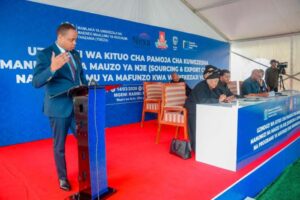
The Lake Victoria Basin Commission (LVBC) and the Lake Tanganyika Authority (LTA) formalised the Memorandum of Cooperation (MoC) in Kigoma, anchoring Tanzania at the centre of a renewed regional push to tackle climate change, pollution and biodiversity loss affecting millions of livelihoods.
For Tanzania, which shares both lakes and hosts critical fishing, transport and tourism economies around them, the agreement strengthens long-term protection of water resources that underpin food security, jobs and regional trade.
Safeguarding key economic lifelines
Lake Victoria and Lake Tanganyika are central to Tanzania’s blue economy. Together, they support fisheries worth billions of shillings annually, sustain cross-border transport corridors and provide water to rapidly growing lakeside communities.
By committing to joint water assessments, monitoring and sustainable water-use policies, the pact is expected to curb overexploitation and improve resource planning – helping Tanzania stabilise fish stocks, protect incomes for fishing communities and reduce conflicts over shared resources.
Pollution control and habitat restoration initiatives under the agreement are also likely to benefit public health and tourism, particularly along Tanzania’s western and north-western corridors.
Climate resilience with local impact
Climate change adaptation and mitigation form a core pillar of the cooperation, a priority for Tanzania as climate variability increasingly disrupts rainfall patterns, fisheries and agriculture.
Through joint research, resilience strategies and support for sustainable land management, the partnership offers Tanzania access to regional expertise and financing mechanisms that can strengthen early warning systems and disaster preparedness for floods and droughts – recurring threats in lake basin communities.
Disaster risk reduction measures, including coordinated responses to climate-related hazards, are expected to lower economic losses and protect infrastructure critical to trade and transport.
Boosting jobs and community livelihoods
The agreement places strong emphasis on community engagement and socio-economic development. For Tanzania, this translates into support for community-led livelihood projects, value addition in fisheries and greater inclusion of local actors in conservation efforts.
Capacity building and knowledge-sharing programmes – ranging from technical exchanges to regional workshops – will also help strengthen Tanzanian institutions and professionals involved in water resources, environmental management and climate policy.
Stronger regional coordination, more funding access
The MoC was facilitated under the EAC4Nature project with backing from the German Federal Ministry for Economic Cooperation and Development through GIZ, opening pathways for Tanzania to leverage additional technical and financial support for environmental programmes.
As a member of the East African Community, Tanzania stands to benefit from tighter coordination with neighbouring states on transboundary resource management – reducing duplication, aligning policies and strengthening its voice in regional environmental governance.
Protecting strategic lakes for long-term growth
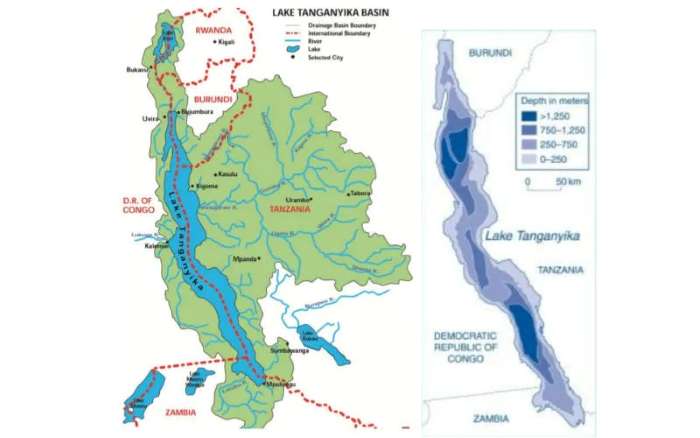
Lake Tanganyika, managed under the LTA framework established by Tanzania, Burundi, the Democratic Republic of Congo and Zambia, is one of the world’s deepest and most biodiverse lakes.

Enhanced maritime safety, pollution prevention and biodiversity protection will help Tanzania safeguard the lake’s ecological value while improving safety standards for transport and fishing activities.
Implementation of he agreement will be overseen by a Joint Implementation Committee, ensuring accountability and regular assessment of progress – an approach that is expected to translate commitments into measurable benefits on the ground.
A strategic win for Tanzania
By hosting the signing and playing a central role in the pact, Tanzania reinforces its position as a regional leader in environmental diplomacy and sustainable development. As pressures from climate change, population growth and economic activity intensify, the LVBC–LTA agreement offers Tanzania a strategic tool to protect vital ecosystems, secure livelihoods and support sustainable growth – turning regional cooperation into tangible national gains.