
By Business Insider Reporter
The Tanzania’s long-term economic roadmap officially enters its legislative phase today, 2 February 2026, as the National Planning Commission (NPC) prepares to table three foundational instruments in Parliament.
The move marks the formal commencement of Dira 2050, a blueprint designed to define the nation’s development trajectory for the next quarter-century.
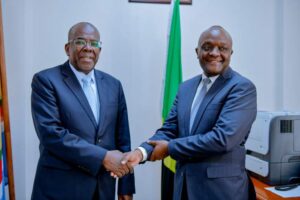
Speaking in Dar es Salaam, NPC Executive Secretary Dr. Fred Msemwa (pictured above) confirmed that the Government, through the Minister of State for Planning and Investment, Professor Kitila Mkumbo, will present the documents in Dodoma.
Following the presentation, Parliament will engage in a week-long deliberation before making a final decision in accordance with the Constitution.
A three-tiered strategy
Unlike previous singular planning efforts, Dira 2050 is being launched through a tiered legislative framework aimed at ensuring immediate actionability. The three instruments include:
- The Long-Term Perspective Plan (2026/27–2050/51): A 25-year strategic anchor.
- The Five-Year Development Plan (2026/27–2030/31): The primary medium-term operational guide.
- The National Development Plan (2026/27): The specific budget and project roadmap for the upcoming financial year.
“This is a rare and historic opportunity,” Dr. Msemwa said, emphasising the generational weight of the moment. “Vision 2050 embodies the hopes and aspirations of all Tanzanians. It is a symbol of unity, guided by a firm commitment to leave no one behind.”

Accountability through digital innovation
In a significant shift toward modern governance, Dr. Msemwa revealed that the NPC is finalizing an electronic monitoring and evaluation (M&E) system.
Scheduled for rollout in July 2026, the system is designed to replace traditional oversight with a results-oriented digital framework, ensuring that the ambitious goals of Vision 2050 are met with strict accountability.
Localising the Vision
To prevent the “top-down” implementation gaps that often hinder large-scale national plans, the Commission has already initiated nationwide seminars. These guidelines are designed to help local government authorities, ministries, and public institutions interpret and align their regional budgets with the national 2050 expectations.
“Every Tanzanian deserves to be fully informed about the country’s development planning,” Dr. Msemwa stated. He urged the public to closely follow the parliamentary sessions, noting that the broad public consultations used to draft the Vision make its successful execution a shared national responsibility. The implementation of these plans is set to begin in the 2026/2027 financial year, positioning Tanzania to transition from its current economic status toward a high-middle-income reality by the mid-century mark.